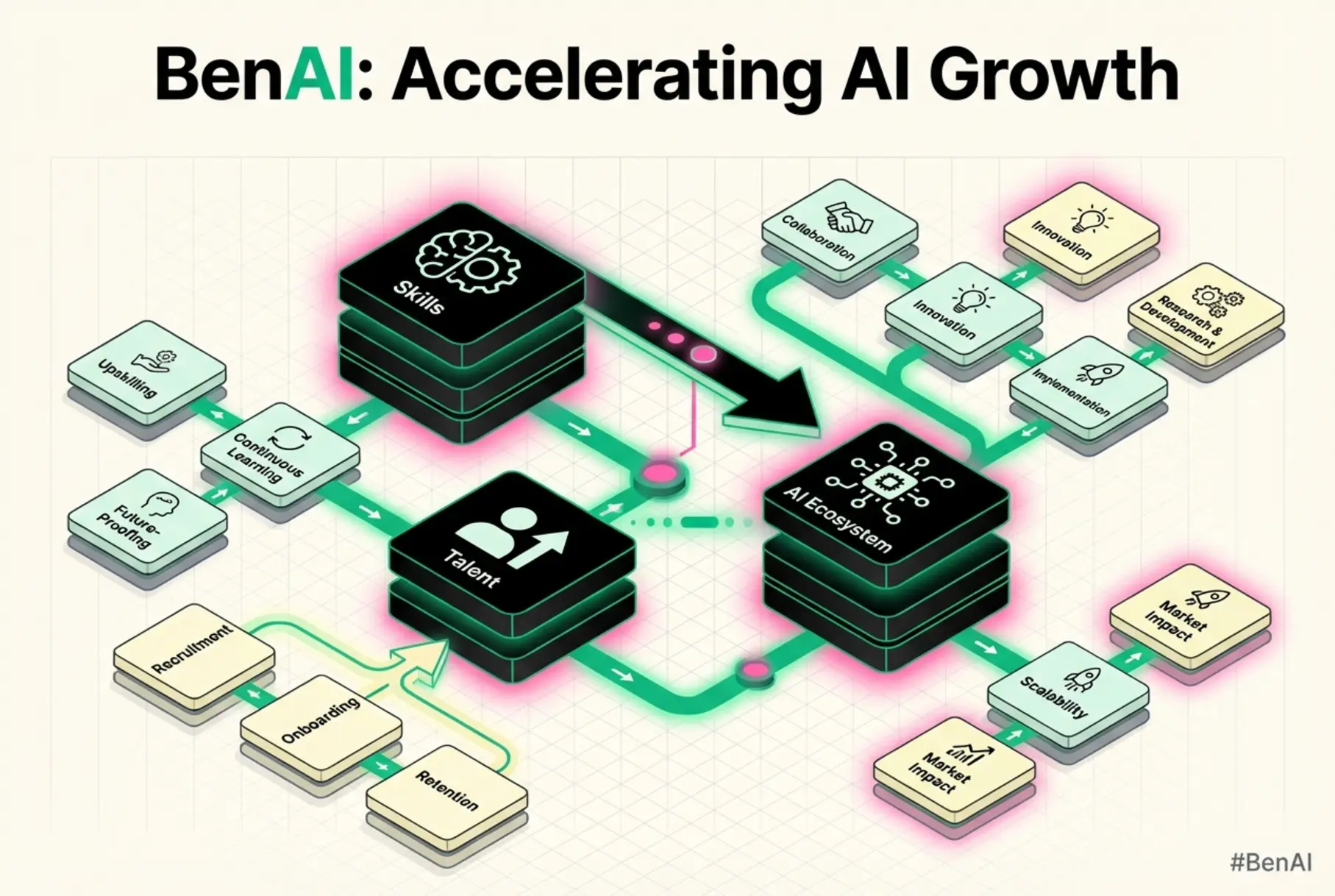
You're beyond the "should we adopt AI" stage. You recognize that AI isn't just a trend; it's the new operating system for competitive businesses. Your current challenge isn't about whether to implement AI, but how to embed it deeply and sustainably within your organization. Specifically, you're tasked with building the internal capabilities that will transform your company into a truly "AI-first" entity—one that leverages artificial intelligence to automate tasks, create capacity, and unlock unprecedented growth without relying solely on external consultants.
This isn't about superficial AI literacy. It's about strategically cultivating a robust, self-sufficient AI skill ecosystem. You need a practical roadmap to identify critical roles, upskill your existing talent, attract the best new minds, and foster cross-functional teams that can drive your AI agenda. That's precisely what this guide delivers.
The AI-First Advantage: Beyond Adoption to Internal Mastery
The statistics are clear: 78% of organizations use AI in at least one function, yet a sobering 55% report significant AI talent gaps. Only 1% of businesses truly consider themselves AI-mature. This disparity highlights a crucial truth: simply adopting AI tools isn't enough. Sustainable AI leadership demands an internal powerhouse of skilled professionals. This guide will help you bridge that gap, not just by providing frameworks, but by giving you actionable strategies to build your own internal AI ecosystem.
Phase 1: Decoding Your AI Needs – Identifying Critical AI Competencies
Before you can build an AI-skilled workforce, you need a precise understanding of the skills required. Generic "AI skills" won't cut it. You need to define the specific technical and human competencies that will drive your unique business objectives.
This means moving beyond broad definitions to identify specialized AI roles critical for your success. Think of positions such as:
- Machine Learning Engineer: Focuses on designing, building, and deploying ML models.
- Prompt Engineer: Specializes in crafting effective inputs for generative AI models to achieve desired outputs. This is a burgeoning, highly strategic role.
- AI Ethicist/Governance Specialist: Ensures responsible, fair, and compliant AI development and deployment.
- Data Scientist: Extracts insights from data, often feeding critical information into AI model development.
- AI Project Manager: Oversees AI initiatives, blending technical understanding with project management prowess.
- AI Solutions Architect: Designs the overall AI system, integrating various components and ensuring scalability.
Beyond these core roles, consider the specific toolchains and methodologies your team will need to master. This includes technical competencies in:
- Programming Languages: Python is paramount, often with libraries like TensorFlow and PyTorch.
- Cloud Platforms: Expertise in Azure AI, AWS AI, or Google Cloud AI services is increasingly vital for enterprise deployments.
- MLOps: Operationalizing machine learning models for seamless integration and management.
- Explainable AI (XAI): Understanding how AI models make decisions, crucial for transparency and trust.
- Generative AI: Leveraging large language models (LLMs) and other generative tools for content creation, code generation, and process automation.
But don't overlook the AI-adjacent skills. Strong critical thinking, complex problem-solving, collaboration, and ethical reasoning are as important as technical prowess. An IBM study, citing the World Economic Forum, predicts that 40% of core skills will change by 2025 – emphasizing the need for adaptability and continuous learning within your teams.
Your AI Competency Taxonomy
To get started, consider a structured approach to mapping your needs.
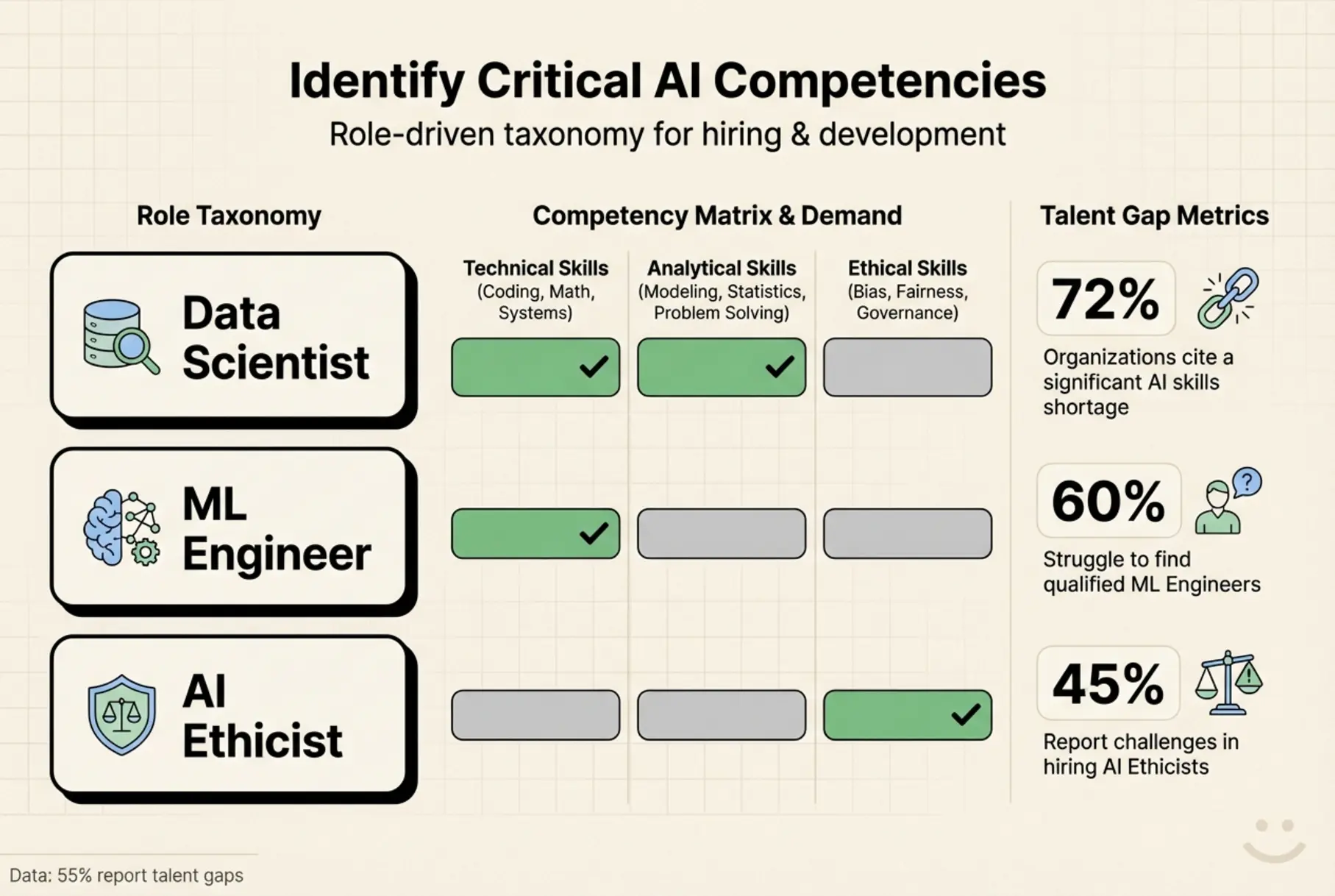
This taxonomy helps you quickly compare core AI roles and their competency demands, allowing you to prioritize your hiring and training decisions based on identified talent gaps. This granular understanding is the foundation for an effective AI strategy.
Phase 2: Cultivating Growth – Designing Internal AI Upskilling Pathways
With your critical AI competencies identified, the next step is to cultivate these skills within your existing workforce. This is far more cost-effective and culturally beneficial than relying solely on external hires, plus employees stay 41% longer at companies that regularly hire from within.
An EY survey found that companies combining AI adoption with strong talent management achieve up to 40% productivity gains. However, only 12% of employees receive sufficient AI training to unlock these gains. This highlights a massive opportunity for strategically designed upskilling programs.
Crafting Multi-Tiered Learning Paths
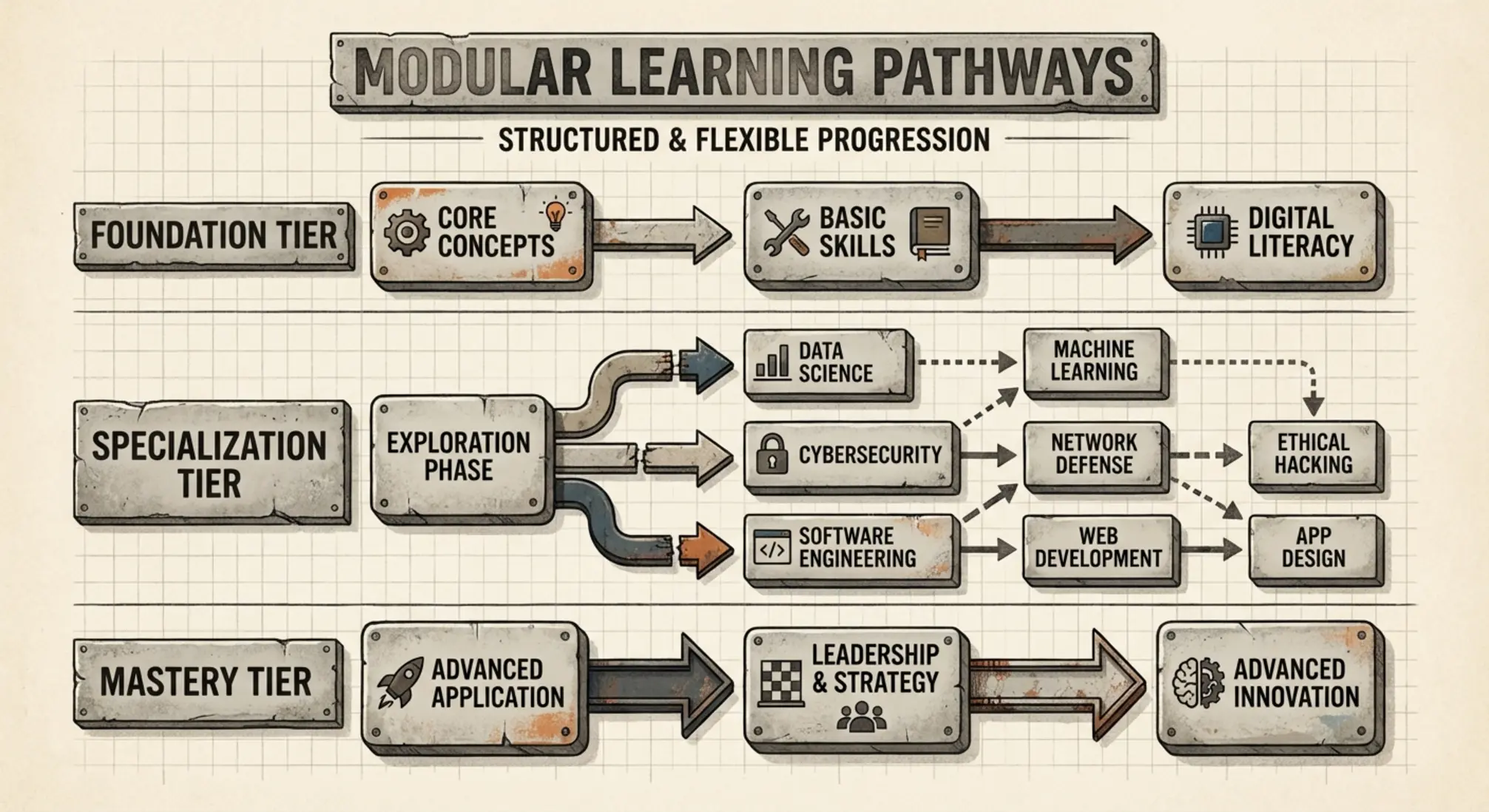
Your upskilling strategy shouldn't be one-size-fits-all. Instead, design multi-tiered learning paths:
- AI Fundamentals for All: Provide basic AI literacy and awareness training across the organization. This reduces AI anxiety and fosters a culture of understanding.
- Role-Specific Upskilling: Tailor training for AI-adjacent roles. For instance, marketing teams can learn to leverage generative AI for content or SEO, while HR professionals can utilize AI recruitment tools to streamline hiring processes. If you're a recruiting firm, this could involve deep dives into using AI to enhance your candidate monitoring systems. BenAI offers specialized AI Recruiting Solutions that can be integrated into these pathways.
- Deep Technical Reskilling: For employees transitioning into core AI roles, offer intensive programs. This might involve internal AI academies, partnerships with online platforms like Coursera or Udemy Business, mentorship programs, and hands-on projects. IBM emphasizes differentiating between "upskilling" (enhancing current role skills) and "reskilling" (training for entirely new roles), a distinction crucial for effective program design.
Measuring Return on Learning Investment (ROLI)
As BCG notes, the C-suite needs to see the return on their upskilling investments. Establish practical metrics from the outset:
- Skill Proficiency Scores: Regular assessments to track skill development.
- Project Completion Rates: Measure the number of AI-driven projects initiated and successfully completed by upskilled teams.
- Productivity Gains: Track improvements in efficiency or output related to AI adoption.
- Employee Retention: Monitor retention rates among employees offered significant upskilling opportunities.
Map customizable upskilling journeys using a framework like this to select the right mix of assessments, modules, and hands-on projects for your teams.
Phase 3: Attracting & Retaining Top AI Talent – Building a Magnetic EVP
Even with robust internal upskilling, attracting new AI talent remains critical. AI skills command significant wage premiums (average 56% higher), highlighting their scarcity and value. This means your Employee Value Proposition (EVP) for AI professionals needs to be compelling and distinct.
What do AI professionals truly value?
- Challenging and Impactful Projects: Opportunities to work on cutting-edge problems that genuinely move the needle.
- Clear Career Progression: Defined paths for growth and advancement within AI roles.
- Continuous Learning Culture: Access to ongoing professional development, conferences, and mentorship. Explore an approach that encourages continuous AI learning.
- Ethical Considerations: A commitment to responsible AI development and deployment.
- Tools and Infrastructure: Access to state-of-the-art AI infrastructure and tools. For guidance on setting this up, read our AI infrastructure guide.
Strategic Acquisition & Retention
Beyond traditional recruitment, consider these strategies:
- Internal Talent Marketplaces: Facilitate internal mobility for employees with nascent AI skills.
- Skills-Based Hiring: Focus on demonstrated capabilities rather than just degrees or traditional experience.
- Unconventional Sourcing: Look to specialized bootcamps, hackathons, and AI communities.
- Retention Playbook: Develop comprehensive career pathing (including the creation of "AI career ladders" that are distinct from traditional IT roles), foster a thriving continuous learning environment, and implement mentorship programs.
BCG emphasizes that simply matching competitor salaries isn't enough; companies must focus on a holistic EVP. This means providing an environment where AI talent feels valued, challenged, and sees a clear future. A balanced approach of internal growth and external recruitment is vital.
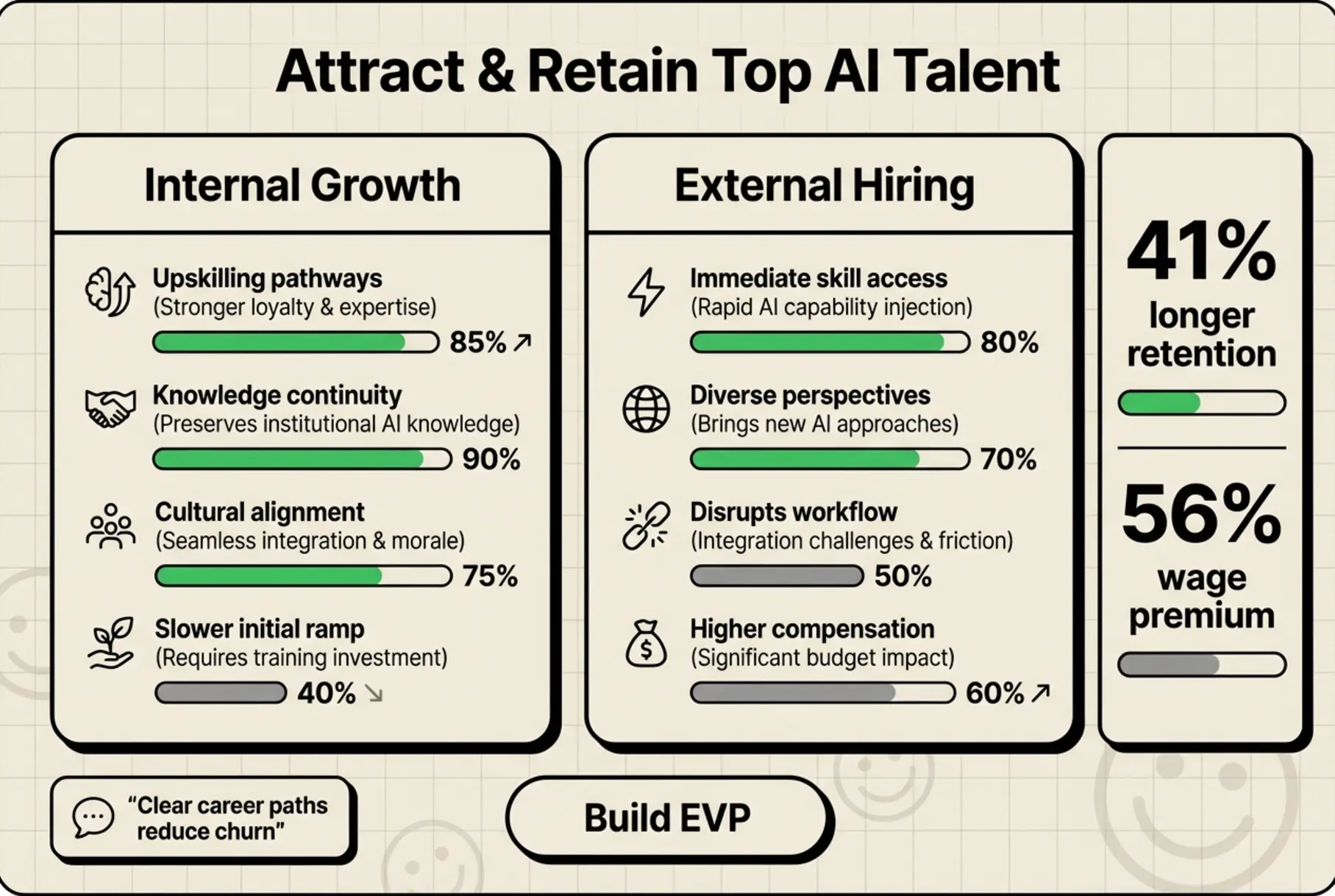
This visual helps you weigh the benefits of internal mobility against external recruitment, providing a clear breakdown of retention, compensation, and cultural benefits to inform your overall hiring strategy.
Phase 4: Synergy in Action – Fostering Cross-Functional AI Teams
Even with the best individual talent, AI only truly shines when teams collaborate effectively. AI projects often bridge technical expertise with deep domain knowledge. This necessitates deliberately fostering cross-functional AI teams. For more on structuring teams, you might find our insights on AI-first team structures valuable.
Building Effective Cross-Functional Teams
- Role Definition & Reporting Structures: Clearly define the roles within cross-functional teams, ensuring both technical AI experts and domain specialists (e.g., marketing, operations, HR) have a voice and contribute meaningfully.
- Collaboration Models: Centralized AI teams can serve as a hub, while federated models embed AI specialists within business units. Hybrid approaches are also common.
- Communication & Governance: Establish clear communication channels and protocols. More importantly, develop robust governance frameworks that outline ethical guidelines, data usage policies, and evaluation metrics for AI projects. Understanding how to integrate AI with legacy systems is also key for these teams.
Bridging the gap between technical AI experts and domain specialists requires explicit strategies. AI solution architects often play a pivotal role in translating business needs into technical specifications and vice-versa. Focus on shared objectives and mutual respect for different expertise.
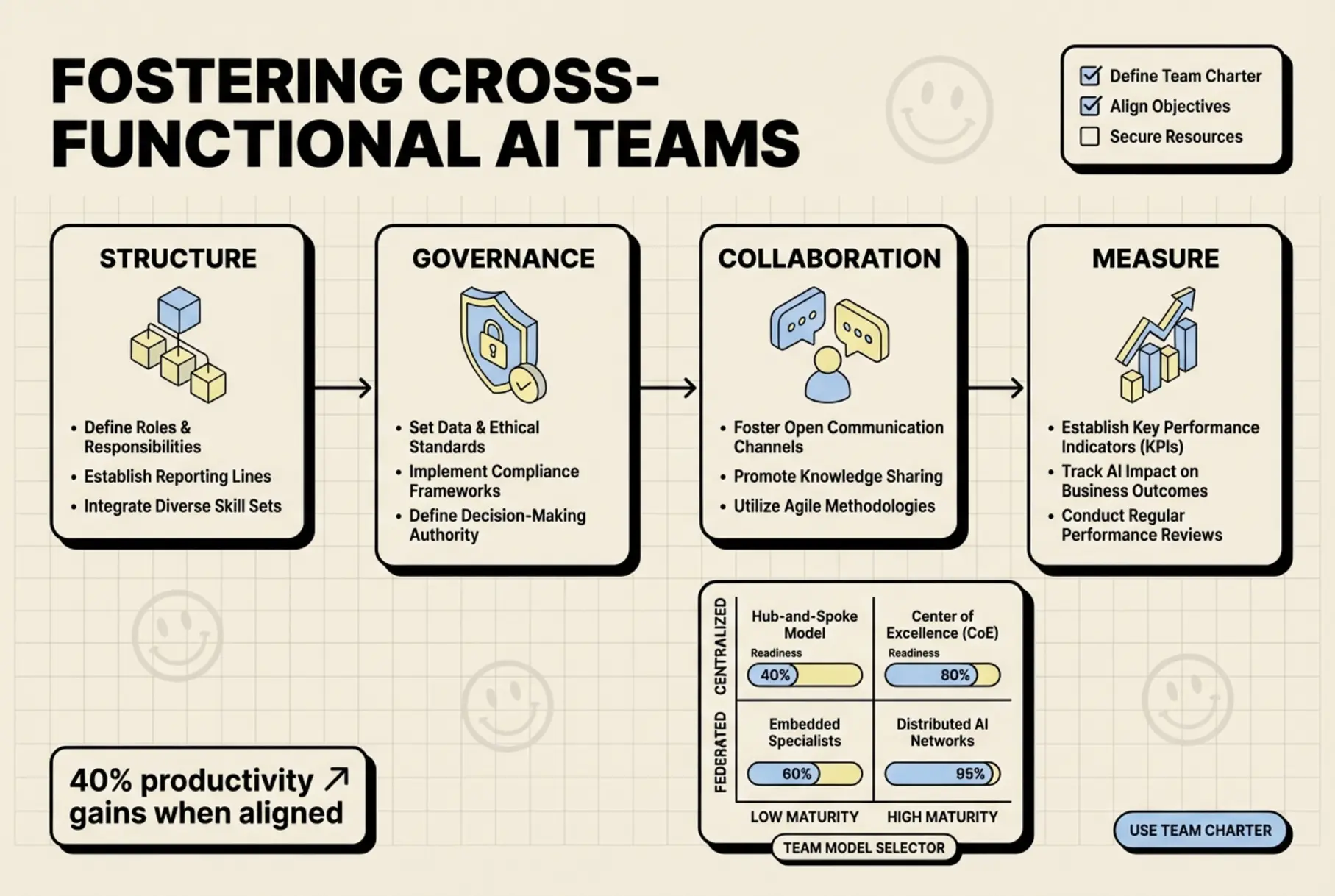
This playbook helps you structure your AI teams strategically, guiding you through phased flows and a decision matrix to choose the optimal governance model for your organization.
Phase 5: Sustaining Momentum – The AI-First Culture & Continuous Adaptation
Building an AI skill ecosystem isn't a one-time project; it's an ongoing journey. Sustained success hinges on cultivating an "AI-first" culture that champions continuous learning, ethical practice, and bold experimentation.
- Leadership Buy-in & Advocacy: As BCG highlights, C-suite involvement is non-negotiable. Leaders must not only invest in AI but actively champion its adoption, communicate its strategic importance, and model AI-driven behaviors. Building an effective AI strategy roadmap starts with this foundational buy-in.
- Psychological Safety & Change Management: AI can evoke fear about job displacement. Address these concerns head-on through transparent communication, emphasizing augmentation over replacement, and providing re-skilling opportunities. Foster an environment where experimentation is encouraged, and "failures" are reframed as valuable learning opportunities.
- Operationalizing AI Ethics: Embed ethical AI principles into every aspect of development and deployment. This includes fairness, transparency, accountability, and data privacy. Your AI Ethicist role becomes crucial here, guiding your teams through complex decisions. Regular post-implementation AI audits are pivotal for ensuring ethical guidelines are followed.
- Continuous Learning & Evolution: The AI landscape changes daily. Your ecosystem must be adaptable. Implement mechanisms for continuous learning, knowledge sharing, and staying abreast of new tools and techniques.
Companies that successfully build and sustain an internal AI skill ecosystem don't just adopt AI; they become AI-first. They foster a proactive culture of innovation, ensuring they're not just reacting to technological shifts but driving them.
Frequently Asked Questions About Building an Internal AI Ecosystem
Q1: Is it really necessary to build internal AI skills, or can we just outsource AI development?
While outsourcing has its place, relying solely on external vendors creates dependencies, can be more expensive long-term, and deprives your organization of crucial, proprietary knowledge. Building internal skills fosters strategic autonomy, allows for faster iteration, and integrates AI directly into your core business processes, leading to up to 40% productivity gains, as noted by EY.
Q2: We're a small business. Do these recommendations apply to us too?
Absolutely. The principles are scalable. For a small business, "internal ecosystem" might mean upskilling a few key individuals, leveraging readily available no-code AI tools, and focusing on one or two high-impact use cases. The core idea is to build some in-house capability rather than none, which allows for greater control and innovation. BenAI also offers a Free Community & Templates for foundational AI knowledge and tools.
Q3: How do we identify which AI skills are most relevant for our specific industry/business?
Start by defining your strategic business problems that AI could solve. Then, research the AI technologies best suited for those problems. From there, map the technical skills required to implement those technologies. Our "Phase 1: Decoding Your AI Needs" section, including the AI Competency Taxonomy visual, provides a structured approach to this. We also offer custom Enterprise Solutions for tailored guidance.
Q4: How can we address employee fear or resistance to AI upskilling?
Transparency and clear communication are key. Emphasize that AI is meant to augment human capabilities, not replace them. Highlight career growth opportunities through upskilling and involve employees in the AI journey. Provide psychological safety, celebrate small wins, and ensure leadership champions the transformation, as recommended by BCG.
Q5: What's the biggest mistake companies make when trying to build internal AI capabilities?
Often, it's a lack of integrated strategy. Companies might buy tools without adequate training, train without clear use cases, or hire AI talent without establishing a supportive culture. The most successful approach is holistic: defining needs, creating pathways, attracting talent, fostering collaboration, and cultivating an AI-first culture, as outlined in this guide. Another common mistake is failing to continuously adapt in the fast-evolving AI landscape.
Q6: What if our existing talent lacks a strong technical background? Can they still be upskilled in AI?
Yes. Many AI roles benefit from domain expertise. Employees with strong business acumen can be trained in AI fundamentals, prompt engineering, or AI project management. For those interested in deeper technical roles, robust reskilling programs can bridge the gap, even for those without a traditional STEM background, particularly with the rise of user-friendly AI development platforms.
Ready to Build Your AI-First Business?
The journey to becoming an AI-first enterprise is complex, but it's also your most powerful lever for future growth. By systematically building your internal AI skill ecosystem—from identifying critical competencies and designing tailored upskilling pathways to attracting and retaining top talent and fostering cross-functional collaboration—you equip your organization not just to compete, but to lead. You're moving past evaluation and into strategic action.
Don't just observe the AI revolution; lead it from within. If you're ready for world-class AI implementations, training, and consulting customized for your unique business needs, it's time to talk.
Join Our Growing AI Business Community
Get access to our AI Automations templates, 1:1 Tech support, 1:1 Solution Engineers, Step-by-step breakdowns and a community of forward-thinking business owners.
Latest Blogs
Explore our latest blog posts and insights.