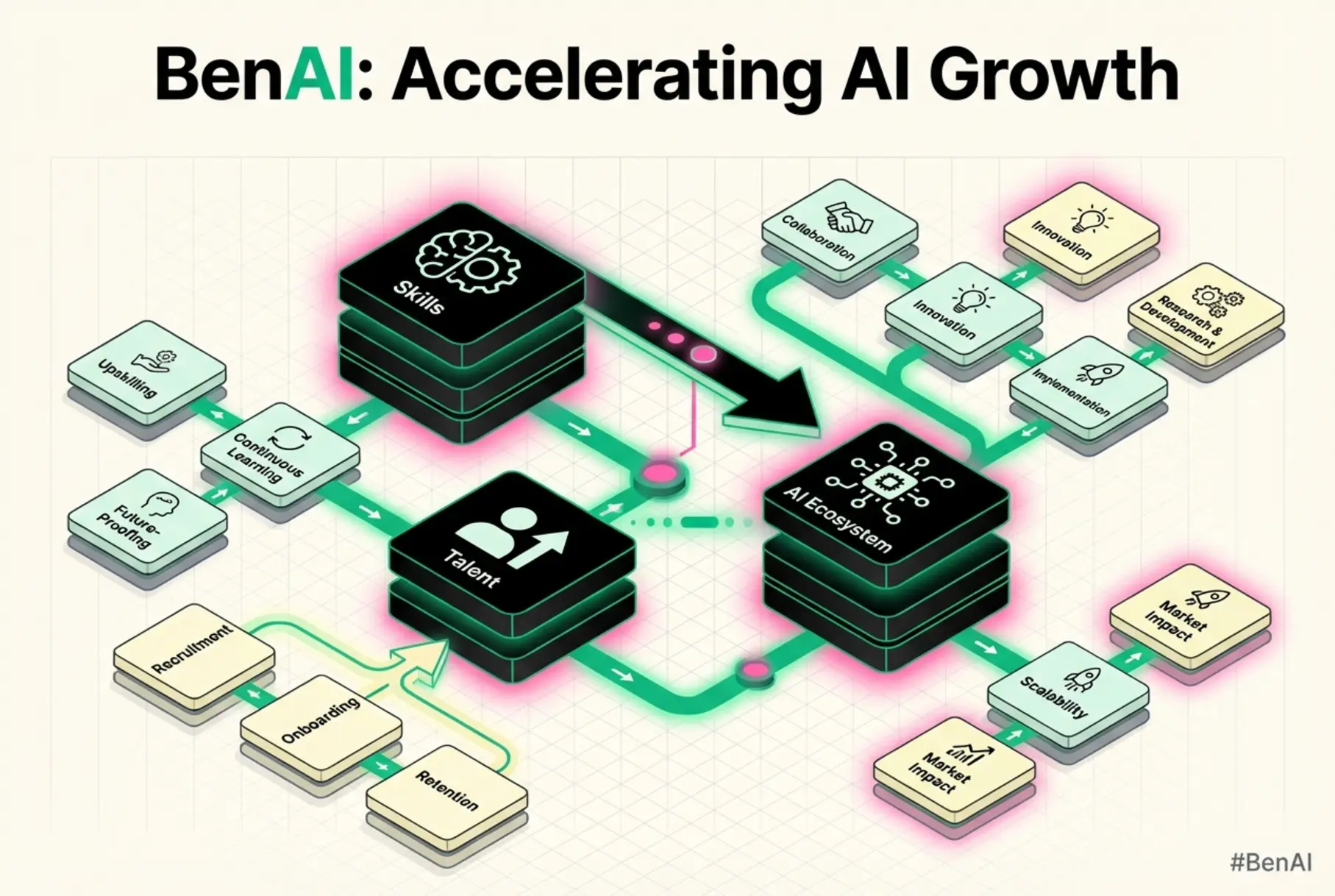
The promise of AI is unparalleled: automation, efficiency, and unprecedented growth. Yet, for many businesses and agencies, that promise often gets lost in the labyrinth of project complexities, scope creep, and unmet expectations. If you're evaluating how to not just launch AI projects, but to profit from them consistently, you're looking for more than just technical guidance—you need an operational blueprint.
Between 70-85% of GenAI deployment efforts are failing, often due to poor data, a lack of robust AI operations, and inappropriate infrastructure. This isn't just about picking the right model; it's about building a delivery engine that turns AI innovation into predictable revenue. It’s about operationalizing AI for profit.
At BenAI, we understand that building an AI-first business requires more than just innovative tools; it demands a rigorous approach to project delivery and operations. We've distilled our expertise into a comprehensive framework designed to guide you through profitable AI project execution, from initial scope to sustained, high-quality output.
Phase 1: Profitable AI Project Scoping & Client Alignment
You're evaluating AI solutions to drive growth, but the first hurdle is often translating ambitious AI concepts into tangible, profitable projects. Traditional IT scoping methods frequently fall short because AI projects inherently involve more discovery and experimentation. They are less about defined requirements and more about exploring possibilities based on data and iterative learning.
Our approach begins with a Profit-First AI Framework, explicitly linking every project decision to its potential financial outcome. Unlike generic guides, we prioritize not just what to build, but how that build will generate measurable value.
Why AI Scoping is DifferentThink of it this way: traditional software development often starts with a clear problem and a known solution. AI, however, frequently begins with a business problem and an exploratory solution space. This means your initial "requirements" might evolve as you learn from data and early model iterations. This R&D-heavy nature demands a more dynamic, yet disciplined, scoping process.
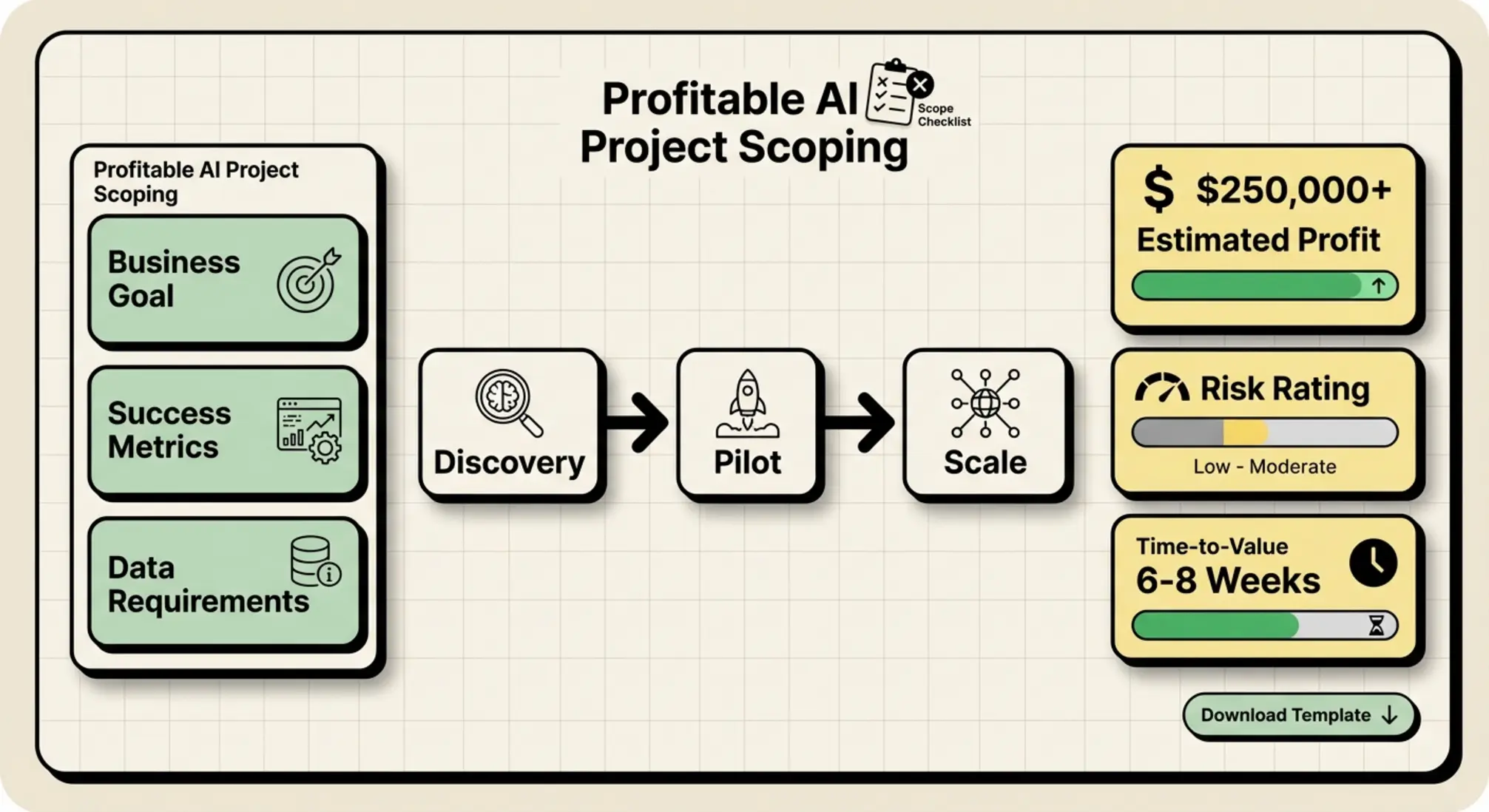
AI Project Scoping Framework: From Business Problem to Measurable GoalsTo navigate this, we advocate for a structured approach that moves from top-level business objectives to specific, measurable AI outcomes:
- Identify Core Business Problem: What specific pain point or opportunity can AI address?
- Define Desired Business Outcome: How will solving this problem translate into revenue, cost savings, or efficiency gains? (e.g., "reduce customer support costs by 20%," "increase lead conversion by 15%").
- Translate to AI Capability: What AI capability (e.g., natural language processing, predictive analytics, image recognition) is needed to achieve this outcome?
- Establish Key Performance Indicators (KPIs): How will you measure the AI's success against the business outcome? This goes beyond technical metrics and includes profit, operational efficiency, and user adoption.
- Assess Data Availability & Quality: The bedrock of any AI project. Without sufficient, high-quality data, even the best algorithms will fail. An AI readiness assessment is crucial here.
- Outline High-Level Project Phases & Milestones: Break down the project into logical, iterative steps with clear deliverables.
This rigorous process helps define a clear, well-documented project scope upfront, which is crucial for setting expectations and avoiding ambiguity. Sparkco.ai emphasizes this as a core defense against scope creep.
Advanced Client Expectation Management for AI SolutionsManaging client expectations in AI is paramount. The "AI hype" often leads to unrealistic assumptions about what the technology can achieve. We focus on:
- Transparency: Clearly communicate the limitations and capabilities of AI, particularly given its reliance on data and its probabilistic nature.
- Framing ROI: Shift the conversation from solely technical features to clear, measurable business value. Explain how the AI solution directly contributes to their profitability.
- Iterative Demos: Showcase work in progress frequently to provide early visibility and align expectations. This also helps in an AI operational automation process, adjusting to feedback.
This proactive approach builds trust and ensures your client understands the journey, not just the destination.
Phase 2: Preventing Scope Creep & Ensuring Project Viability
Scope creep—the insidious expansion of project requirements beyond the initially agreed-upon scope—is a mortal enemy of profitability, especially in AI. The highly iterative and experimental nature of AI development makes it particularly vulnerable.
The Dangers of AI Scope CreepUncontrolled scope creep leads to:
- Cost Overruns: Every new feature, every extra data source, adds time and resources.
- Missed Deadlines: Expanding scope without adjusting timelines is a direct path to delays.
- Project Failure: Overburdened projects can stall or fail entirely, wasting significant investment.
- Profit Erosion: For service providers, these directly impact your margins and client relationships.
AI-Enhanced Scope Management FrameworksAgainst this backdrop, a hybrid project management approach often works best for AI: combining structured upfront planning (like Waterfall for discovery and strategic overview) with Agile methodologies (for iterative development and flexibility). SoftKraft's research supports this, finding that most AI projects benefit from a combination of Waterfall for planning and Agile for development.
We layer AI tools on top of this framework to provide real-time monitoring:
- NLP for Communication Analysis: AI can analyze client communication and internal discussions to flag subtle shifts in requirements or new requests that could indicate potential scope creep.
- Predictive Analytics: By analyzing past project data, AI can predict the impact of proposed changes on timelines and budgets, offering an early warning system.
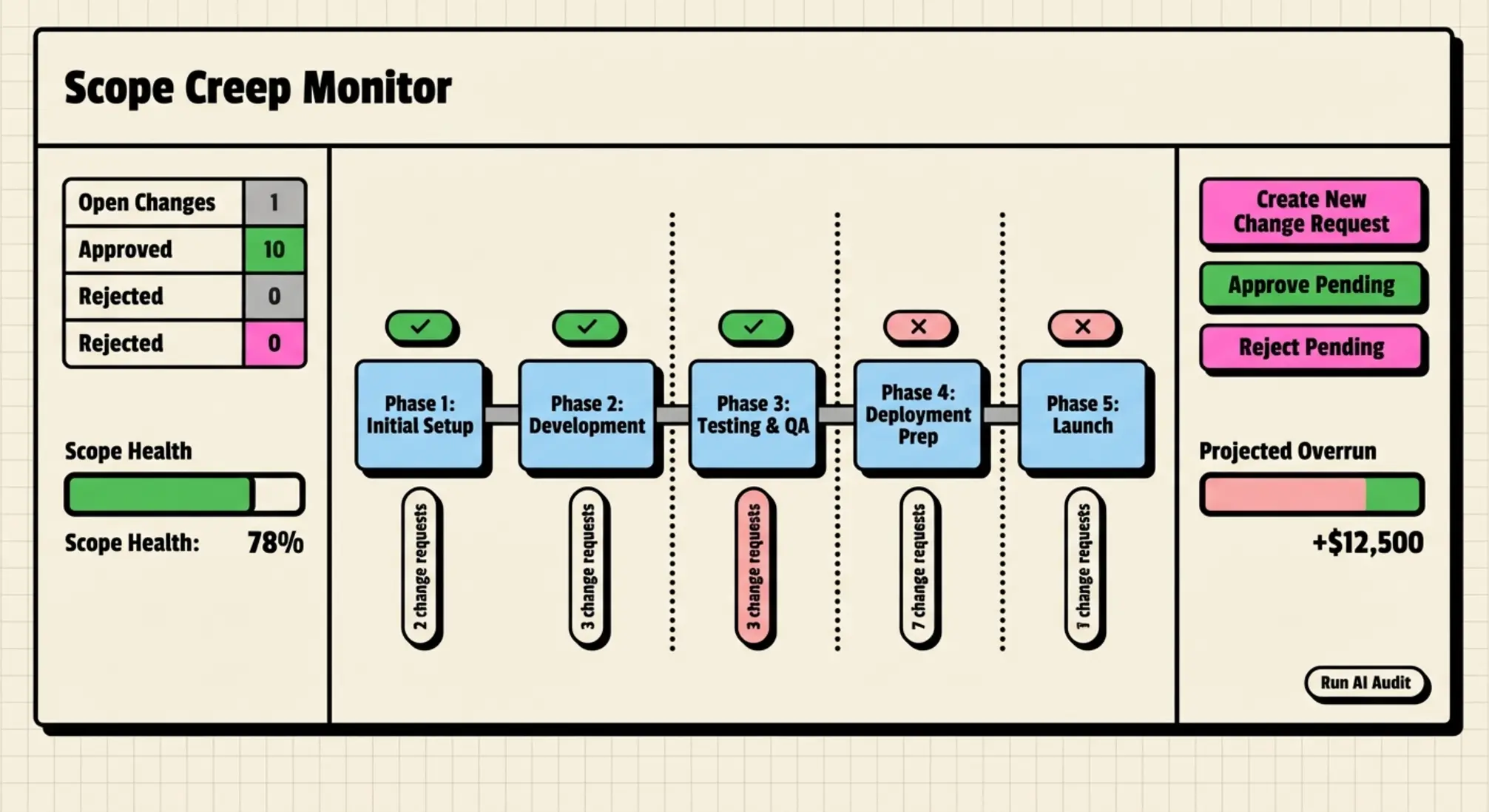
Implementing Robust Change Management for AI ProjectsEvery proposed change should go through a formal process:
- Impact Assessment: Evaluate the change's technical feasibility, cost, timeline implications, and potential impact on profitability.
- Client Approval: Present the assessment to the client, clearly outlining the additional cost and time.
- Documentation: Formally update the project scope, budget, and timeline.
This discipline isn't about being rigid; it's about being strategically flexible, ensuring that every deviation from the initial plan is a conscious, informed decision.
Phase 3: Building Operational Excellence with Reusable AI Assets
True profitability in AI service delivery comes from scalability. You can't rebuild every component from scratch for every new project. The "AI Factory" concept champions a shift from bespoke, one-off solutions to a library of reusable AI assets.
The Power of the AI Factory: Shifting from Bespoke to ReusableBuilding reusable AI assets—models, data pipelines, output templates, and even AI automation content structuring frameworks—can significantly reduce development costs and accelerate time-to-value. Think of it like a mature software development team building and reusing microservices. Microsoft Research has, for example, invested in SEAGULL for reusable AI infrastructure.
Strategies for Creating Reusable AI Models, Data Pipelines, and Output Templates
- Standardization: Define clear standards for model development, data preprocessing, and API interfaces.
- Modularity: Design components to be independent and interchangeable.
- Documentation: Thoroughly document every reusable asset, including its purpose, parameters, and potential use cases.
- Version Control: Utilize robust version control systems for all assets, ensuring reproducibility and easy updates. For example, templates for generative AI outputs.
Measuring the ROI of Reusable AI AssetsThe benefits are not just theoretical. Reusable content alone can show an ROI of up to 961% over five years. When applied to complex AI models and pipelines, the cost savings in development time, maintenance, and faster deployment are exponential. This proactive strategy is a cornerstone of AI operational cost reduction.
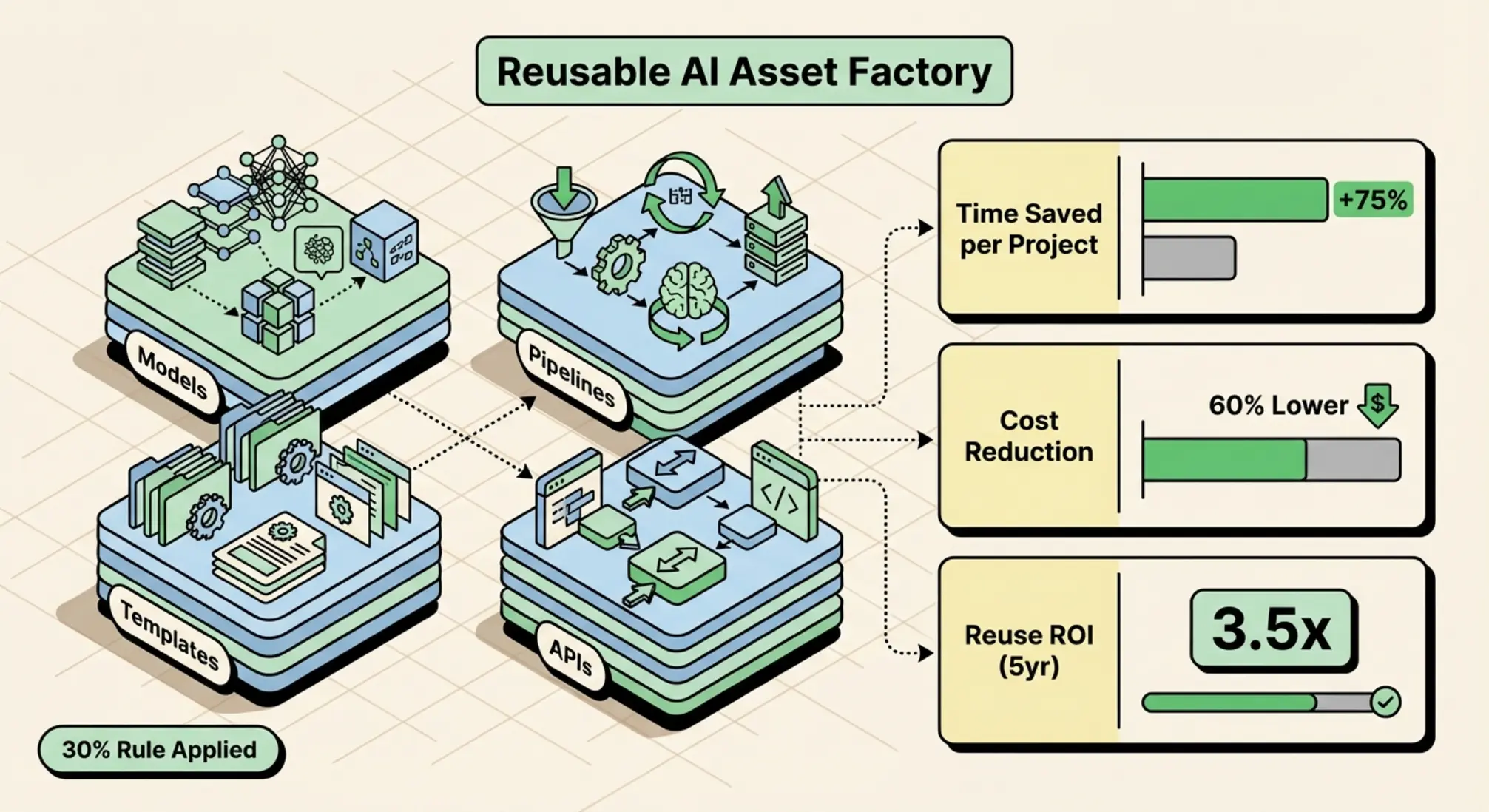
Best Practices for AI Asset Management and Version ControlAdopt dedicated MLOps platforms or robust internal systems to manage your AI asset library. This includes not just the code, but also training data sets, model artifacts, and deployment configurations. Regular audits and updates ensure your reusable assets remain current and effective.
Phase 4: Guaranteeing Quality & Tracking Profitability of AI Outputs
Delivering an AI solution isn't enough; it must deliver high-quality, reliable outputs that continuously contribute to the client's profitability. This requires a sophisticated approach to quality control and meticulous financial tracking.
Quality Control for AI-Generated Outputs: The Human-in-the-Loop ImperativeUnlike traditional software with deterministic outcomes, AI outputs can be probabilistic, sometimes biased, and occasionally "hallucinate." Harvard Business Review highlights the critical need to address GenAI’s quality control problem. This necessitates a "human-in-the-loop" strategy where human experts validate, refine, and provide feedback on AI-generated content or model decisions.
Tools and Techniques for Automated AI Output Review and Validation
- Automated Metrics: Utilize tools to track accuracy, precision, recall, and other performance metrics against established benchmarks.
- Anomaly Detection: AI itself can be used to flag unusual or low-confidence outputs for human review.
- Golden Datasets: Maintain specific datasets with known correct outputs to regularly test and validate the AI's performance.
Defining Essential Metrics for AI Output QualityYour quality metrics must align with the business outcome defined in Phase 1. For example:
- Marketing Content AI: % increase in engagement, % reduction in manual editing time, conversion rate uplift.
- Recruiting AI: % reduction in time-to-hire, % improvement in candidate quality score, % reduction in unconscious bias markers.
- Enterprise Automation AI: % task completion rate, % error reduction, operational cost savings.
Ultimately, the quality of your AI outputs directly impacts your client's bottom line and your perceived value.
Financial Tracking for AI Projects: Linking Operational Metrics to ProfitabilityGeneric project management tools often fall short in tracking the unique cost structures of AI projects—especially regarding data, compute, and continuous model retraining. To track post-implementation AI audit financials, you need specialized approaches.
- Granular Cost Tracking: Monitor expenses related to data acquisition, labeling, compute resources (cloud APIs, GPU usage), model deployment, and ongoing maintenance.
- Value Realization Frameworks: Develop frameworks that tie specific AI outputs and their quality metrics directly to financial benefits like revenue generated, costs saved, or efficiency gained.
- Profitability Dashboards: Implement dashboards that provide real-time visibility into project profitability, factoring in both costs and value delivered. Zeni.ai emphasizes the importance of financial reporting automation strategies for operational efficiency.
BenAI helps you implement comprehensive systems that make quality's profit impact visible.
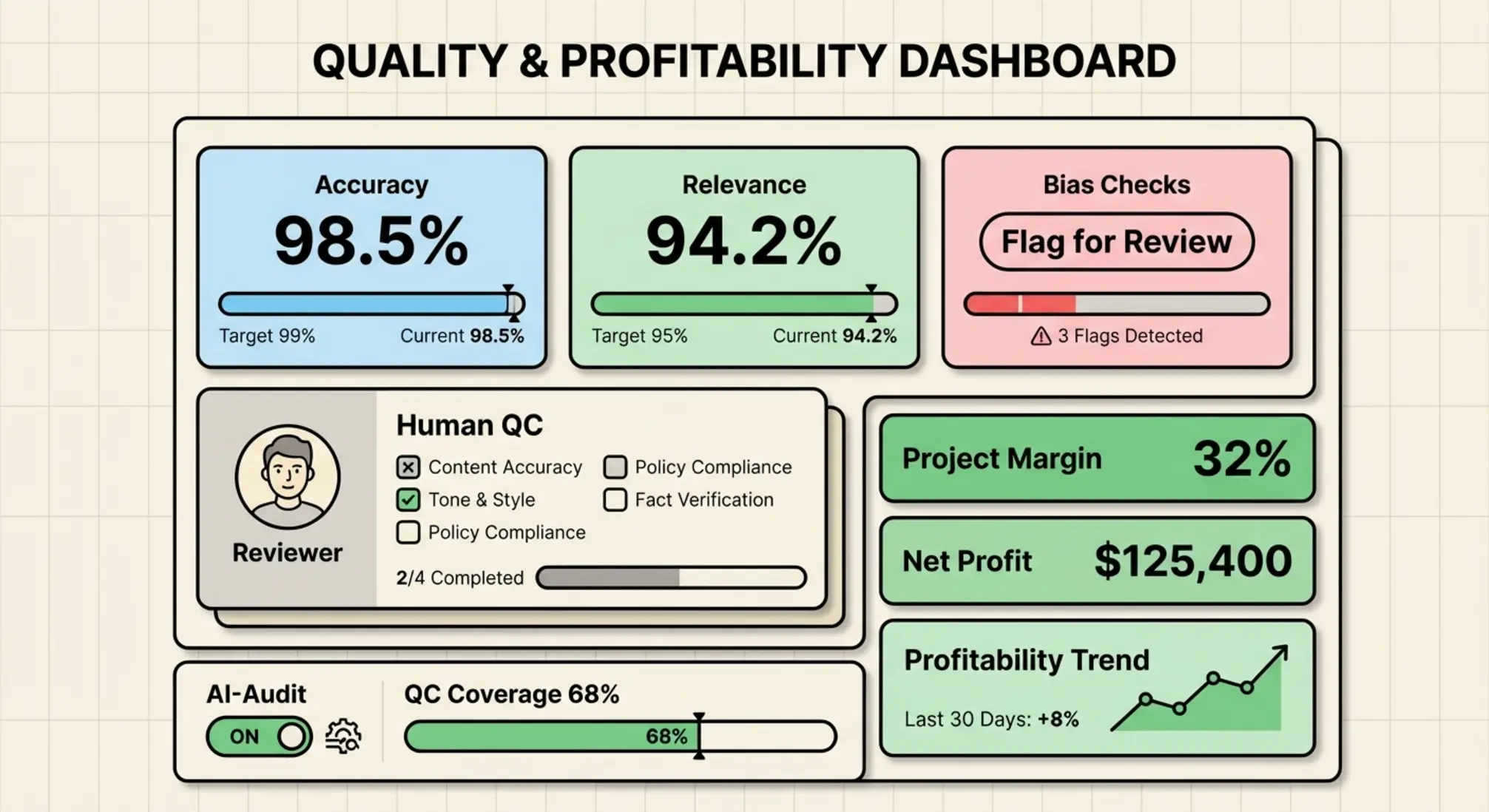
AI-Powered Financial Tracking Tools for Operational EfficiencyEmerging tools like Eyer.ai and Fiscal.ai leverage AI to automate financial reporting, identify cost anomalies, and forecast project profitability. Integrating these with your project management system provides a holistic view of your financial health.
Phase 5: Sustaining Founder & Team Productivity in AI Operations
Your operational engine is only as strong as the people driving it. For founders and teams building an AI-first business, the demands are immense. The pace of change, the technical complexity, and the constant need for innovation can lead to burnout.
The Unique Productivity Challenges of AI StartupsAI startup founders face a unique amalgam of challenges:
- Rapid Iteration: The AI landscape evolves quickly, requiring constant learning and adaptation.
- Technical Deep Dives: Often, founders are still deeply involved in the technical aspects alongside business strategy.
- Talent Scarcity: Hiring top AI talent is competitive and time-consuming.
- Balancing R&D with Delivery: The inherent R&D nature of AI means balancing exploration with client commitments.
AI-Driven Time Management Strategies for FoundersNucamp.co's research suggests AI tools can reclaim 8-10+ hours weekly for founders. This isn't about working harder; it’s about working smarter.
- Deep Work Prioritization: Use AI tools to automate scheduling, email triaging, and administrative tasks, freeing up blocks for focused, strategic work.
- Smart Automation: Leverage AI agents for research, content generation, data analysis, and even initial client outreach.
- Strategic Delegation: Identify tasks that can be effectively handled by virtual AI assistants or junior team members, guided by clear AI-generated instructions. This emphasizes AI resource optimization.
Building Efficient AI Workflows: Project Management Methodologies Adapted for AIWhile Agile is common, an effective AI workflow might integrate elements of Kanban for continuous delivery, or a Lean Startup methodology for rapid experimentation and validation of AI concepts. The key is to manage not just tasks, but continuous learning and adaptation.
Leveraging AI for Enhanced Collaboration and CommunicationAI tools can automatically summarize meeting notes, suggest action items, and facilitate knowledge sharing across teams. Language models can draft internal communications, status updates, or even initial client reports, streamlining processes that often bog down productivity.
Conclusion: Your Roadmap to Profitable AI Delivery
Becoming an AI-first business isn't just about building AI; it's about building an operation optimized for profitable AI delivery. It requires a strategic shift from ad-hoc projects to a systematized, quality-controlled, and financially transparent workflow.
By adopting our framework for profitable AI project delivery, you move beyond the challenges of scope creep and unmet expectations. You embrace a future where every AI initiative is a calculated step towards growth, backed by structured scoping, intelligent management, reusable assets, rigorous quality control, and optimized team productivity.
Your AI journey shouldn’t be a gamble. It should be a predictable, profitable path forward.
Frequently Asked Questions (FAQ)
Q1: What makes AI project delivery different from traditional software projects?
A: AI projects are fundamentally different due to their R&D-heavy nature, reliance on data quality, and probabilistic outcomes. Traditional software often has clearly defined requirements and deterministic results. AI projects, conversely, typically start with a business problem and an exploratory solution space, requiring iterative development and constant learning from data. This means more ambiguity upfront and a greater need for flexible, yet disciplined, project management. DAC.digital and Emerj.com both articulate that AI projects begin with discovery, emphasizing the data-driven and iterative development compared to traditional IT.
Q2: How can I prevent scope creep in my AI projects given their iterative nature?
A: Preventing scope creep in AI projects requires a hybrid approach. Start with rigorous, detailed scoping that links business problems to measurable AI capabilities and KPIs. Then, implement an agile change management process where every proposed change undergoes a formal impact assessment for cost, timeline, and profitability. Leveraging AI tools for real-time monitoring of communication and predictive analytics can also help detect potential scope creep early. Sparkco.ai highlights the importance of clear scoping as a defense against scope creep.
Q3: What is the "human-in-the-loop" approach, and why is it crucial for AI quality control?
A: The "human-in-the-loop" (HITL) approach involves human experts validating, refining, and providing feedback on AI-generated outputs or model decisions. It's crucial because AI, especially generative AI, can produce probabilistic, biased, or even "hallucinated" content. HITL ensures quality, accuracy, and ethical alignment that automated metrics alone cannot guarantee. This approach addresses the "quality control problem" in GenAI, as noted by Harvard Business Review.
Q4: How can I measure the ROI of reusable AI assets?
A: Measuring the ROI of reusable AI assets involves tracking the time and cost savings achieved by not developing components from scratch for each project. Factors include reduced development time, faster deployment, lower maintenance costs due to standardized components, and improved consistency across projects. For example, content reuse alone can yield an ROI of up to 961% over five years. Svitla.com and RWS.com illustrate similar returns related to content and AI transformation.
Q5: Can AI tools really improve my personal productivity as a founder or team leader?
A: Absolutely. AI tools can significantly boost productivity by automating repetitive, time-consuming tasks. This includes scheduling, email triaging, data analysis, initial research, and even drafting communications. By offloading these tasks, founders and leaders can free up substantial time—up to 8-10+ hours weekly according to Nucamp.co—to focus on strategic, high-value activities that require creativity, judgment, and direct human interaction.
Ready to transform your AI project delivery into a profitable, scalable operation?
Connect with our AI Project Delivery Experts to build your customized operational playbook.
Join Our Growing AI Business Community
Get access to our AI Automations templates, 1:1 Tech support, 1:1 Solution Engineers, Step-by-step breakdowns and a community of forward-thinking business owners.

Latest Blogs
Explore our latest blog posts and insights.