The promise of Artificial Intelligence often sounds like a mythical cure-all for every business ill. You've likely sifted through countless articles and vendor pitches, all touting "efficiency" and "automation." But as a decision-maker actively evaluating solutions, you're past the theoretical. You need to know: how does AI actually drive down operational costs, and how can it create tangible capacity within your organization without simply displacing valuable talent?
The critical challenge isn't just if AI can help, but how to implement it strategically for measurable impact, and how to avoid the pitfalls that can turn promise into peril. At BenAI, we understand your need for authoritative guidance during this pivotal evaluation stage. Our expertise lies in transforming complex AI challenges into accessible, actionable insights, helping you confidently integrate AI to become an AI-first business.
AI for Operational Cost Reduction & Capacity Creation: A Strategic Framework
In today's competitive landscape, businesses face immense pressure to innovate while simultaneously optimizing their bottom line. AI offers a powerful lever for achieving both, but only when approached with a clear strategy and a deep understanding of its nuances. Our comprehensive competitive intelligence research, utilizing SerpScraper, Perplexity, and direct competitor analysis, reveals that while many focus on AI's broad benefits, few offer the granular, actionable frameworks and address the critical considerations decision-makers truly need.
The Business Imperative: Transforming Operations with AI
Rising operational costs, stagnant productivity, and underutilized human potential are common challenges that can hinder growth. Generative AI tools, for instance, have shown to boost productivity by as much as 66% for business users doing realistic tasks, and even highly skilled workers can experience a nearly 40% performance improvement (Moveworks, MIT Sloan). This isn't just about marginal gains; it's about a fundamental shift in how work gets done.
AI's strategic role extends beyond basic automation. It’s about intelligent optimization, enabling your business to do more with less, create new capacities, and reallocate precious resources—both financial and human—to higher-value activities.
Quantifying the Impact: AI's Direct Influence on Operational Costs
Many AI vendors will tell you AI reduces costs. We show you how to measure it. AI can deliver a substantial reduction in costs, with some reports indicating 20-30% in operational costs across the board. McKinsey even suggests efficiency improvements exceeding 40% with strategic AI and automation implementation (Perplexity). More impressively, AI implementations can deliver a 372% ROI in just three months for specific use cases, and 10-15x ROI within three years for companies adopting Generative AI in operations (Perplexity). Most AI-driven solutions see a return on investment within 6 to 12 months.
Let’s break down where these savings come from:
1. Automating Repetitive Tasks
One of the most immediate benefits of AI is its ability to handle routine, high-volume tasks with speed and accuracy. This includes everything from data entry and document processing to customer service inquiries and content generation.
- Case Study Example: Imagine a marketing agency struggling with content creation at scale. By implementing an AI-powered content structuring system, they can automate the initial drafts and outlines for blog posts, social media updates, and ad copy. This significantly reduces the time creatives spend on foundational work, allowing them to focus on refinement and strategic messaging. Our insights on AI automation content structuring dive deeper into this.
- Metrics: Look for reductions in man-hours spent on routine tasks, decreased error rates, and faster processing times.
2. Optimizing Workflows & Processes
AI excels at analyzing vast datasets to identify inefficiencies and suggest optimal paths, leading to system-wide improvements.
- Supply Chain: Predictive analytics can forecast demand more accurately, minimizing overstocking and understocking, and optimizing logistics routes.
- Manufacturing: AI-driven quality control systems can identify defects early in the production cycle, reducing waste and rework. For a deeper dive into this, see our guide on AI-driven quality control.
- Finance: AI can automate invoice processing, fraud detection, and reconciliation, streamlining financial operations.
- Metrics: Measure reduced inventory costs, lower defect rates, faster time-to-market, and decreased processing bottlenecks.
3. Enhanced Decision-Making
AI doesn't just automate; it intelligentizes. By providing data-driven insights, AI empowers better, faster decisions across the organization.
- Predictive Maintenance: AI can analyze sensor data from machinery to predict failures before they occur, reducing costly downtime and unplanned repairs.
- Demand Forecasting: More accurate forecasts, powered by AI, minimize waste and maximize sales opportunities.
- Customer Service: AI chatbots and virtual assistants can resolve common customer queries instantly, freeing human agents for complex issues.
- Metrics: Track improvements in uptime, customer satisfaction scores, and reduced operational disruptions.
The cost of inaction is perhaps the biggest hidden cost. Competitors are actively leveraging AI, and falling behind means losing market share, talent, and strategic agility. Your competitors often present general benefits. We provide the methodology to quantify the specific savings for your business.
Beyond Cost Reduction: AI as a Capacity Creator
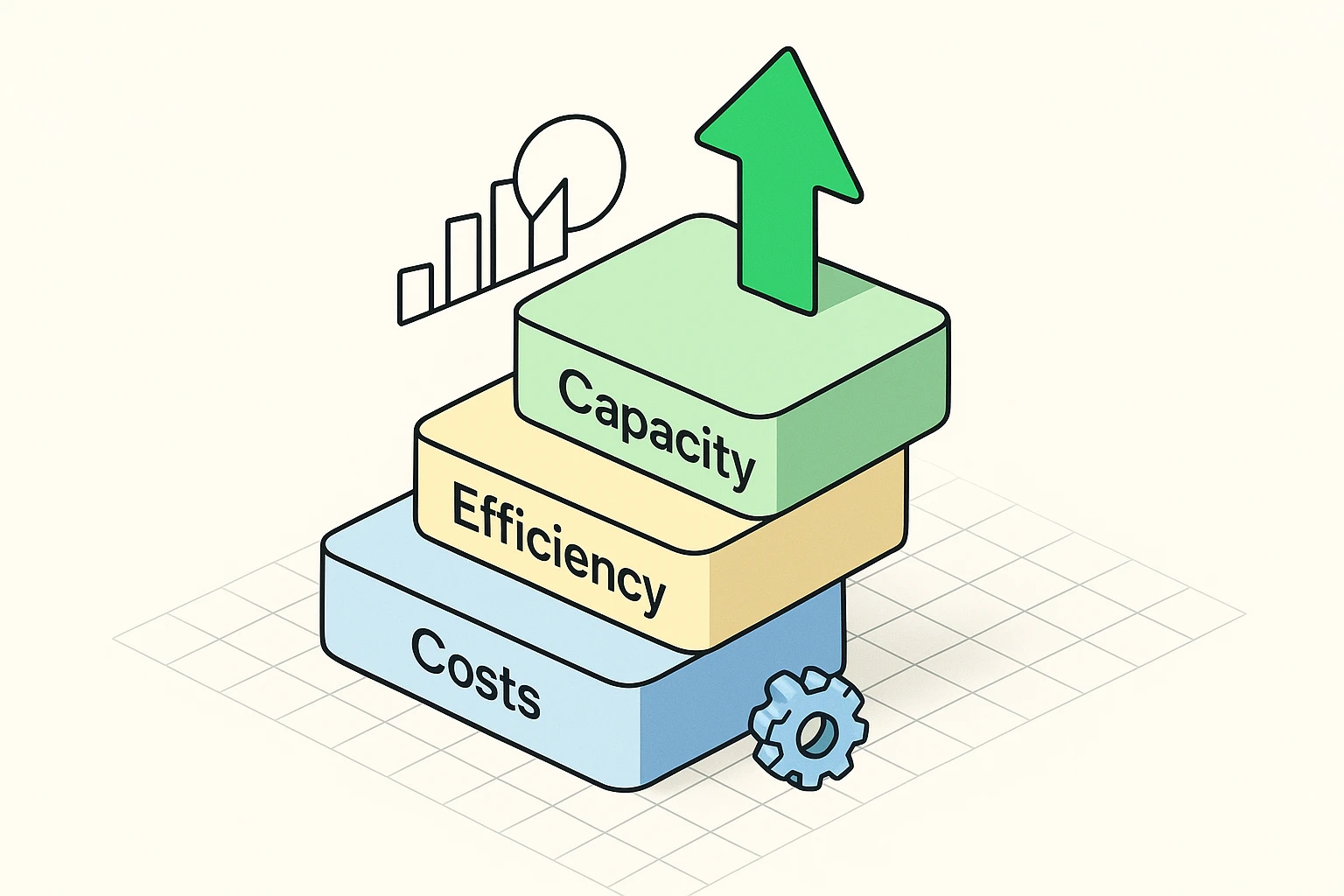
True AI transformation isn’t just about trimming fat; it’s about building muscle. While AI can save 5.4% of work hours and contribute to a 1.1% increase in aggregate productivity (Federal Reserve Bank of St. Louis), its greatest value often lies in creating capacity within your human workforce. This means freeing up human capital for higher-value, strategic, and creative tasks that only humans can perform. Vanguard notes that AI acts as a "copilot," freeing up human talent rather than eliminating jobs. In fact, AI is expected to positively impact about 80% of jobs, enhancing rather than replacing them (Vanguard).
Freeing Up Human Capital
Imagine your marketing team, freed from the mundane tasks of basic content generation or managing LinkedIn outreach manually. With AI taking over these operational tasks, their newfound capacity can be channeled into strategic planning, client relationship building, or crafting innovative campaigns. Our insights on scaling LinkedIn lead generation with AI automation demonstrate this in practice.
For recruiting firms, AI can automate candidate sourcing, screening, and monitoring tasks that consume significant recruiter time. This allows recruitment professionals to focus on building deeper relationships, conducting more meaningful interviews, and making higher-quality placements. Explore our AI recruiting solutions to see how this translates into practice.
Talent Redeployment Frameworks
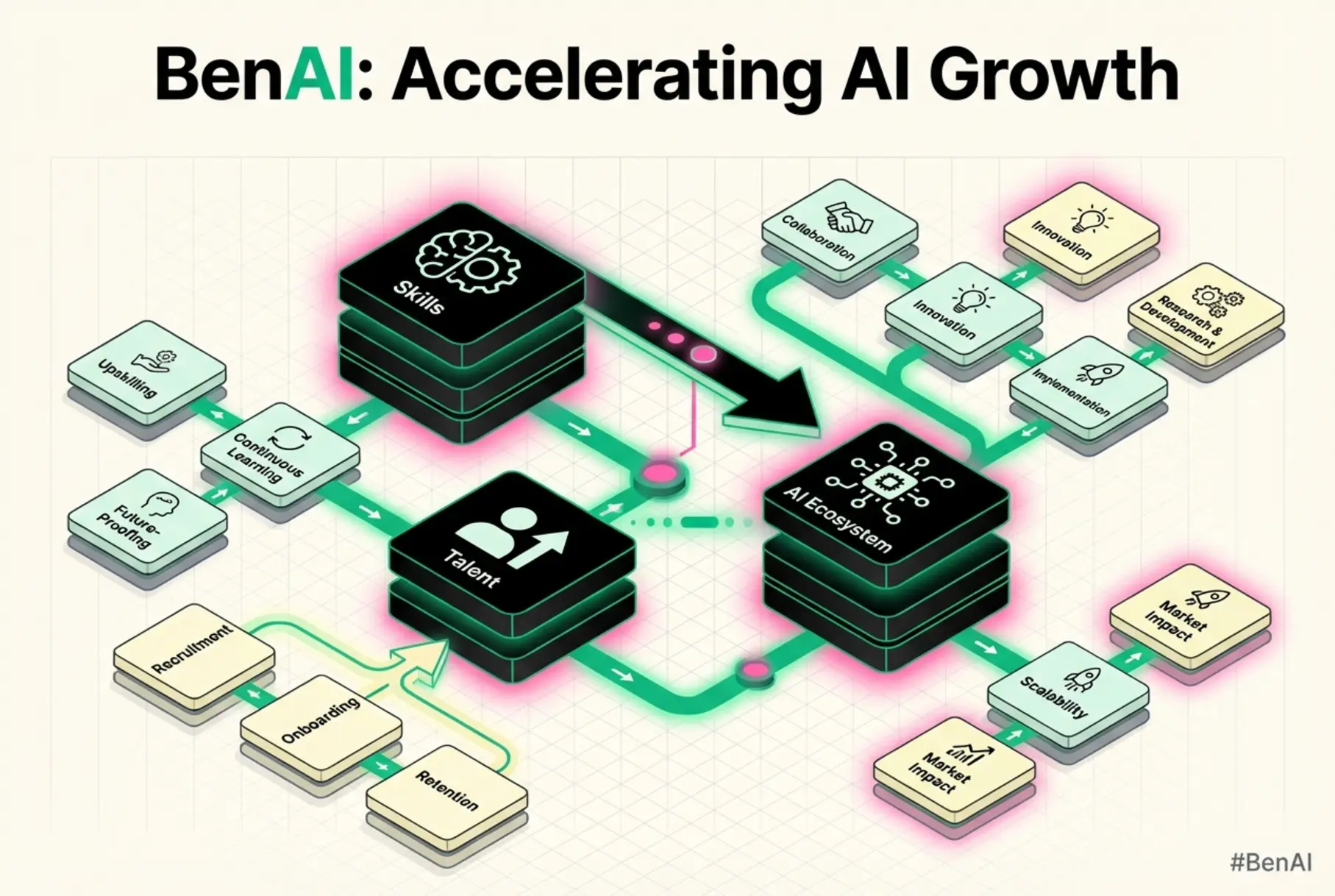
This isn't about replacing people; it's about reallocating their genius. Our frameworks help businesses prepare for and manage this transition:
- Identify Freed Capacity: Pinpoint exactly which roles or tasks are gaining significant time back due to AI automation.
- Skill Gap Analysis: Assess existing employee skill sets against future needs, identifying areas for upskilling and reskilling.
- New Role Creation: Proactively design new, higher-value roles that leverage human creativity, critical thinking, and emotional intelligence, often in areas like AI governance, ethical oversight, strategy, and innovation.
- Training & Development: Implement targeted training programs to equip employees with the new skills needed for these evolved roles.
Case Studies on Capacity Creation
Businesses that strategically implement AI often see tangible results in human capital reallocation:
- A Global Marketing Agency: Reduced manual SEO tasks by 70% using AI automation, allowing their SEO specialists to focus on advanced link-building, competitive analysis, and client strategy, leading to a 30% increase in client retention rates. For more on this, check out our AI SEO Automation Guide.
- A Biotech Startup: Used AI to automate administrative and research support functions, enabling core scientific teams to dedicate an additional 15 hours per week to experimental design and data interpretation, accelerating R&D timelines.
- An Enterprise Client: Streamlined their internal IT support by deploying AI agents to handle Tier 1 requests, freeing IT staff to work on complex system integrations and strategic infrastructure projects.
By creating this capacity, organizations don't just save money; they unlock innovation, improve employee satisfaction, and build a more agile, resilient workforce.
Navigating the Nuances: Addressing the "AI Efficiency Trap" & Related Challenges
While AI offers immense benefits, a naive approach can lead to what MIT Sloan calls the "AI efficiency trap" – over-reliance leading to a performance drop when AI is used outside its capabilities, or skill degradation among the human workforce.
The Efficiency Trap Explained
The danger lies in completely offloading cognitive effort to AI, leading to a loss of human expertise and critical thinking. If an AI tool simplifies a complex task too much, humans might lose the underlying knowledge needed to intervene effectively when the AI fails or to innovate beyond its current capabilities.
Strategies for Mindful AI Adoption
At BenAI, we advocate for "mindful AI adoption," ensuring humans remain at the center of the intelligence loop:
- Maintain Human Oversight: Always ensure human review and validation for critical AI outputs, especially in decision-making processes.
- Foster Critical Thinking: Implement AI tools as augmented intelligence, encouraging employees to critically evaluate AI suggestions rather than blindly accepting them.
- Continuous Learning: Promote ongoing training that focuses not just on using AI tools, but on understanding their underlying principles and limitations.
- Skill Augmentation over Replacement: Design AI implementations that enhance human skills, enabling "centaurs" (human-AI teams) that outperform either working alone.
Data Quality and Governance
AI is only as good as the data it's fed. Poor data quality, bias, or lack of governance can lead to inaccurate outputs, costly errors, and erode trust. Investing in robust data hygiene and governance frameworks is not optional; it's foundational for successful AI implementation and avoiding downstream costs. For strategic planning around this, refer to our guide on how to assess AI readiness.
Integration with Legacy Systems
Many enterprises struggle with integrating cutting-edge AI solutions into existing, often decades-old, legacy systems. This requires a pragmatic approach to ensure seamless data flow and functionality without disrupting critical operations. Our expertise in custom AI implementations for enterprises directly addresses this, ensuring smooth integration.
The Hidden Cost: Managing AI's Energy Footprint for Sustainable Operations
Here’s a critical challenge often overlooked by competitors: AI's increasing energy consumption. While AI can drive efficiency in many sectors, the computational demands of training and running sophisticated AI models are substantial. AI's demand for electricity is growing exponentially, doubling between two and four-fold year-over-year (Perplexity). AI data centers alone accounted for 4% of total U.S. electricity use in 2024, expected to more than double by 2030 (Pew Research Center, MIT Technology Review). A single ChatGPT query uses approximately ten times more electricity than a traditional Google search (UNRIC). These increased energy costs are being passed on to consumers (Bloomberg).
For a business focused on operational cost reduction, ignoring the energy costs of AI itself would be a significant oversight. We address this directly:
Acknowledging AI's Energy Demands
We help clients understand the energy footprint of their AI initiatives and factor these into their total cost of ownership. This transparent approach ensures a holistic view of operational costs.
Green AI Strategies
Sustainable AI implementation is not just environmentally responsible; it's financially prudent.
- Optimizing AI Models: Exploring efficient algorithms and lighter models reduces computational power.
- Energy-Efficient Hardware: Advising on hardware that minimizes energy consumption without compromising performance.
- Renewable Energy Sources: Leveraging data centers powered by renewable energy for AI infrastructure.
- Optimized Resource Allocation: Intelligently managing GPU and CPU usage to avoid unnecessary energy drain.
By considering AI's energy consumption as a direct operational cost, we help you implement "Green AI" strategies that contribute to both your sustainability goals and your bottom line.
Calculating the True Cost of AI
To make truly informed decisions, it's essential to include energy consumption in your AI ROI calculations.
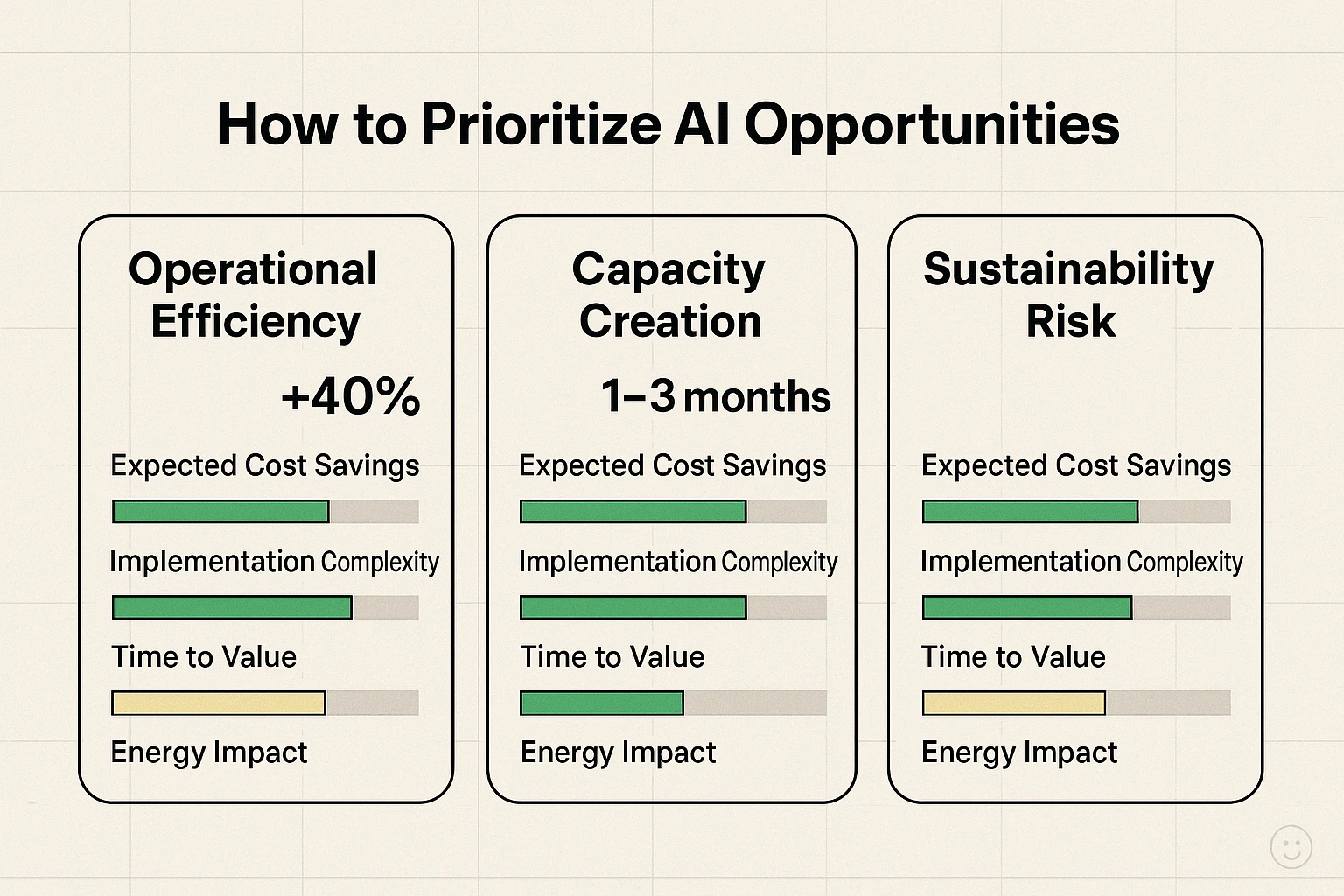
Quantify both the upside and the hidden energy costs—showing clear ROI, time-to-payback, and AI energy impact to support data-driven investment decisions.
This approach provides a transparent and accurate picture of your AI investment, proving that you're not just reducing one cost by inadvertently increasing another.
Building Trust & Overcoming Skepticism
Decision-makers, particularly in sectors like finance, have historically viewed AI with a healthy dose of skepticism. While organizations like Wolters Kluwer note a shift from skepticism to optimism, the need for data-driven evidence and practical guidance is paramount. We address common concerns head-on:
- "Is AI just a fad?" We counter with hard data: 10-15x ROI within three years for companies adopting Generative AI in operations (Perplexity).
- "Will it replace my team?" We emphasize AI's role in creating capacity and freeing up talent for higher-value, more rewarding work, aligning with the 170 million new jobs created by AI projection (Perplexity).
- "Can we trust the results?" We prioritize ethical AI, explainability, and rigorous testing to ensure accuracy and build confidence in AI-driven insights.
Actionable Frameworks & Implementation Roadmap
Implementing AI for cost reduction and capacity creation doesn't happen overnight. It requires a structured, strategic approach. We provide a clear roadmap:
1. Identify AI Opportunities
Start by analyzing your current operational bottlenecks and manual processes.
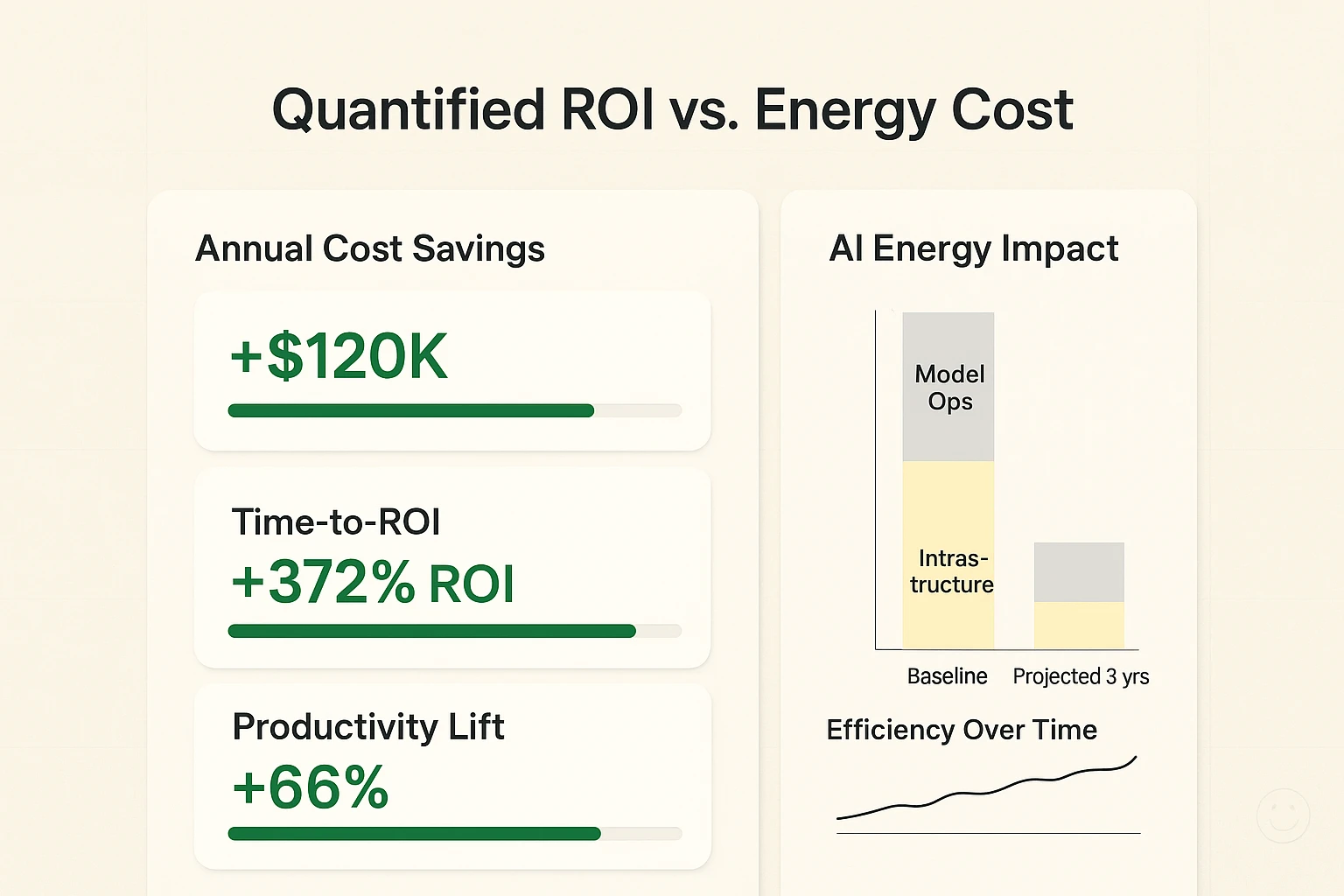
Compare AI opportunities quickly with side-by-side metrics—cost savings, complexity, time-to-value, and energy impact—so teams can prioritize high-return initiatives.
Prioritize based on potential cost savings, feasibility, and alignment with strategic goals. Focus on "low-hanging fruit" for quick wins to build immediate momentum and demonstrate value.
2. Pilot & Measure
Implement AI solutions in a controlled environment, rigorously measuring KPIs related to cost reduction and capacity creation. This phase allows for adjustments and fine-tuning before broader deployment.
3. Scale & Optimize
Once successful, scale your AI solutions across the organization. Continuously monitor performance, gather feedback, and optimize algorithms to maximize efficiency and ROI. Define clear metrics for talent redeployment and track the success of upskilling initiatives.
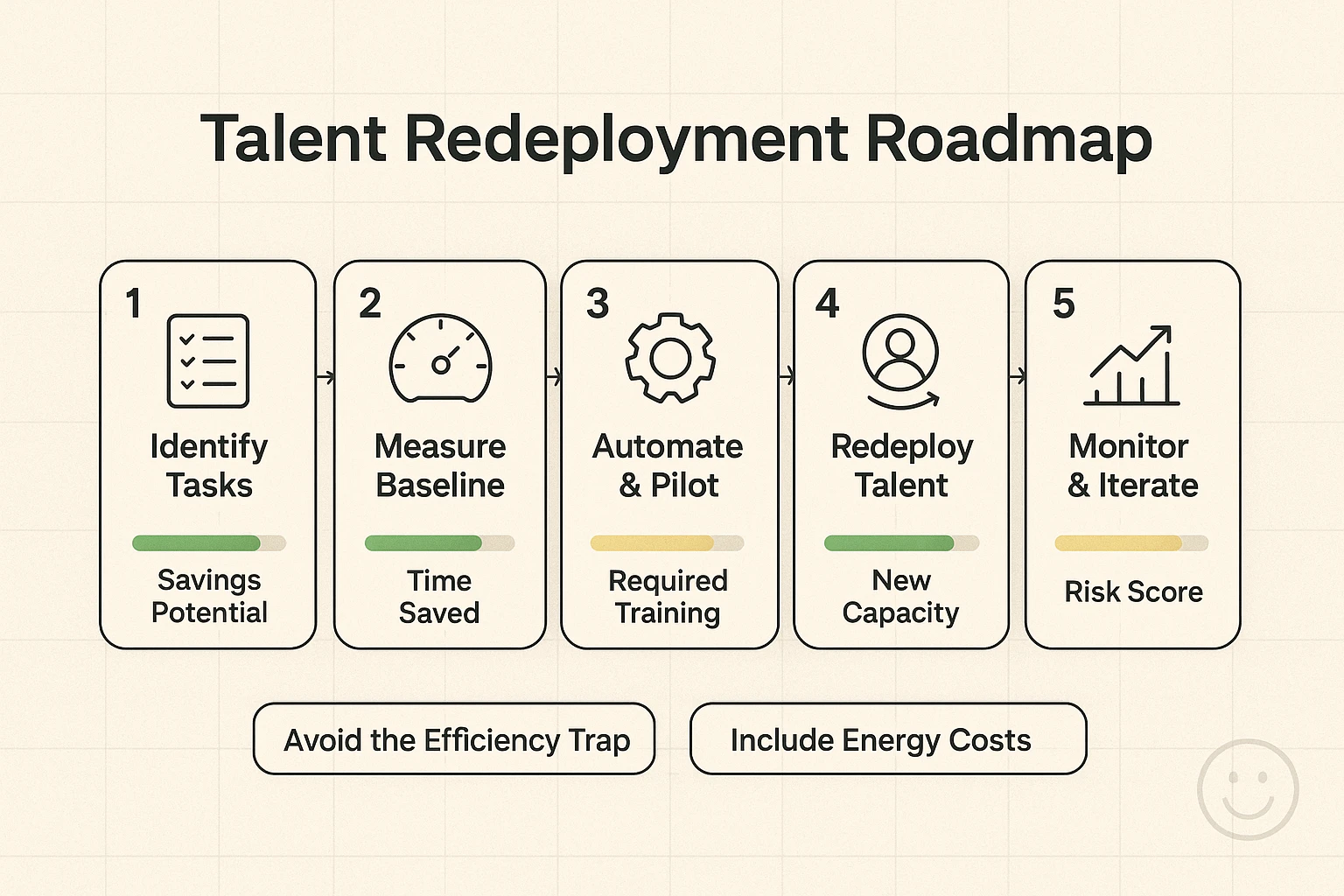
A practical step-by-step roadmap showing how to identify tasks for automation, redeploy talent, and monitor outcomes—helping teams avoid the efficiency trap.
This iterative approach, supported by continuous assessment of AI readiness and strategic planning, ensures sustainable and impactful AI transformation.
Frequently Asked Questions
Q: What is the average ROI for AI investments in operational efficiency?
A: While specific numbers vary by use case, AI implementations can deliver significant ROI. Some reports indicate early returns of 372% within three months for specific projects, expanding to 10-15x ROI within three years for companies adopting Generative AI broadly (Perplexity). Most businesses can expect to see a positive ROI within 6 to 12 months.
Q: How much can AI reduce operational costs?
A: AI can lead to substantial cost reductions. McKinsey suggests efficiency improvements exceeding 40% with AI and automation, and various sources point to 20-30% in overall operational cost reductions across industries (Perplexity). This is achieved by automating repetitive tasks, optimizing workflows, and enhancing decision-making.
Q: Does AI replace human jobs, or does it create new opportunities?
A: While AI automates repetitive tasks, the overwhelming consensus is that it augments human capabilities rather than simply replacing jobs. AI is expected to positively impact about 80% of jobs, creating about 170 million new jobs globally by 2030, with a net increase of 78 million positions (Vanguard, Perplexity). The focus is on freeing up human capital for higher-value, strategic, and creative work.
Q: What are the main challenges when implementing AI for cost reduction?
A: Key challenges include ensuring data quality and governance, integrating AI with existing legacy systems, managing change within the organization, and avoiding the "AI efficiency trap" (over-reliance on AI that can lead to skill degradation). At BenAI, our custom implementations and training address these head-on.
Q: How does BenAI address the energy cost of AI?
A: We integrate "Green AI" strategies into our solutions. This involves optimizing AI models for energy efficiency, advising on energy-efficient hardware, and prioritizing AI infrastructure powered by renewable energy. We also help clients factor these energy costs into their overall ROI calculations for a transparent view of the true operational cost.
Q: How do you measure the "capacity created" by AI?
A: We measure capacity created by tracking the reallocation of human time saved from automated tasks. This is quantified by monitoring the number of hours employees can now dedicate to strategic initiatives, innovation, skill development, or new revenue-generating activities. We also track the success of talent redeployment through metrics like employee satisfaction in new roles and achievement of strategic objectives.
Your AI-First Business Starts Here
The journey to becoming an AI-first business is complex, but the rewards—in terms of operational efficiency, cost reduction, and capacity creation—are undeniable. Generic AI tools offer a starting point, but bespoke, strategically implemented AI solutions are what truly drive transformative growth.
If you're ready to move beyond theoretical discussions and implement AI solutions that deliver measurable ROI, create valuable human capacity, and intelligently navigate the challenges of modern AI adoption, BenAI is your trusted partner. From AI Marketing Solutions to custom Enterprise Solutions, we provide the proven systems, implementations, and consulting to make your business AI-first.
Ready to build an AI-first business model that redefines your operations?
Join Our Growing AI Business Community
Get access to our AI Automations templates, 1:1 Tech support, 1:1 Solution Engineers, Step-by-step breakdowns and a community of forward-thinking business owners.
Latest Blogs
Explore our latest blog posts and insights.