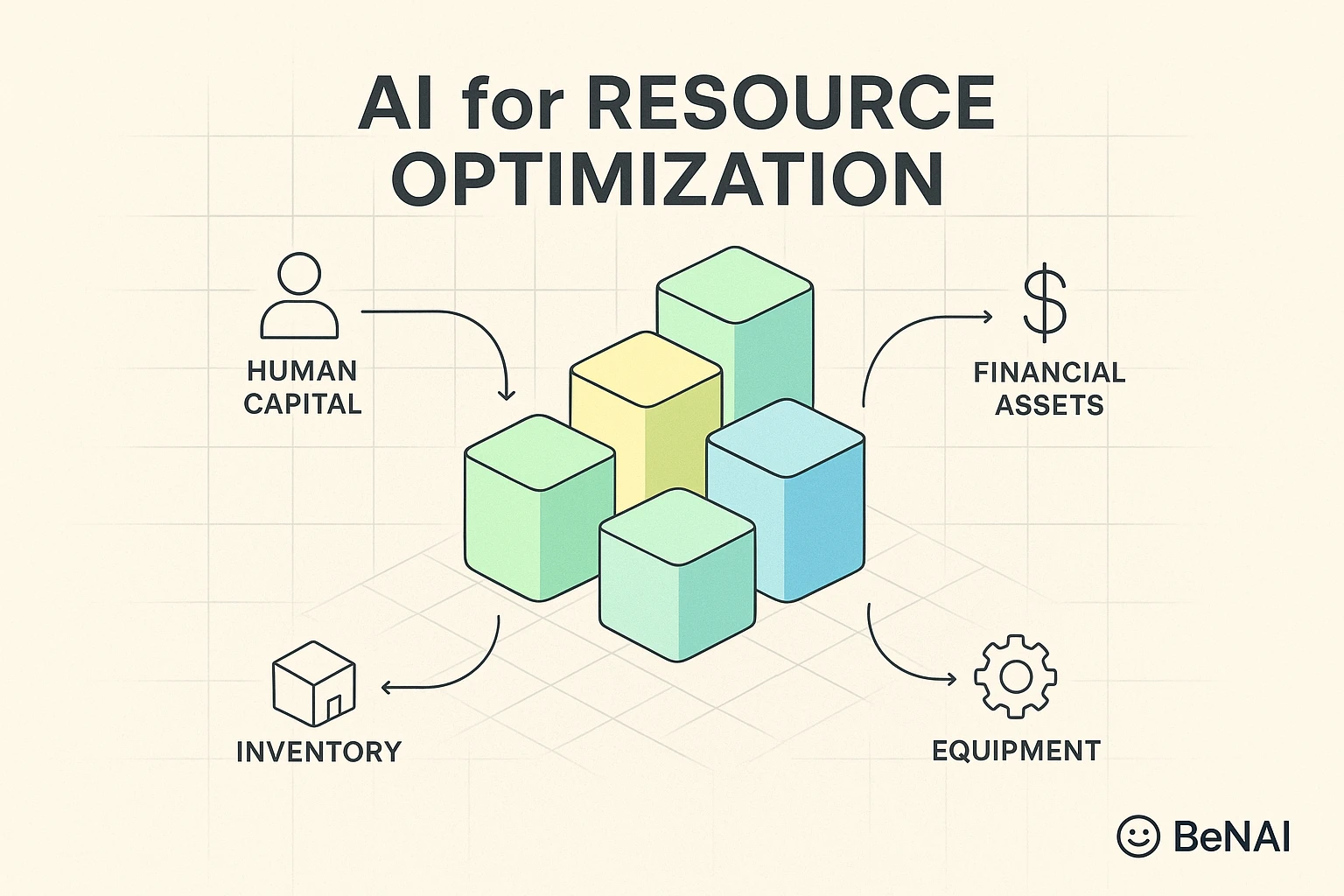
You're evaluating how AI can revolutionize your business, and the sheer volume of information can feel overwhelming. Every vendor promises efficiency, but how do you cut through the noise and identify genuine solutions that will optimize your core resources: your people, your money, your inventory, and your equipment? This guide is designed to provide clarity, offering a data-backed framework to assess AI's true potential for resource optimization and allocation within your organization.
We're moving beyond theoretical benefits to practical applications, focusing on the measurable impact AI can have on your bottom line. Seventy-eight percent of organizations are already actively using AI, a significant leap from 55% just last year, and 65% are deploying generative AI, yielding an impressive $3.70 return for every dollar invested. This isn't just a trend; it's a strategic imperative. Your AI-first business starts here.
Why AI Now? Unpacking the Urgent Need for Resource Efficiency
In today's competitive landscape, doing more with less isn't just a goal; it's a survival mechanism. Manual processes, outdated forecasting methods, and reactive resource deployment lead to significant waste, from lost revenue due to stockouts to overstaffing or underutilization of critical assets. The solution lies in proactive, intelligent optimization—and that's where AI truly shines.
The global AI software market, including pivotal optimization tools, is on an explosive trajectory, projected to surge from $174.1 billion in 2025 to a staggering $467 billion by 2030. This growth isn't speculative; it's driven by tangible productivity gains. Generative AI, for instance, has been shown to improve employee productivity by 66% on average, with workers saving 5.4% of work hours, translating to a 1.1% increase in overall productivity. These aren't minor adjustments; they are transformative shifts that redefine operational benchmarks.
Organizations often grapple with resource challenges that AI directly addresses:
- Human Capital: Overtime costs, understaffing during peak demand, skill gaps, and burnout.
- Financial Assets: Suboptimal budget allocation, missed investment opportunities, and unnecessary expenditures.
- Inventory: Excessive carrying costs, stockouts, obsolete stock, and inefficient warehouse operations.
- Equipment: Predictive maintenance failures, underutilization, and unplanned downtime.
AI provides the predictive power and dynamic adaptability needed to move from reactive management to proactive optimization, ensuring every resource contributes maximally to your business objectives.
Beyond the Hype: How AI Actually Optimizes Human Capital, Financial Assets, Inventory & Equipment
AI isn't a magic bullet; it's a sophisticated toolkit that, when applied strategically, yields unparalleled efficiency. Let's delve into how AI concretely optimizes core business resources.
AI-Driven Demand Forecasting for Inventory Management
Manual or traditional statistical forecasting methods often struggle with volatility, seasonality, and external unpredictable factors. AI, particularly machine learning algorithms, transforms inventory management by providing highly accurate demand forecasts. This isn't just about prediction; it's about intelligent anticipation.
AI models can ingest and analyze vast datasets—historical sales, current trends, promotional activities, weather patterns, social media sentiment, economic indicators, and even competitor actions—to identify complex patterns invisible to human analysts. This leads to:
- Higher Accuracy: Reducing forecast errors by leveraging nuanced data relationships.
- Minimized Stockouts: Ensuring products are available when customers want them, protecting revenue and customer loyalty.
- Reduced Overstocking: Lowering carrying costs, preventing obsolescence, and freeing up warehouse space and capital.
- Dynamic Safety Stock Levels: Instead of static buffers, AI adjusts safety stock based on real-time variability and predicted risk.
Consider the manufacturing sector, projected to gain a staggering $3.78 trillion from AI by 2035, largely through optimized resource allocation, including inventory. A C3 AI case study even shows AI solutions facilitating a 96% reduction in time for production schedule generation. For any business managing physical goods, AI-driven demand forecasting is no longer optional; it's a competitive necessity.
Optimizing Workforce Scheduling with AI
Your workforce is your most valuable asset, but inefficient scheduling can lead to disproportionate costs and reduced morale. AI-driven workforce optimization moves beyond simple rotas, creating schedules that balance demand, employee skills, availability, compliance, and cost-efficiency.
AI models analyze:
- Demand Fluctuations: Daily, weekly, or seasonal peaks and troughs in customer traffic or project load.
- Employee Metrics: Skills, certifications, historical performance, shift preferences, and even predicted absenteeism.
- Regulatory Compliance: Ensuring adherence to labor laws, break times, and maximum working hours.
- Cost Factors: Minimizing overtime while maximizing productive hours.
The result is a dynamic scheduling system that reduces administrative burden, minimizes labor costs, improves employee satisfaction by offering more predictable or preferred shifts, and ensures optimal staffing levels for peak performance. This approach directly addresses common pain points for operations managers and HR, making scheduling a strategic advantage rather than a logistical headache.
AI for Dynamic Budget Allocation
Traditional budget allocation is often static, historical, and slow to react to market shifts or performance changes. AI for dynamic budget allocation, especially in areas like marketing but applicable to broader financial planning, ensures capital is deployed where it will generate the highest return.
AI models continuously monitor:
- Performance Metrics: Real-time sales data, marketing campaign ROI, project completion rates, and department-specific KPIs.
- Market Conditions: Competitor activity, economic indicators, and consumer behavior shifts.
- Resource Constraints: Available capital, project priorities, and strategic objectives.
This allows for:
- Real-time Reallocation: Shifting funds from underperforming channels or projects to those showing promising returns.
- Optimized Spending: Ensuring every dollar works harder, maximizing ROI across all budget lines.
- Risk Mitigation: Identifying potential financial shortfalls or overspends before they become critical.
- Scientific Experimentation: A/B testing budget splits to discover optimal allocations.
While specific tools like Amanda AI highlight their scientific approach to marketing budget allocation, BenAI specializes in custom solutions that extend this dynamic approach across your entire organization's financial planning, adapting to your unique financial structures and goals.
AI for Equipment & Asset Management
For businesses reliant on physical assets, unplanned downtime or inefficient utilization can be hugely costly. AI brings predictive capabilities to equipment management, moving from reactive maintenance to proactive, condition-based interventions.
AI systems analyze:
- Sensor Data: Real-time readings from machinery (temperature, vibration, pressure, noise).
- Historical Performance: Past maintenance records, failure points, and operational hours.
- Environmental Factors: Temperature, humidity, and other conditions that impact equipment longevity.
This enables:
- Predictive Maintenance: Identifying potential equipment failures before they occur, scheduling maintenance during off-peak hours, and preventing costly shutdowns.
- Optimized Utilization: Ensuring equipment is used efficiently, avoiding under or over-utilization, and prolonging asset life.
- Automated Anomaly Detection: Flagging unusual equipment behavior that indicates a problem in its earliest stages.
By minimizing unexpected breakdowns and optimizing the lifespan of your critical machinery, AI directly contributes to operational continuity and capital expenditure savings.
Navigating the AI Landscape: Overcoming Implementation Challenges & Skepticism
The promise of AI is immense, but the path to successful implementation isn't always smooth. A staggering 85% of AI projects reportedly fail to meet objectives. This isn't due to AI's inherent flaws but often stems from poor data quality, misaligned strategic goals, and insufficient infrastructure. As a prospective buyer, understanding these pitfalls is crucial for mitigating risk and ensuring your investment pays off.
Common challenges include:
- Data Quality and Integration: AI models are only as good as the data they're fed. Inconsistent, incomplete, or siloed data can cripple an AI initiative. Many organizations struggle with integrating AI solutions with legacy systems, creating data pipelines, and ensuring a single source of truth.
- Algorithmic Complexity and Explainability (XAI): The "black box" problem—where AI decisions are hard to interpret—can lead to distrust and hinder adoption, especially in regulated industries or with critical resource allocation. Addressing this requires focusing on explainable AI (XAI) models.
- Talent Gap: A lack of internal AI expertise, from data scientists to implementation specialists, can significantly impede progress. Upskilling current staff or partnering with expert providers is essential.
- Scaling from Pilot to Production: Many AI projects succeed in a small pilot but fail to scale enterprise-wide due to unforeseen complexities, integration issues, or lack of organizational buy-in.
- Uncertainty Management: Real-world environments are inherently uncertain. AI solutions must be robust enough to handle unexpected variables and be adaptive.
BenAI excels at proactively confronting these challenges. Our approach isn't just about deploying technology; it's about building a robust AI strategy tailored to your business, ensuring data readiness, seamless integration, and long-term support. We focus on transparency and explainability, empowering your teams to understand and leverage AI decisions effectively. This is why our client testimonials consistently highlight our world-class AI implementations, training, and consulting.
Choosing Your AI Solution: Evaluation Criteria for Mid-Funnel Buyers
As you evaluate potential AI partners, it's vital to have clear criteria. This isn't just about features; it's about strategic fit, long-term partnership, and verifiable return on investment.
Consider these critical factors:
- Customization vs. Out-of-the-Box: Generic AI tools might offer quick starts, but for deep resource optimization, tailored solutions often yield superior results. Does the vendor offer custom-built, cutting-edge AI automation solutions that fit your unique operational context, or a one-size-fits-all product?
- Scalability and Integration Capabilities: Any AI solution you adopt must scale with your business and integrate seamlessly with your existing technology stack. Assess their track record with complex integrations and their ability to handle growing data volumes and user demands.
- Vendor Expertise and Support: AI implementation is complex. Look for partners with deep domain expertise, proven methodologies, and robust support structures. Do they offer comprehensive training for your staff to truly adopt AI the "right way"? Do they help you build an AI-First Business through structured courses and 1:1 help?
- Verifiable ROI and Metrics: Demand clear metrics and case studies that demonstrate tangible ROI. A partner should be able to articulate how their solution will minimize waste, maximize output, and free up human capital from repetitive tasks. Ask for specific examples, like how they help reduce manual SEO workflows with AI or optimize LinkedIn campaigns. You can see how we've helped others reduce their manual workflows here and with AI-led LinkedIn campaign optimization.
- Focus on Ethical AI and Governance: For enterprise-level deployments, especially involving human capital or financial decisions, ethical considerations and data governance frameworks are paramount. Ensure your partner adheres to best practices for responsible AI.
- Continuous Improvement and Iteration: AI models benefit from continuous learning. A strong partner will offer solutions that can adapt, learn from new data, and evolve with your business needs and market changes. This includes staying abreast of emerging trends like agentic AI and compact models, which promise even greater efficiency and adaptability.
BenAI's commitment to custom implementations, comprehensive training, and strategic consulting directly addresses these evaluation criteria. We offer the world-class AI implementations, training, and consulting that allow you to lead the way in AI adoption, not just follow.
Frequently Asked Questions (FAQ)
Q1: How quickly can we expect to see ROI from AI resource optimization?
The timeline for ROI varies based on the complexity of your systems and the scope of implementation. However, many of our clients start seeing tangible benefits within 3-6 months. For instance, generative AI, which improves employee productivity by 66%, shows an average return of $3.70 for every $1 invested. Areas like AI-driven demand forecasting can quickly impact inventory carrying costs and stockout rates. We focus on practical AI adoption through custom implementations and systems that drive immediate growth and efficiency.
Q2: What if our existing data quality isn't perfect? Can AI still help?
Data quality is a common concern. While clean, robust data significantly enhances AI performance, it's rare for any company to have perfect data. Our process begins with a thorough data audit and strategy phase. We help you identify critical data sources, implement cleansing processes, and build data pipelines. AI models can often infer and clean data to some extent, but direct intervention for data quality improvement is crucial. Addressing potential weaknesses in data is our specialty.
Q3: Isn't implementing AI incredibly expensive and complex for mid-sized businesses?
The cost and complexity of AI implementation have significantly decreased, especially with the rise of AI agent solutions. Enterprise solutions can start around $10,000+ monthly, but simpler, targeted implementations can be more accessible. BenAI structures solutions to provide scalable options. Our goal is to create capacity without increasing headcount, automating tasks, and improving efficiency. Many of our blog posts on building no-code AI agents demonstrate how practical applications don't always require massive budgets.
Q4: How does AI handle the "human element" in workforce scheduling or customer interactions?
AI for workforce scheduling isn't about replacing humans but optimizing their deployment. It aims to ensure the right person with the right skills is in the right place at the right time, minimizing burnout and maximizing productivity. For repetitive tasks that generate capacity, AI "agents" or automation can take over, freeing human teams for higher-value, creative, and empathic work. This symbiotic relationship augments human capabilities rather than diminishing them.
Q5: What kind of ongoing support and training does BenAI provide after implementation?
Our commitment extends far beyond initial implementation. We offer continuous monitoring, optimization, and training to ensure your AI systems evolve with your business. This includes hands-on staff training, ongoing consulting, and access to the Ben AI Accelerator program for those who want to deeply embed AI-first principles. We equip your teams to effectively utilize and manage the AI tools, fostering internal AI expertise. We also keep our community informed with new AI updates and templates.
Q6: Can AI help with specific marketing or recruiting resource challenges?
Absolutely. We offer dedicated AI Marketing Solutions designed to automate content creation (think of your content refresh workflows with AI), SEO, and outreach, scaling your agency 10x faster. For recruiting, our AI Recruiting Solutions include AI Hiring Manager and Candidate Monitoring Systems, streamlining the entire hiring process—much like AI could enhance eCommerce SEO or AI site speed analysis tools. Our custom AI implementations are tailored to the precise needs of these and other domains.
Your AI-First Business Starts Here
The journey to becoming an AI-first business is a strategic evolution, not a one-time deployment. It requires a partner who understands your challenges, provides proven systems, and supports your team through every step of the adoption process. BenAI offers the expertise, custom solutions, and ongoing guidance to help you navigate this transformation, minimize waste, and maximize output across human capital, financial assets, inventory, and equipment.
Don't let the complexity of AI deter you from seizing its immense potential. We invite you to explore our services further or connect with one of our AI strategists to discuss how custom AI implementations, training, and consulting can redefine efficiency and growth for your organization. Your path to optimized resources and a competitive advantage in the AI-driven economy begins now.
Join Our Growing AI Business Community
Get access to our AI Automations templates, 1:1 Tech support, 1:1 Solution Engineers, Step-by-step breakdowns and a community of forward-thinking business owners.
Latest Blogs
Explore our latest blog posts and insights.