Ecommerce SEO is not merely a technical exercise; it is an imperative for online retail platforms to achieve sustained growth and remain competitive in an increasingly complex digital landscape. With organic Google search driving an impressive 43% of all traffic to e-commerce sites and accounting for 23.6% of e-commerce sales, mastering search engine optimization (SEO) is the most impactful acquisition channel for online businesses. Yet, many businesses face significant challenges, including a lack of in-house SEO expertise, limited budgets, and technical deficiencies that collectively hinder visibility and conversion rates. Addressing these issues with a strategic, data-driven approach positions businesses to capture a larger market share and secure long-term profitability.
The Imperative of E-commerce SEO in an AI-Driven World
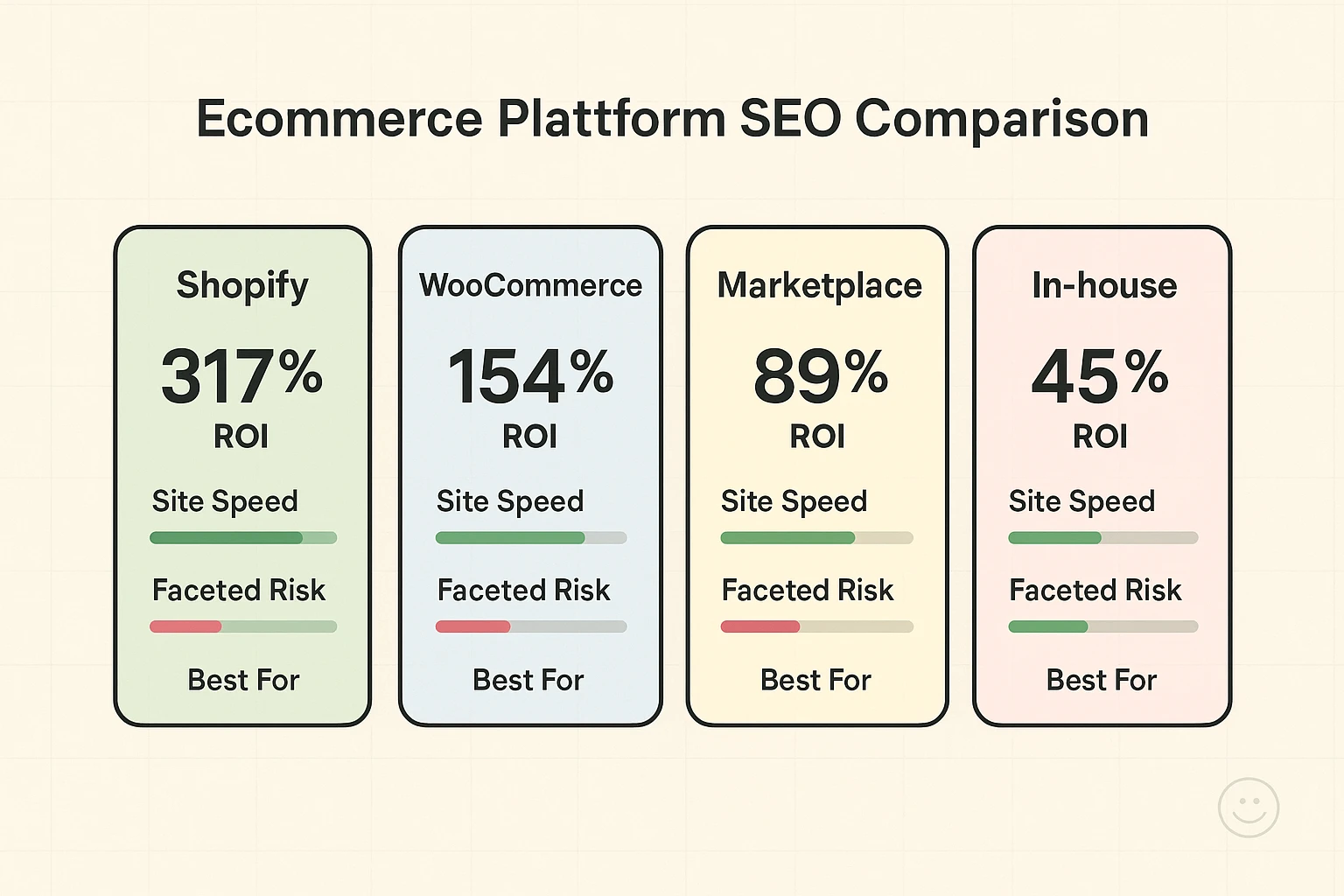
The digital storefront's success hinges on its discoverability. In an era where AI-powered search engines are evolving rapidly, the foundational principles of SEO, when applied to e-commerce, have become more critical than ever. According to SeoProfy and marketingltb.com, e-commerce SEO delivers a significant return on investment (ROI), averaging 317% for businesses, achieving a breakeven point in approximately 16 months. This demonstrates the profound impact of investing in a robust SEO strategy. However, despite this proven effectiveness, 57% of enterprises report limited in-house SEO skills, and 43% cite limited SEO budgets as their most challenging obstacles, according to a Perplexity AI search. These statistics underscore a widespread gap in strategic implementation and resource allocation.
The evolving search landscape necessitates a proactive approach to e-commerce SEO. AI Overviews and zero-click search results, driven by advancements in natural language processing (NLP) and machine learning, mean that search engines can answer queries directly within the search results page. This paradigm shift requires e-commerce sites to optimize not only for keyword rankings but also for factual accuracy, entity clarity, and structured data to ensure their products and information are discoverable and cited by AI. The optimization for alternative search platforms, including TikTok and Amazon, further expands the scope of e-commerce SEO beyond traditional Google queries.
What is the primary benefit of investing in e-commerce SEO?
Investing in e-commerce SEO primarily yields a substantial return on investment (ROI), averaging 317% for e-commerce businesses. According to SeoProfy, this high ROI highlights its effectiveness as a cornerstone of digital marketing strategy, offering a breakeven point in approximately 16 months for many businesses. Consequently, it represents the most impactful channel for generating organic traffic and driving sales for online retailers.
Why is e-commerce SEO more complex than traditional SEO?
E-commerce SEO is more complex than traditional SEO largely due to the dynamic nature of product catalogs, faceted navigation, and the sheer volume of pages. Managing technical elements such as inventory changes, seasonal promotions, duplicate content issues arising from product variations, and ensuring optimal crawlability for thousands of product and category pages creates unique challenges. Additionally, the need to integrate product schema, manage user-generated content like reviews, and optimize for transactional queries further distinguishes it from content-focused SEO.
Decoding User Intent: Beyond Generic Keywords for E-commerce Success
Effective e-commerce SEO transcends basic keyword research; it necessitates a deep understanding of user intent. Searchers for e-commerce products exhibit primary, secondary, and often hidden intents, which must be addressed through targeted content. Primary intents focus on transactional conversions, meaning users are ready to buy. Secondary intents encompass informational queries related to product features, comparisons, or uses. Hidden intents involve building trust, seeking social proof, and ensuring the credibility of the retailer.
To effectively map these intents, e-commerce businesses classify keywords based on buyer intent:
- Commercial investigation keywords (e.g., "best durable hiking boots," "compare smartwatches features").
- Transactional keywords (e.g., "buy ergonomic office chair," "discount codes for running shoes").
- Informational keywords (e.g., "how to choose a gaming laptop," "benefits of vegan skincare").
By understanding these distinctions, e-commerce content can be tailored to direct users towards purchasing decisions. For example, a product page targets transactional keywords, while a blog post covering "how to choose X product" addresses informational search intent, guiding users through the buying journey. Tools beyond basic keyword planners, such as sophisticated competitor analysis platforms, identify long-tail keywords and niche opportunities that competitors often overlook. This approach uncovers the precise language customers use at each stage of their purchase journey. Identifying content gaps and understanding search patterns, particularly for AI-driven queries, is crucial for developing a comprehensive keyword strategy.
On-Page Optimization: Product Detail Pages, Categories, and Beyond
Optimizing individual product detail pages and category pages is paramount for e-commerce visibility. These pages are the digital shelves where products are displayed, and their optimization directly affects how well they rank in search results.
Product titles, descriptions, and images are not merely product attributes; they are critical SEO elements. For example, product titles should include the brand, product name, and key attributes, mirroring customer search queries. Product descriptions must go beyond manufacturer-supplied content, offering unique, detailed insights that convey value and answer potential customer questions. Duplicating manufacturer descriptions can lead to duplicate content penalties from search engines, negatively impacting rankings. High-quality product images, optimized in modern formats such as WebP or AVIF, with descriptive alt text, improve page load times and accessibility. This also provides additional opportunities for keyword inclusion.
User-generated content (UGC), such as customer reviews, questions, and answers (Q&A), also contribute significantly to on-page optimization. Reviews provide fresh, relevant content and act as social proof, influencing both search engine rankings and conversion rates. According to Perplexity AI search results, retailers optimizing meta titles and product descriptions witnessed a 32% increase in organic sales. This highlights the direct correlation between meticulous on-page optimization and sales performance.
Mastering E-commerce Technical SEO: Speed, Crawlability, and Structure
Technical SEO forms the backbone of any successful e-commerce strategy, ensuring that search engines can efficiently access, crawl, and index a website's content. Critical technical elements include site speed, mobile-first indexing, HTTPS, and XML sitemaps.
- Site Speed: Page load speed is a crucial ranking factor and directly impacts user experience and conversion rates. Websites loading within 1 second boast three times higher conversion rates compared to slower ones, according to a Perplexity AI search. Optimizing images, leveraging a Content Delivery Network (CDN), minifying CSS and JavaScript, and selecting high-performance hosting are essential for enhancing site speed. AI tools for image optimization can significantly improve loading times without compromising visual quality.
- Mobile-First Indexing: Google primarily uses the mobile version of a website for indexing and ranking. Therefore, a responsive design that provides an optimal experience across all devices is non-negotiable.
- HTTPS: Ensuring all pages are served over HTTPS (secure sockets layer) is vital for security and is a recognized ranking signal.
- XML Sitemaps: An accurate and up-to-date XML sitemap guides search engines through the important pages of an e-commerce site, particularly large ones with frequently changing inventory.
A significant technical challenge for e-commerce sites is faceted navigation, which refers to filters (e.g., size, color, brand) that allow users to refine product searches. Without proper handling, faceted navigation can create an enormous number of duplicate content issues and waste crawl budget. Strategies to manage this include:
- Canonicalization: Using rel="canonical" tags to point search engines to the preferred version of a page.
- Robots.txt directives: Preventing search engines from crawling specific URLs or sections of the site that offer little SEO value.
- Noindex tags: Instructing search engines not to index certain pages that are not intended for public search results.
Optimizing for crawlability and indexation is fundamental for an AI-first approach to e-commerce SEO. This ensures that search engine bots efficiently discover and understand the full scope of an online store's offerings, preventing common issues like slow page loading—which affects 35% of e-commerce sites—and broken backlinks—affecting over 66%—as revealed by Perplexity AI, citing SearchAtlas.com.

Navigating the Labyrinth: Site Architecture & Internal Linking for E-commerce
A well-structured e-commerce site architecture creates a clear path for both users and search engine crawlers, distributing authority effectively and enhancing discoverability. A logical site hierarchy, typically a flat structure with few clicks from the homepage to product pages, improves user experience and search engine understanding of content relationships.
Key elements of an effective site architecture include:
- Logical Categories and Subcategories: Grouping products intuitively, such as "Electronics > Laptops > Gaming Laptops," clarifies navigation.
- Breadcrumbs: These navigation elements (e.g., Home > Category > Subcategory > Product) show users their current location within the site hierarchy, improving usability and providing internal links.
- Strategic Internal Linking: Internally linking relevant pages, from category pages to product pages, product to product, and blog posts to product pages, passes link equity throughout the site. This strengthens the authority of individual pages and allows search engines to discover new content more easily. Automated internal linking strategies can further enhance this process, ensuring consistent and effective link equity distribution.
This intentional structure ensures that search engines prioritize and rank important commercial pages more effectively. Shopify.com emphasizes that thoughtful site architecture, combined with internal linking strategies, directly impacts how efficiently search engines crawl and index product listings.
Beyond the Page: Off-Page SEO & Link Building for E-commerce Authority
Off-page SEO, particularly link building, establishes an e-commerce site's authority and trustworthiness in its niche, directly influencing search rankings. High-quality backlinks from reputable sources signal to search engines that a site is a valuable resource.
Effective link-building tactics tailored for e-commerce include:
- Product Feedback Exchange: Collaborating with influential reviewers or bloggers in exchange for product reviews that include backlinks.
- Leveraging Unlinked Brand Mentions: Monitoring mentions of the brand or products across the web and reaching out to request a link where appropriate.
- H.A.R.O. (Help A Reporter Out): Responding to journalist queries for expert opinions or sources, which can result in coverage and backlinks from high-authority news sites.
- Creative Content for Natural Links: Developing unique content such as comprehensive gift guides, in-depth product comparisons, or original research that naturally attracts backlinks from other sites. Neil Patel (neilpatel.com) emphasizes that these techniques establish not only authority but also directly influence buyer intent.
Content Marketing Evolution: Engaging Shoppers Across the Funnel
Content marketing for e-commerce extends beyond simple product descriptions, encompassing strategies to engage shoppers at every stage of the buying funnel. This includes leveraging user-generated content (UGC), employing video marketing, and executing SEO-driven strategies for high-impact events like flash sales and seasonal campaigns.
- User-Generated Content (UGC): Reviews, customer photos, and Q&A sections are invaluable. They provide fresh, authentic content that addresses customer concerns and improves product discovery. Encouraging customers to submit their content not only enhances SEO by providing unique keywords but also builds community and trust. According to Perplexity, while reviews are recognized as crucial trust signals, a deeper exploration of actively soliciting, managing, and leveraging all forms of UGC to create fresh, SEO-rich content remains an underserved area for many e-commerce sites.
- Video Marketing: Product demonstration videos, unboxing reviews, and "how-to" guides on platforms like YouTube can significantly boost engagement and drive traffic. Video content enhances product understanding and can rank independently in search results, capturing diverse search queries.
- Strategies for Flash Sales and Seasonal Campaigns: These high-impact events require specific SEO considerations. Creating dedicated landing pages with evergreen content, optimizing for short-term, high-volume keywords, managing temporary URLs, and implementing precise canonicalization for seasonal product variants prevent lost link equity and maintain search visibility. Most competitors offer limited guidance in this crucial area, presenting an opportunity for tailored, SEO-driven strategies.
Platform-Specific SEO Deep Dives
While general SEO principles apply across the board, optimizing for specific e-commerce platforms like Shopify, WooCommerce, and marketplaces like Amazon requires tailored strategies. These platforms have unique architectures and features that necessitate specific optimization tactics.
Shopify SEO
Shopify's user-friendly nature makes it popular, but effective SEO still requires careful attention.
- Meta data and product page optimization: Shopify allows easy editing of meta titles, descriptions, and URL handles for products and collections. Ensuring these are unique and keyword-rich is crucial.
- Image optimization: Shopify automatically resizes images, but proper naming conventions and alt text are still vital for discoverability.
- App integration: Utilizing SEO apps from the Shopify App Store can enhance functionalities like schema markup and broken link checking.
- Structure: Optimizing collection pages for relevant keywords and ensuring a logical hierarchy is key to Shopify SEO success.
WooCommerce SEO
WooCommerce, being a WordPress plugin, benefits from WordPress’s robust SEO capabilities but introduces specific considerations.
- Plugins: Leveraging SEO plugins such as Yoast SEO or Rank Math is essential for fine-tuning titles, descriptions, and sitemaps.
- Product Tags and Categories: Proper utilization of product tags and categories helps organize inventory and create additional keyword-rich pages. Yoast (yoast.com) stresses careful handling of tags to avoid creating thin content pages.
- Site Speed: Often a concern with WordPress, optimizing hosting, image sizes, and caching plugins are vital for WooCommerce stores.
Amazon SEO
Optimizing for marketplaces like Amazon requires understanding its internal search algorithm, which differs significantly from Google.
- Keyword research: Focus on high-volume, relevant keywords within Amazon's search ecosystem using tools specifically designed for Amazon.
- Product titles and descriptions: These must be highly descriptive, keyword-rich, and clearly articulate product benefits and specifications. Amazon’s A9 algorithm prioritizes these elements heavily.
- Product images and videos: High-quality visuals are critical for conversion and implicitly influence ranking.
- Customer reviews: A high volume of positive reviews is a significant ranking factor on Amazon.
- Enhanced Brand Content (EBC)/A+ Content: For registered brands, EBC allows for richer product descriptions with engaging visuals, which can improve conversion rates and implicitly boost visibility.
International E-commerce SEO
Expanding globally with multiple stores or language versions of a site presents SEO complexities.
- Hreflang tags: These HTML attributes tell search engines about the language and geographical targeting of a specific page, helping to avoid duplicate content issues across different regions.
- Geo-targeting: Using Google Search Console to specify target countries for different versions of the site.
- Localized Content Strategy: Translating content is not enough; comprehensive localization involves adapting product descriptions, currencies, and payment methods to suit local nuances. BigCommerce.com strongly advocates for country-specific domain strategies to cater to the unique linguistic and cultural preferences of international audiences.
The Future is Now: Optimizing for AI-Powered Search & Zero-Click SERPs
The emergence of AI-powered search, epitomized by Google's Search Generative Experience (SGE) and AI Overviews, signals a profound shift in how users interact with search results and how e-commerce sites must optimize. This evolution moves beyond traditional keyword ranking to focus on factual accuracy, entity resolution, and providing direct, concise answers.
According to TechRadar and Ninepeaks.io, zero-click searches are accelerating, driven by Google's AI summaries, necessitating content optimized for AI discovery with structured data and factual accuracy. This means that e-commerce sites need to structure their content so that AI can easily extract and synthesize information about products, prices, and availability, often directly answering user queries on the search results page without requiring a click to the website.
Strategies for optimizing for this evolving landscape include:
- Answer Engine Optimization (AEO): Crafting content that directly answers common questions related to products and categories, making it readily digestible for AI summarization.
- Structured Data (Schema Markup): Implementing product schema, review schema, and FAQ schema provides explicit information to search engines about the content on a page, facilitating AI understanding and rich results in SERPs. AI tools can automate schema markup, ensuring correct implementation and compliance with best practices.
- Entity Clarity: Ensuring product names, brands, and attributes are consistently and clearly defined across the site helps AI systems correctly identify and contextualize entities.
- Adapting to Alternative Search Platforms: Beyond Google, e-commerce optimization must consider platforms like TikTok, YouTube, and Amazon, where product discovery increasingly occurs. These platforms demand unique content formats, such as short-form video for TikTok or detailed product comparisons for YouTube.

Comprehensive Inventory Management's Impact on SEO
Inventory management, often perceived as purely operational, exerts a significant impact on SEO, affecting crawlability, link equity, and user experience. Failing to properly manage product life cycles can lead to various SEO issues, including broken pages, wasted crawl budget, and frustrated customers.
Common scenarios and their SEO implications include:
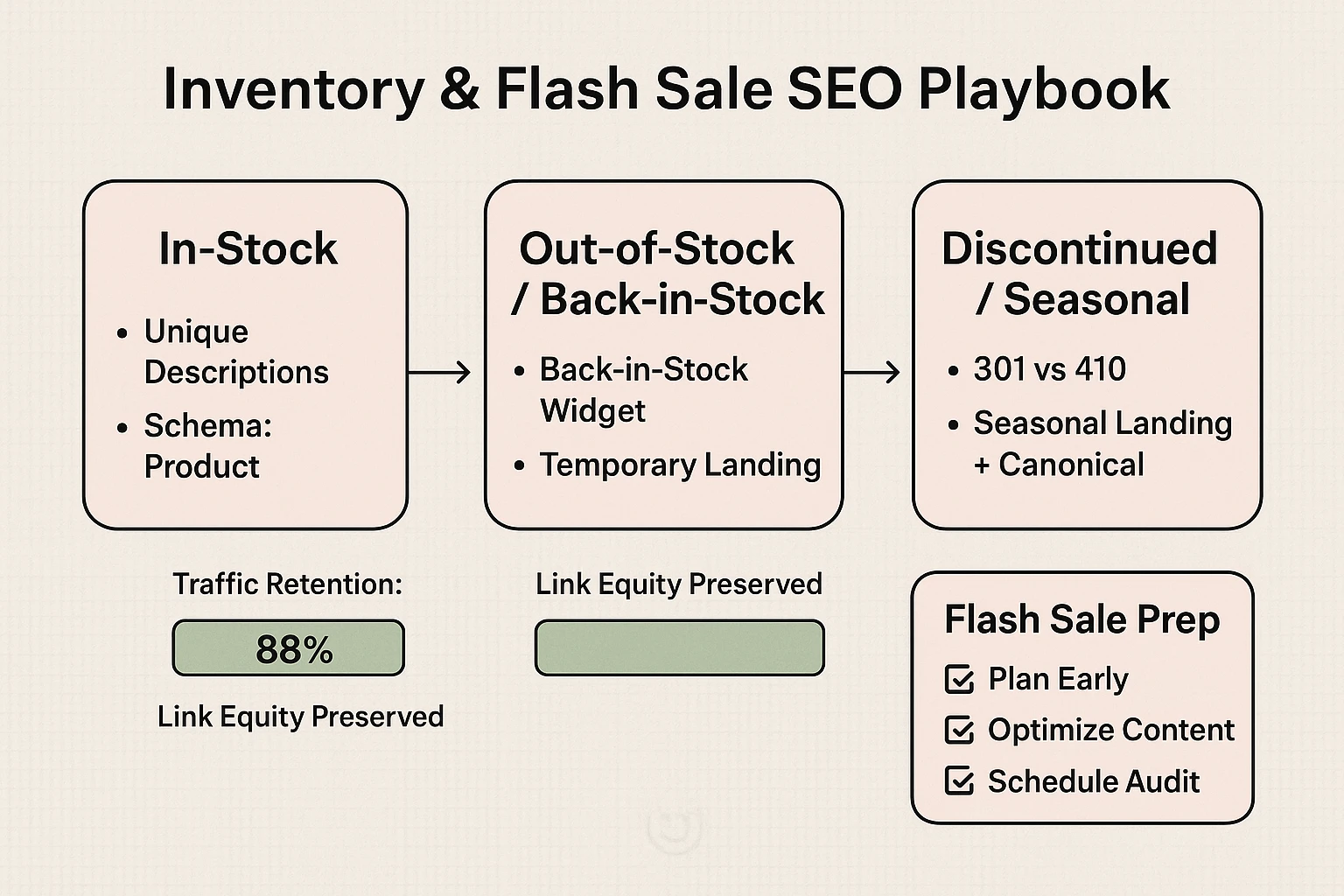
- Out-of-Stock Products: Listing out-of-stock items can still benefit SEO if managed correctly. Instead of removing the page, updating the product page with an estimated restock date, offering alternatives, or allowing customers to sign up for back-in-stock notifications maintains the page's SEO value and captures potential sales.
- Discontinued Products: For permanently discontinued items, strategies include 301 redirects to a relevant category page or alternative product, retaining the page but marking it as discontinued with a clear call to action for replacement products, or, as a last resort, allowing it to 404 (not found) if no suitable alternative exists. The decision should prioritize preserving any accumulated link equity.
- Seasonal Items: For products that are only available seasonally, such as holiday gifts or summer apparel, it is better to maintain dedicated seasonal pages rather than deleting and recreating them. Utilizing internal linking to direct traffic to related products during off-seasons and updating content seasonally ensures consistent SEO performance.
- Temporary Product Pages (Flash Sales): For flash sales or limited-time promotions, creating temporary product pages requires careful SEO planning. Using canonical tags to point to an evergreen category page, clearly setting expiry dates for the promotion, and ensuring that temporary URLs do not dilute the main site's authority are critical.
- Back-in-Stock Notifications: Integrating these features not only improves conversion but also provides invaluable data on demand for popular products, guiding future inventory decisions and content strategies.
Optimizing operations around inventory ensures that fluctuations do not inadvertently harm SEO. This systematic approach, as highlighted by Perplexity, allows e-commerce platforms to maintain their search visibility and preserve link equity during dynamic inventory changes.
Frequently Asked Questions about Ecommerce SEO
What is e-commerce SEO?
E-commerce SEO is the practice of optimizing your online store for search engines like Google, with the goal of increasing organic traffic from search results. This encompasses technical, on-page, and off-page optimizations tailored specifically for product pages, category pages, and the unique challenges of an online retail environment. It enhances visibility, drives qualified buyers to your site, and ultimately boosts sales and conversions.
How important is site speed for e-commerce SEO?
Site speed is critically important for e-commerce SEO and user experience. Websites that load within 1 second have three times higher conversion rates compared to slower sites, according to a Perplexity AI search. Slow load times can increase bounce rates, negatively impact search rankings, and directly reduce sales. Optimizing images, leveraging CDNs, and minifying code are essential steps for improvement.
Can AI help with e-commerce SEO?
Yes, AI is increasingly valuable for e-commerce SEO. AI tools assist with advanced keyword research, content generation and optimization, schema markup automation, and analyzing complex data patterns to identify optimization opportunities. AI-driven SEO strategies help businesses adapt to emerging search engine AI Overviews and zero-click search results.
How do I optimize product pages for SEO?
To optimize product pages for SEO, focus on:
- Unique, keyword-rich titles and descriptions.
- High-quality, optimized images with descriptive alt text.
- Structured data (schema markup) for products, reviews, and pricing.
- Customer reviews and Q&A sections to provide fresh, relevant content and social proof.
- Clear calls to action and internal links to related products or categories.
What is faceted navigation, and how does it impact SEO?
Faceted navigation uses filters to refine product lists, allowing customers to narrow down options by attributes like size, color, or brand. If not managed correctly, faceted navigation can create an excessive number of dynamically generated URLs, leading to duplicate content issues and wasted crawl budget. SEO solutions include strategic canonicalization, using robots.txt directives, and implementing noindex tags to guide search engines to the most valuable pages.
Do I need different SEO strategies for Shopify, WooCommerce, and Amazon?
Yes, while core SEO principles apply, each platform (Shopify, WooCommerce, Amazon) has unique characteristics requiring tailored strategies. Shopify benefits from its app ecosystem for SEO enhancements, while WooCommerce leverages WordPress plugins. Amazon SEO focuses on internal search algorithms, emphasizing strong product titles, images, customer reviews, and Enhanced Brand Content (EBC). Understanding these differences helps maximize visibility on each specific platform or marketplace.
Next Steps for Elevating Your E-commerce SEO
The journey to e-commerce SEO dominance is dynamic, requiring continuous adaptation and strategic investment. Building a future-proof strategy involves not only implementing foundational best practices but also proactively embracing emerging technologies like AI. For businesses ready to transform their online presence and achieve unparalleled growth, BenAI offers specialized AI solutions that streamline marketing, recruiting, and broader enterprise operations. Our expertise empowers businesses to become "AI-first," automating tasks, reducing manual effort, and scaling operations without increasing overhead.
- Implement AI-Powered SEO Audits: Use advanced AI tools to identify critical technical SEO issues, content gaps, and keyword opportunities that traditional methods might miss.
- Refine Core Web Vitals: Focus on optimizing site speed, interactivity, and visual stability to enhance user experience and satisfy search engine ranking factors.
- Develop an Answer Engine Optimization (AEO) Strategy: Structure your content and data to be easily consumable by AI search models, increasing your chances of appearing in AI Overviews and zero-click results.
To navigate these complexities and capitalize on the immense potential of e-commerce SEO, partnering with specialists ensures a tailored approach that drives measurable results. Explore our tailored AI growth systems and let us help your e-commerce business thrive in the AI era.
Join Our Growing AI Business Community
Get access to our AI Automations templates, 1:1 Tech support, 1:1 Solution Engineers, Step-by-step breakdowns and a community of forward-thinking business owners.

Latest Blogs
Explore our latest blog posts and insights.