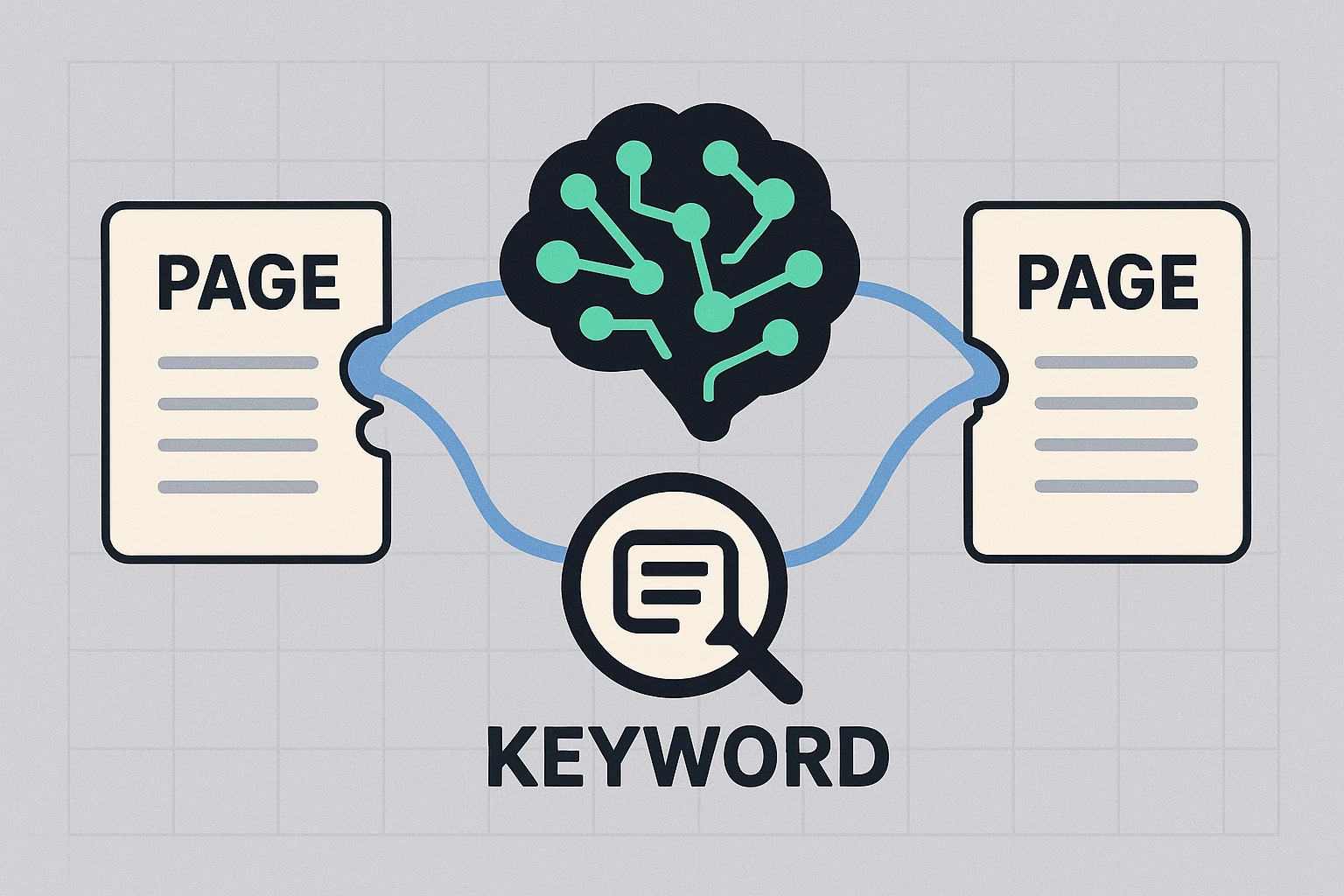
Ever felt like your website was stuck in a rut, despite all your hard work on content? You churn out articles, guides, and blog posts, hoping to rank for key terms, but your organic traffic plateaus. What if I told you your own website might be actively undermining its SEO efforts? The culprit could be something called keyword cannibalization.
Imagine you have two fantastic articles, both trying to rank for the exact same keywords. Instead of a powerful one-two punch for search engines, they end up competing with each other. This confusion dilutes their individual authority, making it harder for either page to achieve top rankings. It's like having two chefs in the same kitchen, both trying to cook the same dish – the result is often chaos, not culinary excellence.
For years, identifying and fixing keyword cannibalization has been a painstaking, manual process. But what if there was a way to uncover these hidden battles swiftly and strategically? Enter AI-powered content audits.
What is Keyword Cannibalization, Anyway?
At its core, keyword cannibalization occurs when multiple pages on your website target the same or very similar keywords, leading to internal competition for search engine rankings. Instead of search engines clearly understanding which page is the definitive resource for a given query, they see several slightly different options. This confusion can:
- Dilute Page Authority: Instead of one page collecting all the backlinks, shares, and user engagement for a keyword, that authority gets split across multiple pages.
- Lower Ranking Potential: Search engines get confused about which page to rank as most relevant, potentially ranking neither optimally, or constantly swapping between them.
- Waste Crawl Budget: Search engines waste time crawling and indexing multiple similar pages.
- Impact User Experience: Users might land on a less relevant page, leading to higher bounce rates.
Visualizing the Problem: Why Two Pages Are Worse Than One (Sometimes)
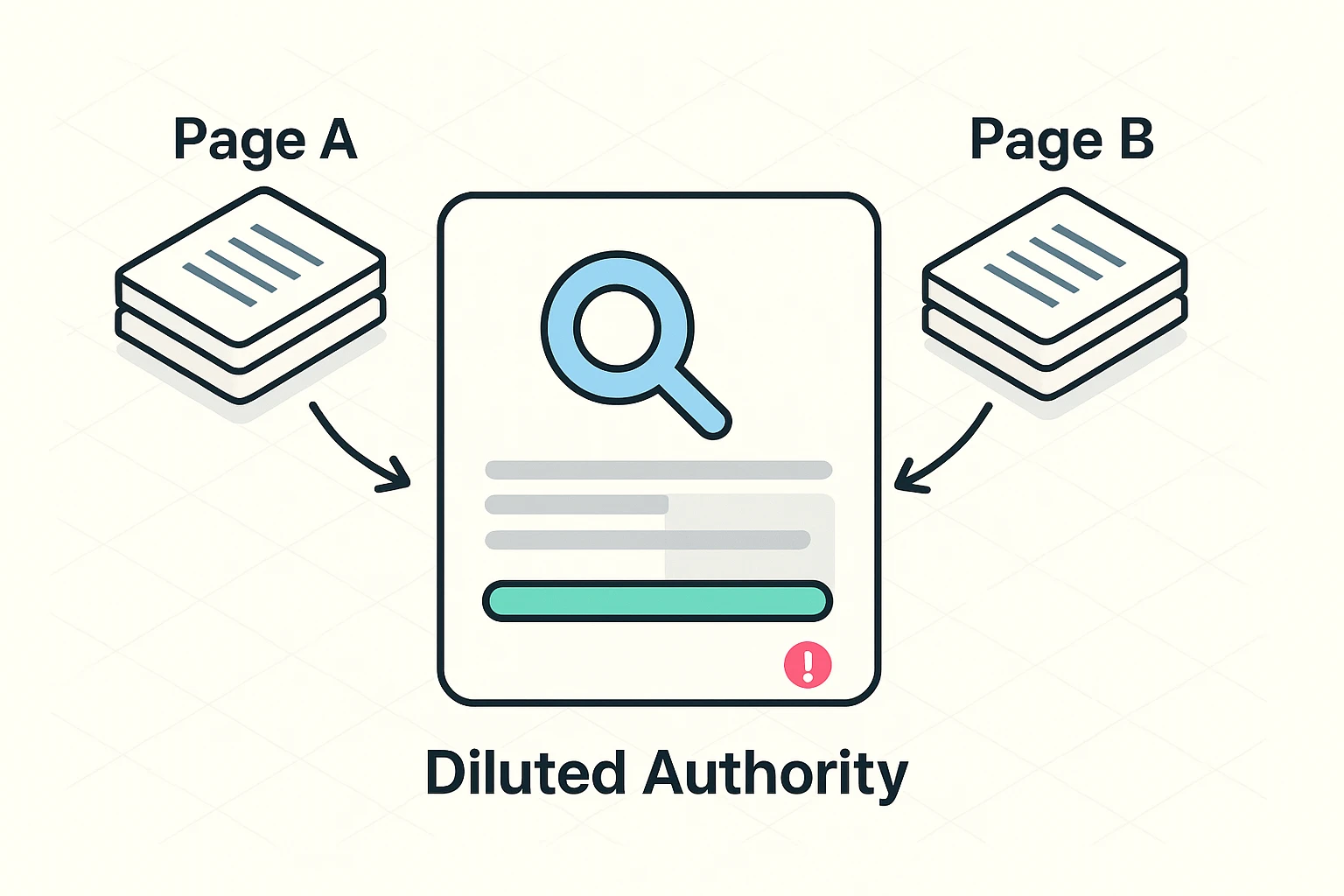
As you can see, when two or more pages vie for the same keyword, they essentially split the potential authority that could otherwise be concentrated on a single, stronger resource. This is a common problem that often goes unnoticed, gradually eroding a website's overall search performance. Traditional methods of detecting this involve tedious manual reviews of search console data, ranking reports, and sitemaps – a process that's not only time-consuming but also prone to human error, especially on larger sites.
The AI Advantage: Revolutionizing Content Audits
The good news is that you don't have to tackle this SEO puzzle with outdated tools. AI is transforming how we approach content audits, making the process of identifying, analyzing, and resolving keyword cannibalization more efficient, scalable, and precise.
While leading SEO blogs like Yoast, Surfer SEO, and Backlinko offer excellent foundational knowledge on keyword cannibalization, they often focus on traditional, manual detection methods. The real game-changer lies in how AI can automate and enhance these critical steps.
How AI Detects and Prioritizes Cannibalization
AI-powered content audit tools don't just look at exact keyword matches. They leverage advanced capabilities like:
- Natural Language Processing (NLP): To understand the semantic meaning and intent behind your content and the keywords it targets. This allows AI to differentiate between similar phrases that have different user intents, or to group truly overlapping content.
- Keyword Clustering: AI can analyze your entire content library and automatically group pages that target the same or closely related keyword clusters. This unearths hidden cannibalization issues far faster than manual review.
- Performance Analysis Integration: By connecting with your Google Search Console and analytics data, AI tools can assess which pages are underperforming due to cannibalization, helping you prioritize fixes.
The AI-Powered Content Audit Workflow
Here’s a glimpse of the systematic approach an AI-powered content audit takes:
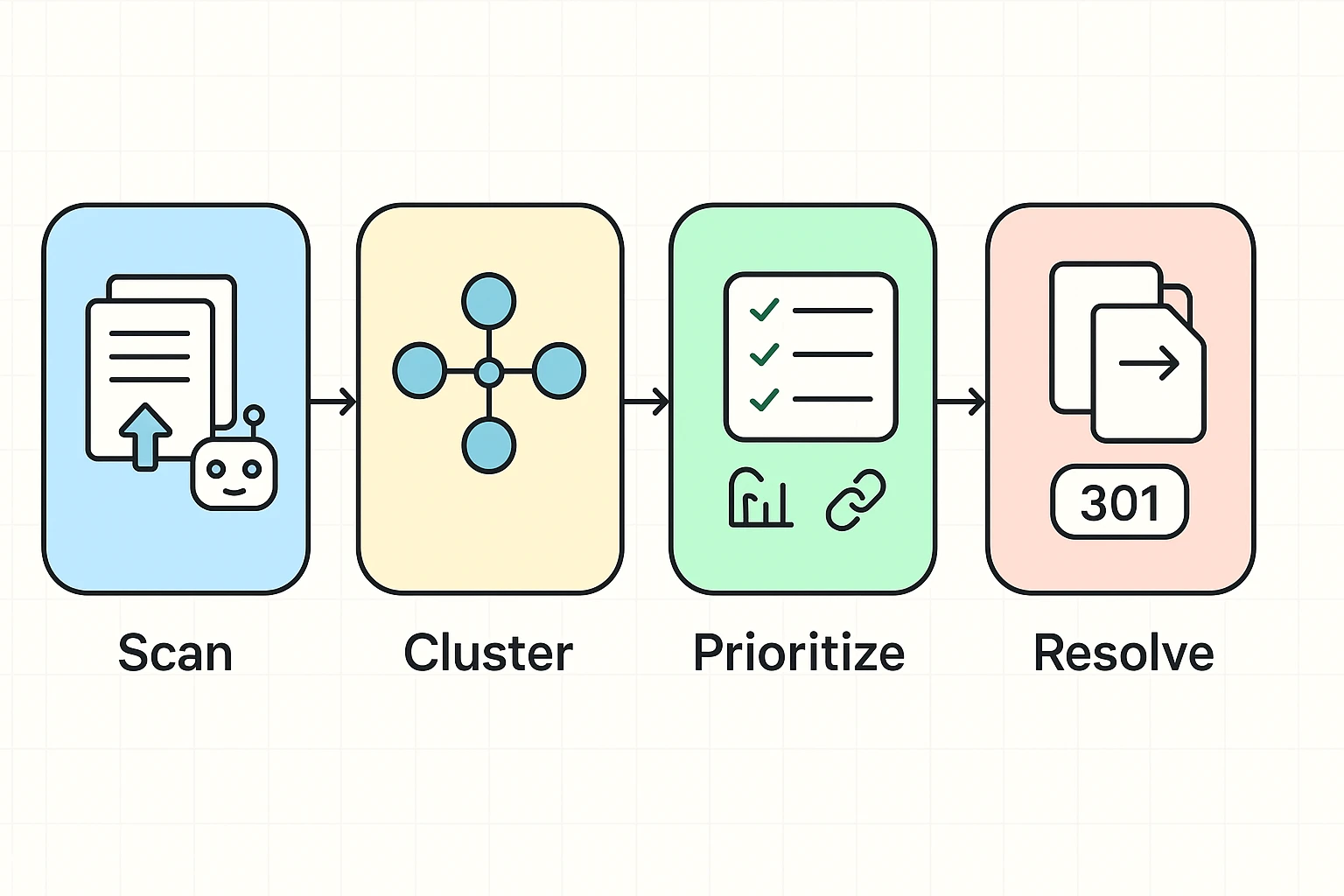
- Scan & Index: AI rapidly scans all your web pages, understanding their content, keywords, and semantic themes.
- Cluster Keywords & Content: It then groups pages that are semantically similar or target the same core keyword intent.
- Identify Cannibalization: The AI flags clusters where multiple pages are directly competing for the same search queries, indicating potential cannibalization.
- Prioritize Issues: Based on traffic data, backlinks, and potential impact, the AI helps you prioritize which cannibalization issues to address first, focusing on opportunities with the highest ROI.
- Recommend Solutions: It often suggests specific actions, such as consolidating content, updating existing articles, or re-optimizing topics.
- Implement & Monitor: After implementing changes, the AI continues to monitor for improvements and new instances of cannibalization.
This automated process drastically reduces the time and effort required, allowing you to focus on strategic decision-making rather than data compilation. For more insights on streamlining your SEO efforts, explore how AI can help in reducing manual SEO workflows.
Moving Beyond Detection: AI-Assisted Resolution Strategies
Identifying cannibalization is only half the battle. The real magic happens when AI assists in implementing effective solutions.
1. Content Consolidation & Merging (AI-Guided)
Sometimes, the best approach is to combine two or more weaker, cannibalizing pages into one robust, authoritative piece.
- AI's Role: AI can analyze the content on competing pages to identify redundant information, unique insights, and valuable sections for merging. It can even suggest how to weave these elements together into a more comprehensive, higher-quality article, essentially helping you update underperforming articles.
- Benefit: Strengthens a single URL, boosting its authority and ranking potential.
2. Content Differentiation (AI-Enhanced)
If two pages are valuable but overly similar, AI can help you re-optimize them to target different but related keywords or user intents.
- AI's Role: By understanding semantic relationships, AI can suggest subtle keyword variations or sub-topics that allow each page to serve a distinct purpose while still contributing to your overall topical authority, informing your AI content strategy with clusters.
- Benefit: Each page ranks for specific, targeted queries, expanding your overall organic footprint.
3. Canonicalization (AI-Informed)
For pages that are almost identical (e.g., product pages with minor variations), a canonical tag tells search engines which version is the "master" copy.
- AI's Role: While canonical tags are a technical decision, AI can analyze page performance and authority signals to help you confirm which page is the strongest candidate for the canonical URL.
- Benefit: Prevents search engines from seeing duplicate content and ensures link equity is concentrated on the preferred page.
4. Internal Linking Optimization (AI-Recommended)
A strong internal linking structure guides search engines and users through your site, distributing authority effectively.
- AI's Role: AI can analyze your site's structure and keyword targeting to recommend optimal internal links, pointing to the most authoritative pages for specific keywords. This strategy can be further enhanced by exploring automated internal linking strategies for maximum impact.
- Benefit: Reinforces the authority of your target pages and helps visitors discover more relevant content.
5. Content Pruning/Redirection (AI-Assisted Decision)
In some cases, a weak, cannibalizing page may need to be redirected (301) to a stronger, more relevant page, or even pruned (deleted) if it offers no unique value.
- AI's Role: By providing a clear picture of page performance, traffic, and content quality, AI helps you make data-driven decisions on whether to redirect or prune, minimizing the risk of losing valuable content or rankings.
Manual vs. AI-Powered Audits: A Clear Advantage
The contrast between traditional manual audits and AI-powered approaches couldn't be starker:
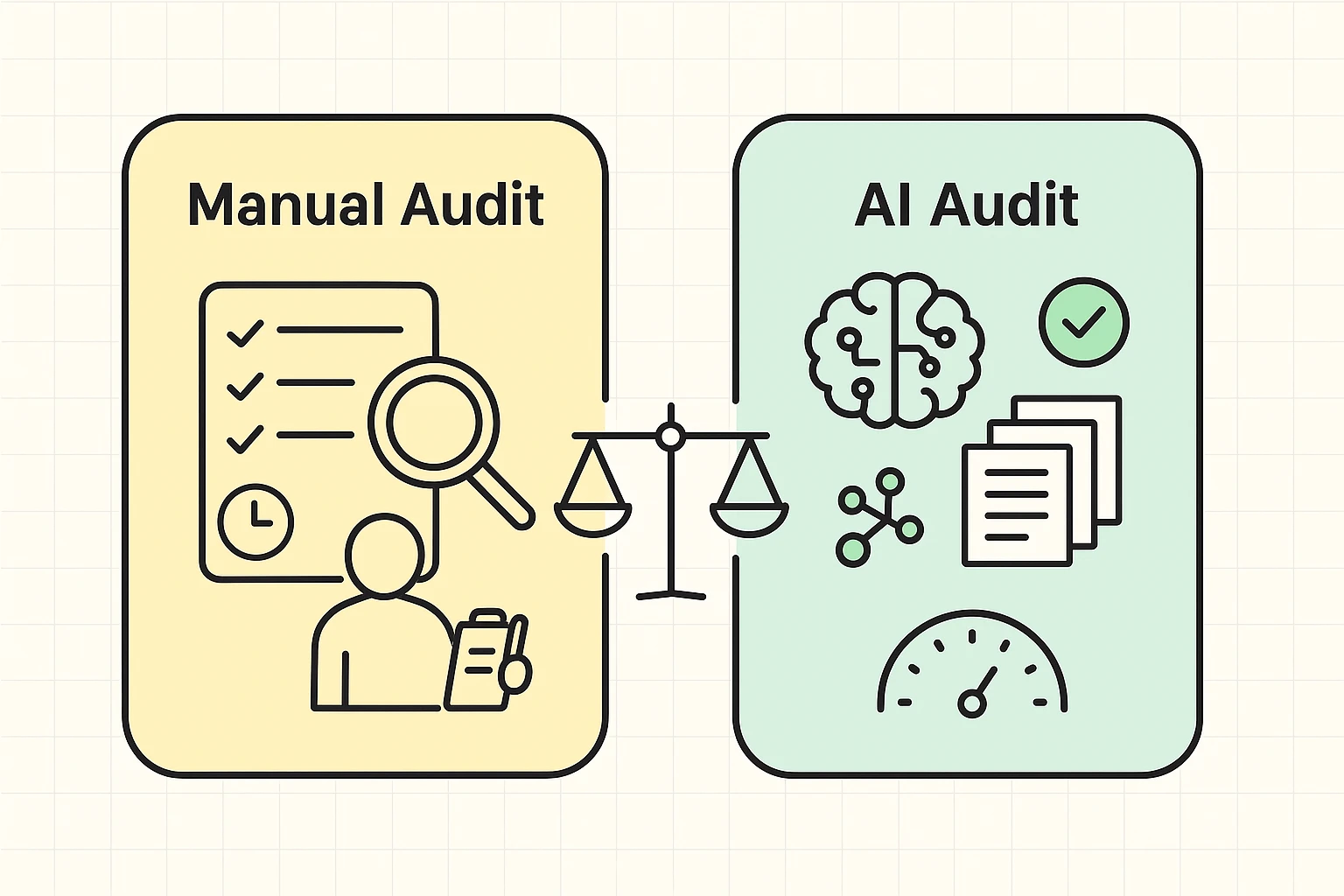
While manual audits rely heavily on human intuition and painstaking data review, AI audits bring:
- Unrivaled Speed: AI can process thousands of pages in a fraction of the time it would take a human.
- Precision in Clustering: Semantic analysis allows for more accurate grouping of deeply related content.
- Scalability: Essential for large websites with vast content libraries.
- Data-Driven Prioritization: Recommendations are backed by hard performance data.
However, it's crucial to remember that AI is a powerful assistant, not a replacement for human strategic oversight. Your judgment as a content strategist remains vital for making final decisions and understanding the broader business context.
The Future is AI-First: Integrating Cannibalization Prevention
As AI becomes more integrated into content creation, the risk of "AI content cannibalization" emerges – where AI generates too similar content, creating new internal competition. This makes AI-powered audits even more critical, acting as a quality control mechanism for your AI-driven content strategy.
Embracing AI for content audits isn't just about fixing past mistakes; it's about building a more robust, future-proof content strategy. By understanding your content landscape with AI's precision, you can ensure every piece of content works together, driving unified search authority and maximizing your organic visibility. For broader insights on optimizing your site, consider how no-code AI can enhance technical SEO automation.
Frequently Asked Questions (FAQ)
Q1: What exactly is "keyword cannibalization"?
Keyword cannibalization occurs when multiple pages on your website target the same or very similar keywords, causing them to compete against each other in search engine rankings. This dilutes the authority of each page, making it harder for any one page to rank highly and potentially lowering your overall organic traffic.
Q2: Why is keyword cannibalization bad for my website's SEO?
It's detrimental because it fragments your authority (link equity, user signals) across multiple pages, confuses search engines about which page is most relevant, can lead to lower rankings for your target keywords, and wastes your crawl budget. Ultimately, it means a less efficient and less effective SEO strategy.
Q3: How can AI help in mitigating keyword cannibalization?
AI-powered tools use Natural Language Processing (NLP) and machine learning to analyze your entire website's content, identify semantically similar pages, cluster keywords, and detect instances of cannibalization much faster and more accurately than manual methods. They can also integrate performance data to help prioritize which issues to fix first and suggest resolution strategies.
Q4: Are there different types of keyword cannibalization?
Yes, it can range from exact keyword matches to semantic overlap where pages target very similar topics. AI helps differentiate between problematic overlap and benign semantic relationships, allowing you to act only on issues that genuinely harm your SEO.
Q5: What are the typical solutions for fixing keyword cannibalization?
Common solutions include:
- Content Consolidation: Merging multiple weaker pages into one strong, comprehensive page.
- Content Differentiation: Re-optimizing pages to target distinct keywords or user intents.
- Canonicalization: Using canonical tags to signal a preferred version of near-duplicate content.
- Internal Linking Optimization: Adjusting internal links to point authority to the most relevant page.
- Redirection (301): Redirecting a weaker page to a stronger, more relevant one.
- Content Pruning: Deleting low-value, cannibalizing pages.
Q6: Can AI entirely replace human judgment in content audits?
No, AI is a powerful assistant that significantly streamlines detection and analysis. However, human strategic oversight is still crucial for understanding the nuances of your business, making final decisions, and ensuring the proposed solutions align with your overall content and business goals.
Q7: How often should I perform an AI-powered content audit for cannibalization?
The frequency depends on your website's size, content publishing velocity, and industry. For dynamic sites, a quarterly or bi-annual deep audit is recommended, coupled with ongoing monitoring for newly emerging cannibalization issues, especially if you're regularly publishing new content or using AI for content creation.
Q8: What if my website publishes AI-generated content? Does that increase the risk of cannibalization?
Yes, without proper oversight, AI-generated content can inadvertently increase the risk of cannibalization if content creation tools are not carefully guided. This makes AI-powered content audits even more critical, ensuring that AI-generated content remains unique and contributes positively to your topical authority.
Join Our Growing AI Business Community
Get access to our AI Automations templates, 1:1 Tech support, 1:1 Solution Engineers, Step-by-step breakdowns and a community of forward-thinking business owners.
Latest Blogs
Explore our latest blog posts and insights.