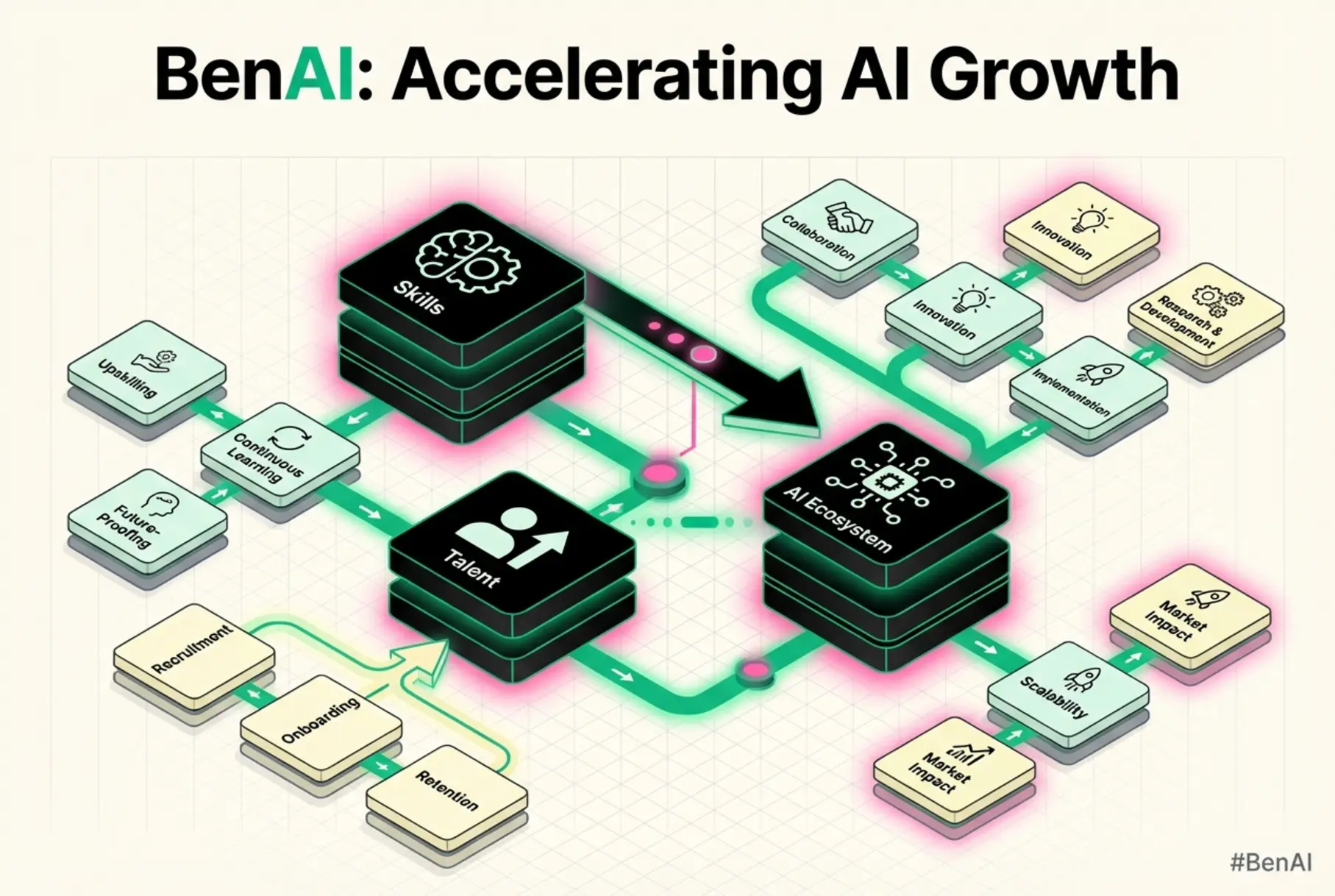
The promise of AI is undeniable, yet many C-suites grapple with a fundamental question: How do we move beyond pilot projects and truly embed AI into the core of our business? It's a critical evaluation point. You're not looking for another vendor selling AI tools; you're seeking a partner who understands that AI transformation begins not in the server room, but in the boardroom.
This isn't just about technology adoption; it's about leading a seismic shift that reshapes strategy, operations, and culture. The path to becoming an AI-first organization demands more than just investment—it requires a committed, informed, and visionary C-suite.
The Mandate for AI-First Leadership: Why the C-Suite is AI's True Catalyst
The statistics are stark: a staggering 43% of AI adoption failures stem directly from insufficient executive sponsorship. While a project might seem groundbreaking on paper, without explicit, sustained leadership buy-in, it often stalls, becomes siloed, or simply fails to achieve its full potential.
Contrast this with leading organizations: AI high performers are three times more likely to have senior leaders demonstrating strong ownership and commitment to AI initiatives. This isn't coincidence; it’s a direct correlation. What C-level oversight guarantees is not just budget, but strategic alignment, resource allocation, and the cultural momentum needed to drive real change.
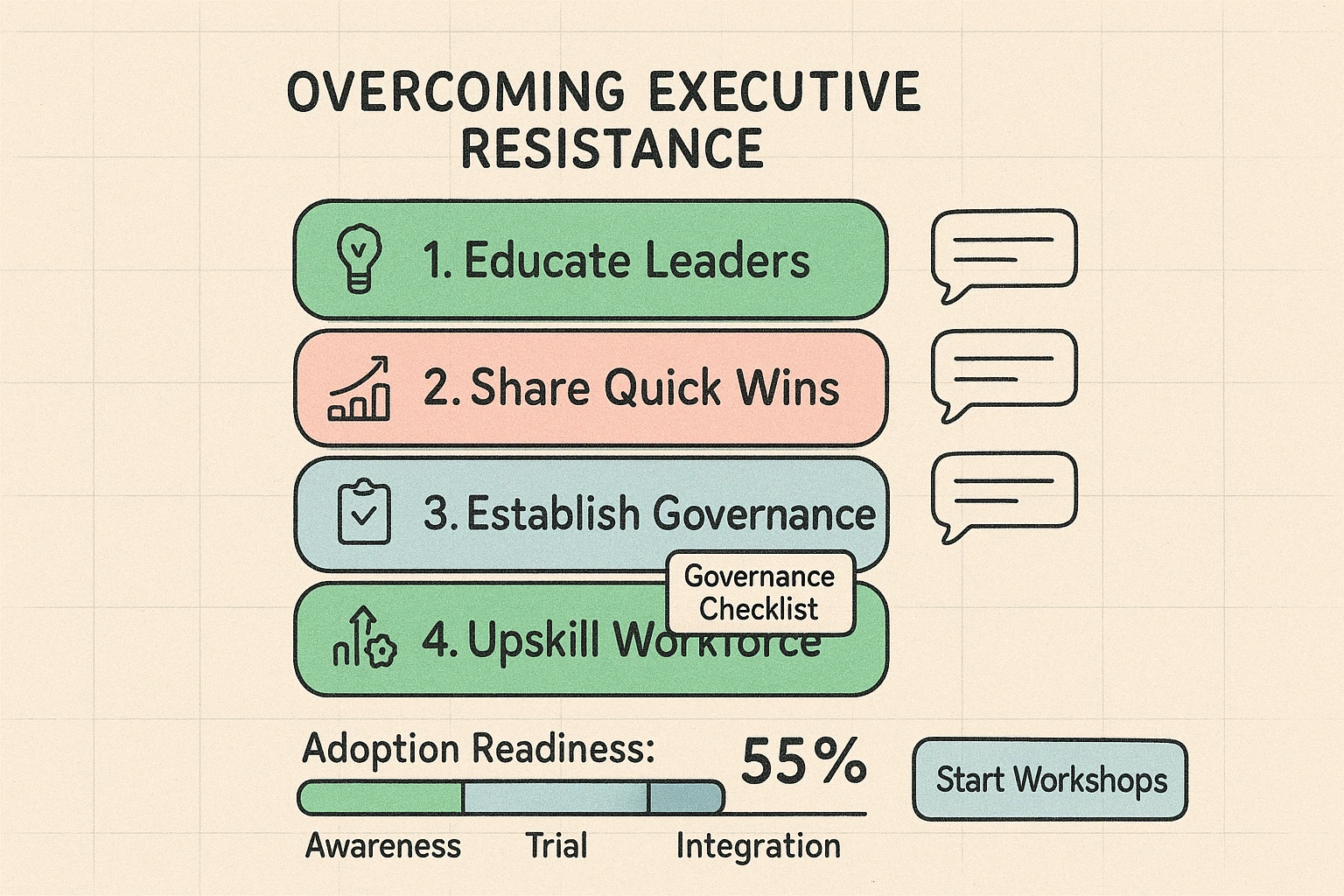
When senior leaders actively champion AI, they don't just greenlight projects—they reshape employee perceptions. Studies show that strong leadership support boosts frontline employees' positive perception and usage of generative AI from 15% to an incredible 55%. This isn't just about efficiency; it's about galvanizing a workforce to embrace the future.
The message is clear: your vision for AI must originate from the top.
Decoding Executive Buy-in: Beyond a Simple "Yes"
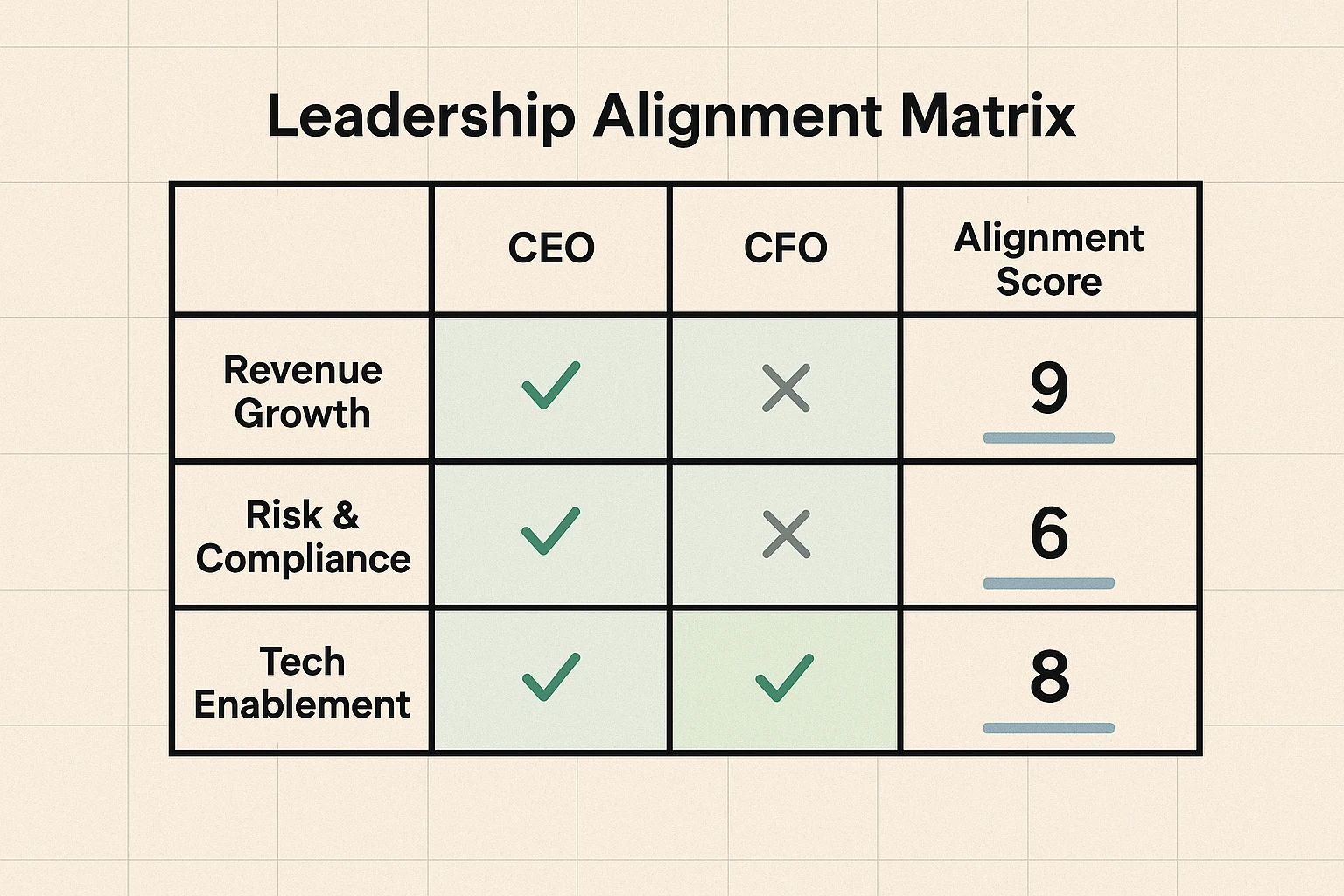
Securing executive buy-in for AI is a nuanced challenge, far more than just getting an approval signature. It means addressing the core concerns of the C-suite: strategic value, measurable ROI, risk mitigation, and talent impact.
Executives aren't impressed by technical jargon; they need to understand how AI translates into tangible business outcomes. How will an investment in AI training and custom implementations differentiate us from competitors? What is the projected return on investment, and how will it directly impact our bottom line?
Your board, for instance, needs to see how AI investment compares to other strategic initiatives—a new market expansion, a brand overhaul, or a significant R&D project. Their decision factors are rooted in maximizing shareholder value and ensuring the long-term viability of the enterprise. This requires translating AI's potential into the language of business strategy, not just technological innovation.
early evaluation — boardroom briefing
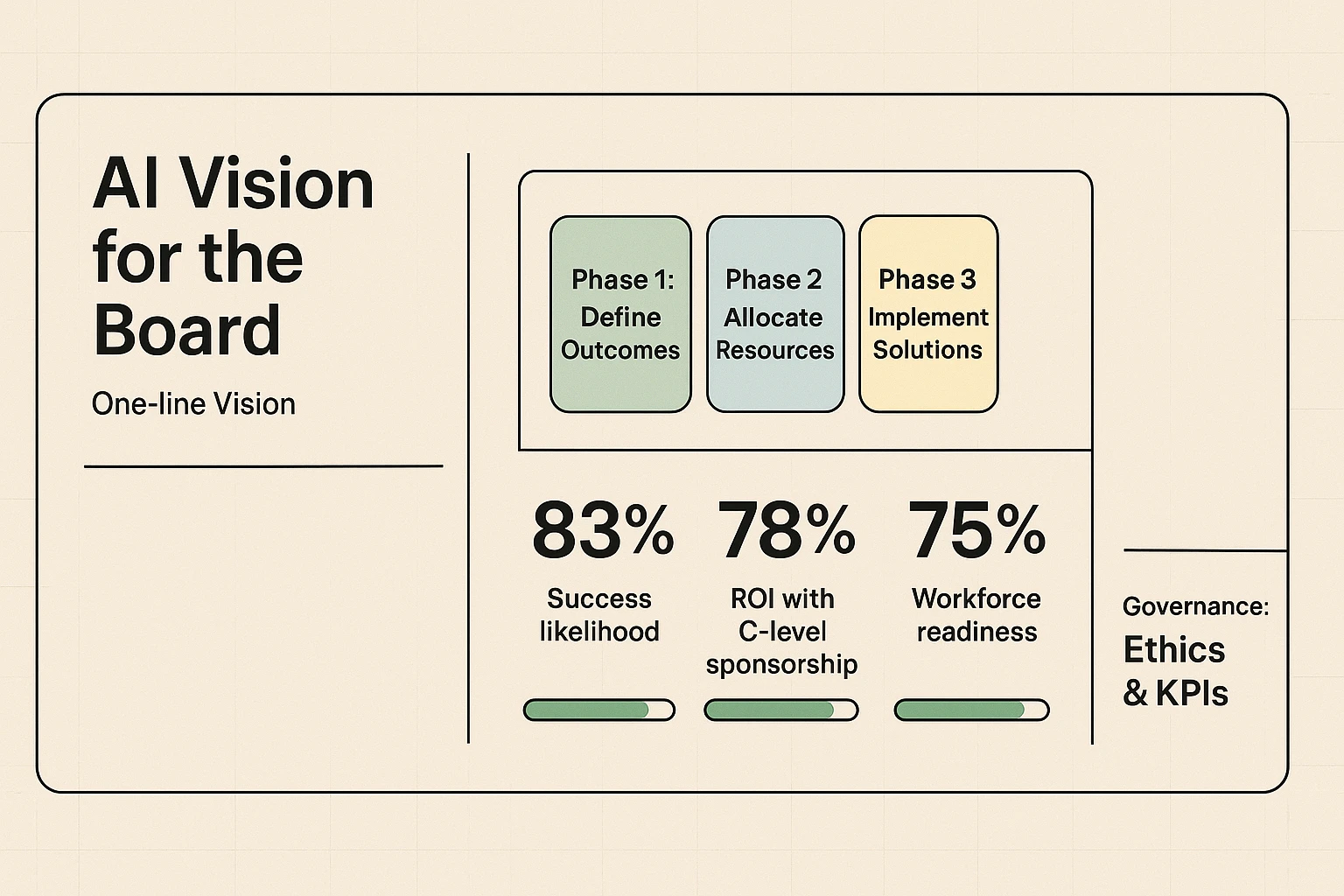
Crafting Your AI Vision for the Boardroom
A compelling AI vision for your board isn't just a statement; it's a strategic blueprint. It needs to articulate where AI will take your organization, why it matters, and how you’ll get there.
- Start with Business Outcomes, Not Technology: Instead of detailing algorithms, explain how AI will enhance customer acquisition through advanced marketing automation, streamline recruitment processes for faster talent acquisition, or unlock new efficiencies that reduce operational costs by X%. This directly addresses the C-suite's focus on profitability and growth.
- Define Your AI North Star: What does "AI-first" genuinely mean for your business? Is it about unparalleled customer experience? Hyper-efficient operations? Intelligent product development? A clear North Star provides direction and helps prioritize initiatives.
- Map to Core Strategic Pillars: Connect your AI vision to existing company objectives. If your company aims to improve customer satisfaction, show how AI-driven insights will personalize interactions or accelerate support. This demonstrates alignment and reduces the perception that AI is a siloed, standalone project.
- Emphasize Competitive Advantage: Explain how embracing AI now will create a distinct advantage. Will it allow faster market entry? Better data-driven decisions? Superior product offerings? The fear of being left behind is a powerful motivator for executives.
- Address the "How": Executives need a high-level roadmap. Articulate the phases: assessment, pilot, scaling, and eventual integration. This shows a thoughtful, structured approach rather than a haphazard dive into new tech.
For a deeper dive into how to architect your vision, explore our guide on Crafting an Enterprise AI Vision with Clear KPIs.
Overcoming Executive Resistance: A Playbook for AI Champions
Even with a strong vision, resistance can emerge. The "AI literacy gap" is a significant barrier, with many senior leaders lacking a deep understanding of AI's capabilities and limitations. In fact, 46% of leaders identify skill gaps as a barrier to AI adoption. This isn't a flaw; it's an opportunity for education.
mid evaluation — cross-functional prioritization
Leading AI adoption requires specific tactics:
- Executive Education, Not Lectures: Instead of formal training, provide concise, high-impact briefings on specific AI use cases relevant to their departmental challenges. Highlight "quick wins" with measurable, immediate ROI to build confidence. Show them how AI is already solving problems in their domain.
- Mitigate Risk Aversion: Executives are rightly concerned about risk. Address these proactively by discussing your strategy for ethical AI, robust data governance, and regulatory compliance. Companies addressing governance and ethics upfront are 2.6 times more likely to succeed in scaling AI.
- Foster Curiosity Over Fear: Frame AI as an augmentation, not a replacement. Emphasize how it creates capacity, automates mundane tasks, and frees up human capital for higher-value, more strategic work. This tackles the hidden intent of job security concerns among employees and middle management.
- Align Technical and Business Priorities: Create dedicated forums where technical experts and business leaders collaboratively define AI project scope, success metrics, and potential challenges. This bridges the communication gap and ensures that AI initiatives are always tied back to commercial objectives.
Building an AI-First Culture: From C-Suite Down
An AI-first culture isn't mandated; it's cultivated. It starts with leaders leading by example.
- Role Modeling: When executives actively use AI tools, question data, and champion AI-driven initiatives, it signals to the entire organization that AI is a priority. This visible sponsorship is crucial for widespread adoption.
- Upskilling and Reskilling: Proactively invest in your workforce. Research shows that 74% of employees are ready to learn new skills to remain employable in the age of AI. Provide accessible, relevant training programs that empower employees to work with AI, not against it.
- Create "AI Translator" Roles: These individuals bridge the gap between technical teams and business units, translating complex AI capabilities into actionable business insights. Forbes highlights "AI translators" as crucial talent, vital for communicating between the technical "know-how" and the business "so what." Empowering these roles is essential for successful, cross-functional AI integration.
- Foster Experimentation: Create a safe environment for teams to experiment with AI, learn from failures, and iteratively improve. This fosters a sense of psychological safety that is vital for innovation. For guidance on assessing your organizational readiness, check out our insights on Assessing AI Readiness for Strategic Planning.
decision stage — change management & adoption
Implementing AI Governance: Your Strategic Safety Net
For the C-suite, "governance" isn't just about compliance; it's about trust, brand reputation, and mitigating significant operational and ethical risks.
- Establish AI Ethics Councils and Steering Committees: These bodies, comprising business, technical, and legal leaders, set the ethical guardrails for AI development and deployment. They ensure transparency, fairness, and accountability. PwC's research indicates that over half (56%) of executives place responsibility for Responsible AI closer to front-line teams, signaling a move towards integrated responsibility.
- Robust Model Risk Management: AI models are not "set it and forget it." Implement continuous monitoring for model drift, bias detection, and performance degradation. Proactive maintenance ensures your AI systems remain accurate and fair.
- Beyond Basic Compliance: Understand and implement data privacy and regulatory compliance that goes deeper than surface-level GDPR or CCPA requirements outlined in our guide on AI Data Management Automation. This involves robust data anonymization, consent mechanisms, and transparent data usage policies, protecting your organization from significant legal and reputational damage.
Measuring What Matters: Quantifying AI's Impact for the C-Suite
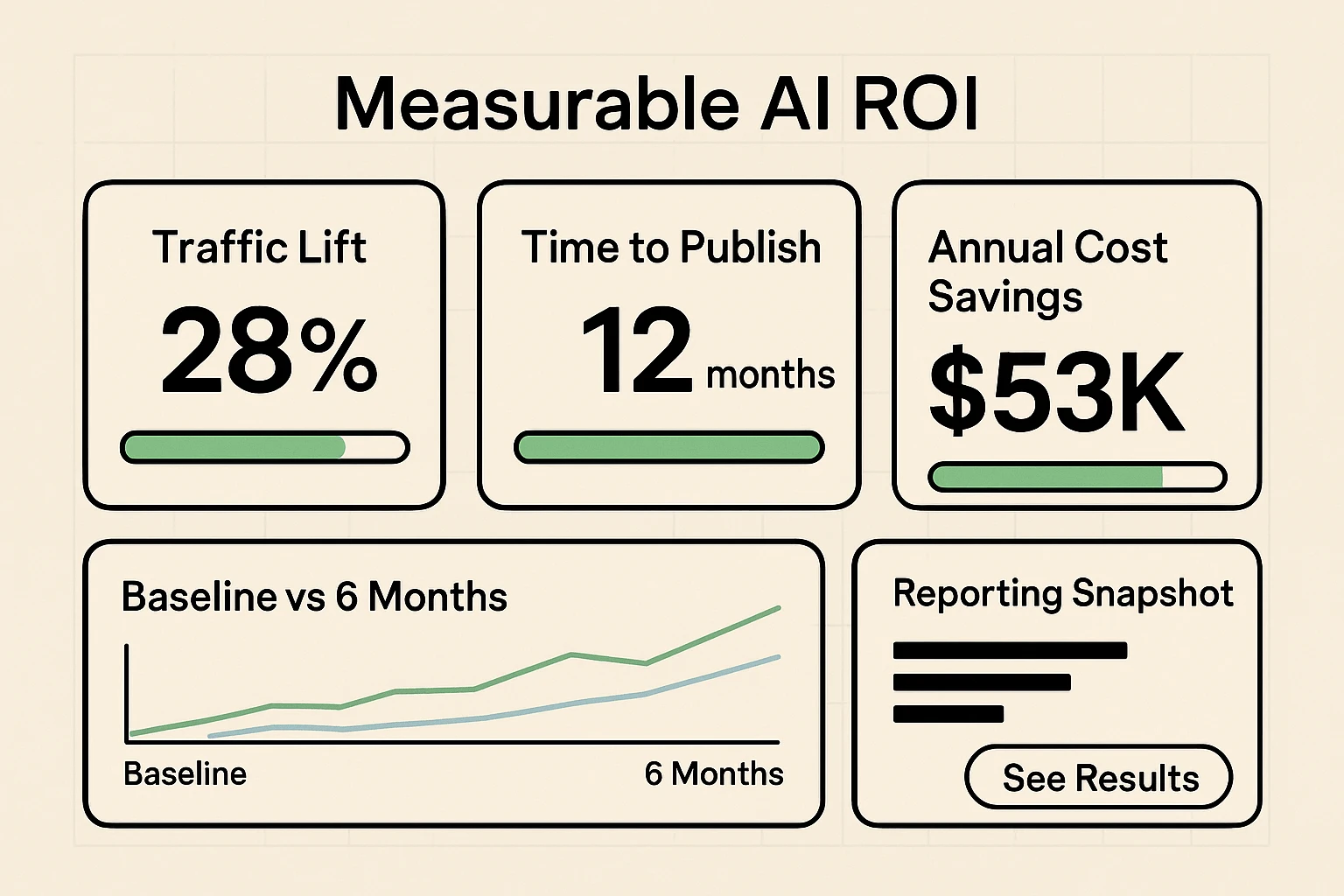
The C-suite demands results. Translating technical AI outcomes into financial ROI is paramount. 78% of executives with C-level sponsorship report seeing ROI from at least one Gen AI use case. Your task is to make that ROI explicit.
evaluation — prioritizing investments
- Define AI-Specific KPIs: Move beyond generic performance metrics. For marketing AI, track lead conversion rate from AI-generated leads, or cost per acquisition using AI-optimized campaigns. For recruiting AI, monitor time-to-hire or candidate quality from AI-sourced pipelines.
- Translate to Financial Metrics: Always connect the KPI to its financial impact. Improved retention due to AI means X dollars saved in churn. Faster product launch cycles due to AI means earlier revenue generation of Y dollars.
- Board-Ready Reporting: Develop dashboards that highlight key AI initiatives, their directly attributable impact on revenue, cost savings, and strategic objectives. This is where your AI vision truly comes to life for the board, providing clear evidence of value. Learn more about crafting these reports in our article on Enterprise AI Vision & KPIs.
The Future of AI-First Leadership: Emerging Trends & Foresight
The AI landscape evolves at breakneck speed. A truly AI-first leader doesn't just react; they anticipate.
- Proactive Leadership in Emerging Technologies: Stay informed about advancements in large language models, AI agents, and even quantum AI. While direct implementation may be years away, understanding their potential impact allows for strategic foresight in infrastructure, talent, and ethical considerations. Our guide to the AI Agent Ecosystem can provide an excellent starting point.
- Global Implications: AI adoption isn't monolithic. Navigating diverse regulatory landscapes, cultural nuances, and global market demands requires an adaptive approach. Consider how AI solutions deployed in one region might need adjustments for another, and ensure your governance framework can handle this complexity.
- The Leader as AI Orchestrator: The future C-suite won't just approve AI; they will intelligently orchestrate its deployment, ensuring synergy across departments, ethical alignment, and continuous value creation. They will be the conductors of an intelligent enterprise, not just the funders.
Your Path to AI Dominance
Becoming an AI-first organization is a journey, not a destination. It demands dedicated leadership, strategic planning, and a willingness to embrace change. The rewards? Unprecedented efficiency, competitive advantage, and a future-ready enterprise.
If your leadership team is ready to move beyond AI experimentation to true strategic integration, BenAI is your trusted partner. We don't just offer solutions; we provide the expert guidance, tailored implementations, and hands-on training to transform your organization into an AI-first powerhouse. From crafting your board-ready vision to implementing robust governance and automating a wide array of business functions—including AI-Driven Quality Control—we ensure your journey is strategic, impactful, and yields measurable ROI.
Frequently Asked Questions (FAQ)
Q1: What is the biggest barrier to achieving executive buy-in for AI?
The biggest barrier is often the "AI literacy gap" within the C-suite. Many senior leaders don't fully understand AI's capabilities, limitations, or how it directly translates to strategic business value and ROI. Overcoming this requires presenting AI in a business-outcome-focused language, mitigating perceived risks, and showcasing measurable impact rather than focusing on technical details.
Q2: How can I demonstrate AI's ROI to a skeptical board?
Focus on "quick wins" first—projects with low implementation complexity but measurable and immediate financial impact. Translate AI's benefits into clear KPIs that directly align with executive priorities: revenue growth, cost reduction, efficiency gains, and risk mitigation. For instance, quantify how AI in marketing reduces customer acquisition cost or how AI in operations decreases downtime. Always present these in C-suite friendly formats like dashboards that explicitly link AI initiatives to financial results.
Q3: What's the role of an "AI Translator" and how do I empower them?
An AI Translator acts as a crucial bridge between technical AI teams and broader business units. They translate complex AI concepts into actionable business strategies and vice versa, ensuring technical solutions address real-world business problems. To empower them, ensure they have strong domain knowledge, communication skills, and influence across departments. Provide cross-training opportunities and ensure their role is formally recognized and valued in decision-making processes.
Q4: How do we address employee fear and resistance to AI adoption?
Transparency and proactive communication are key. Frame AI as an augmentation tool that creates capacity and enhances jobs, rather than eliminating them. Highlight how AI automates mundane, repetitive tasks, freeing employees for more strategic, creative, and fulfilling work. Invest in upskilling and reskilling programs, demonstrating a commitment to your workforce's future in an AI-driven environment.
Q5: What are the key components of a robust AI governance framework for enterprises?
A robust AI governance framework includes establishing an AI Ethics Council or steering committee, implementing continuous model risk management for bias detection and performance monitoring, and ensuring stringent data privacy and regulatory compliance. It should outline clear responsibilities, accountability structures, and a process for ongoing review and adaptation to emerging AI technologies and regulations. This framework ensures ethical, responsible, and compliant AI deployment, minimizing reputational and regulatory risks.
Join Our Growing AI Business Community
Get access to our AI Automations templates, 1:1 Tech support, 1:1 Solution Engineers, Step-by-step breakdowns and a community of forward-thinking business owners.

Latest Blogs
Explore our latest blog posts and insights.