You're beyond the initial hype of AI. You understand its potential, and now you’re actively evaluating how it can directly tackle the data chaos in your business. The challenge isn't if AI can help, but which AI solutions will genuinely transform your raw data into actionable insights, without adding more complexity than they solve. You're looking for concrete answers, not just buzzwords.
Manual data processes are bottlenecking your progress. The sheer volume and complexity of data are overwhelming, leading to slow insights, missed opportunities, and escalating operational costs. This isn't just about finding another tool; it's about building a robust, intelligent data pipeline that fuels strategic decision-making.
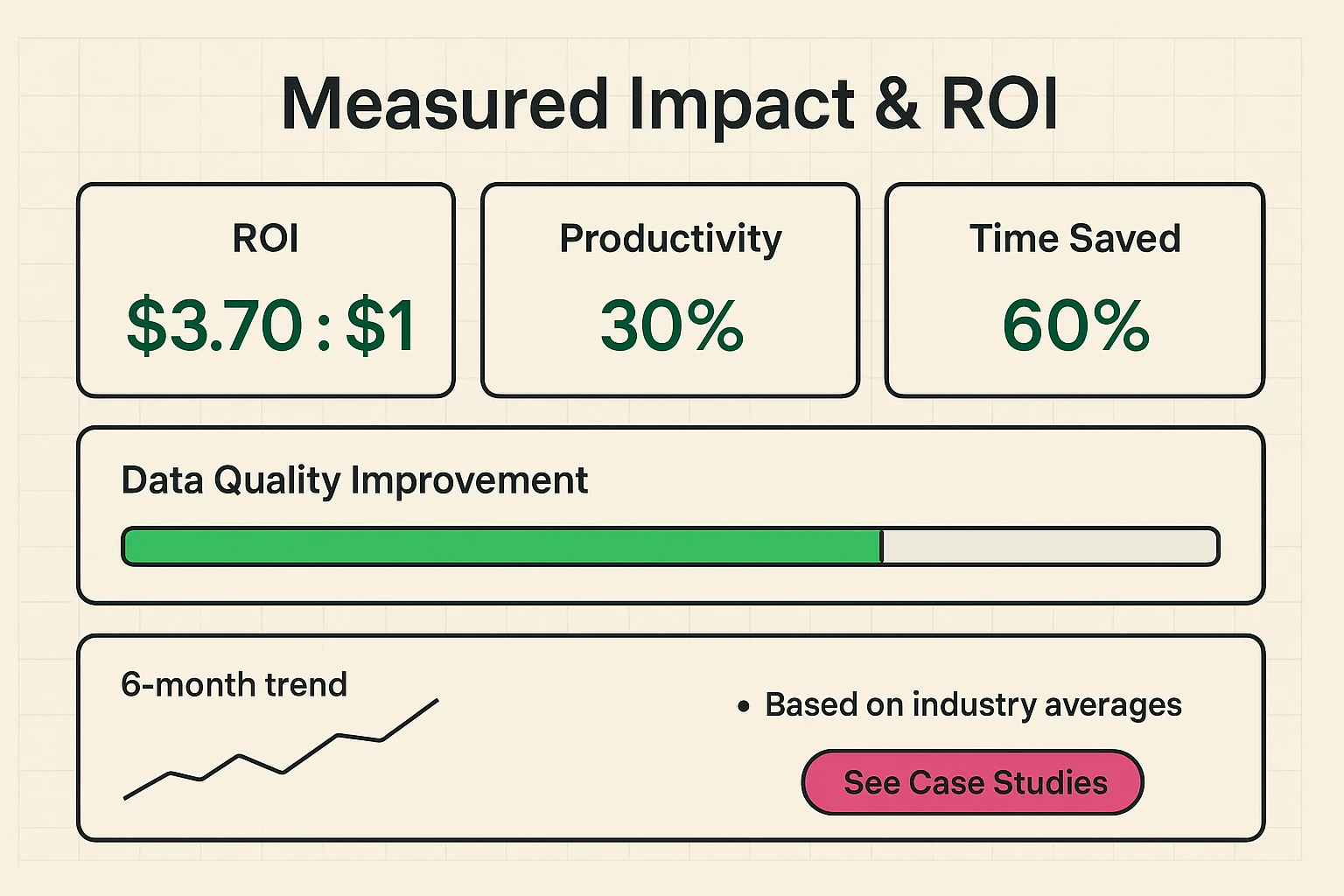
The good news? AI automation is the answer. Companies embracing AI are seeing significant returns, with approximately 79% of organizations already using AI and early adopters generating an impressive $3.70 for every $1 invested. By 2035, AI is projected to boost labor productivity by a remarkable 30-37%. The path to these gains lies in strategically implementing AI for data management and analysis.
Unpacking the Power of AI Across the Data Lifecycle
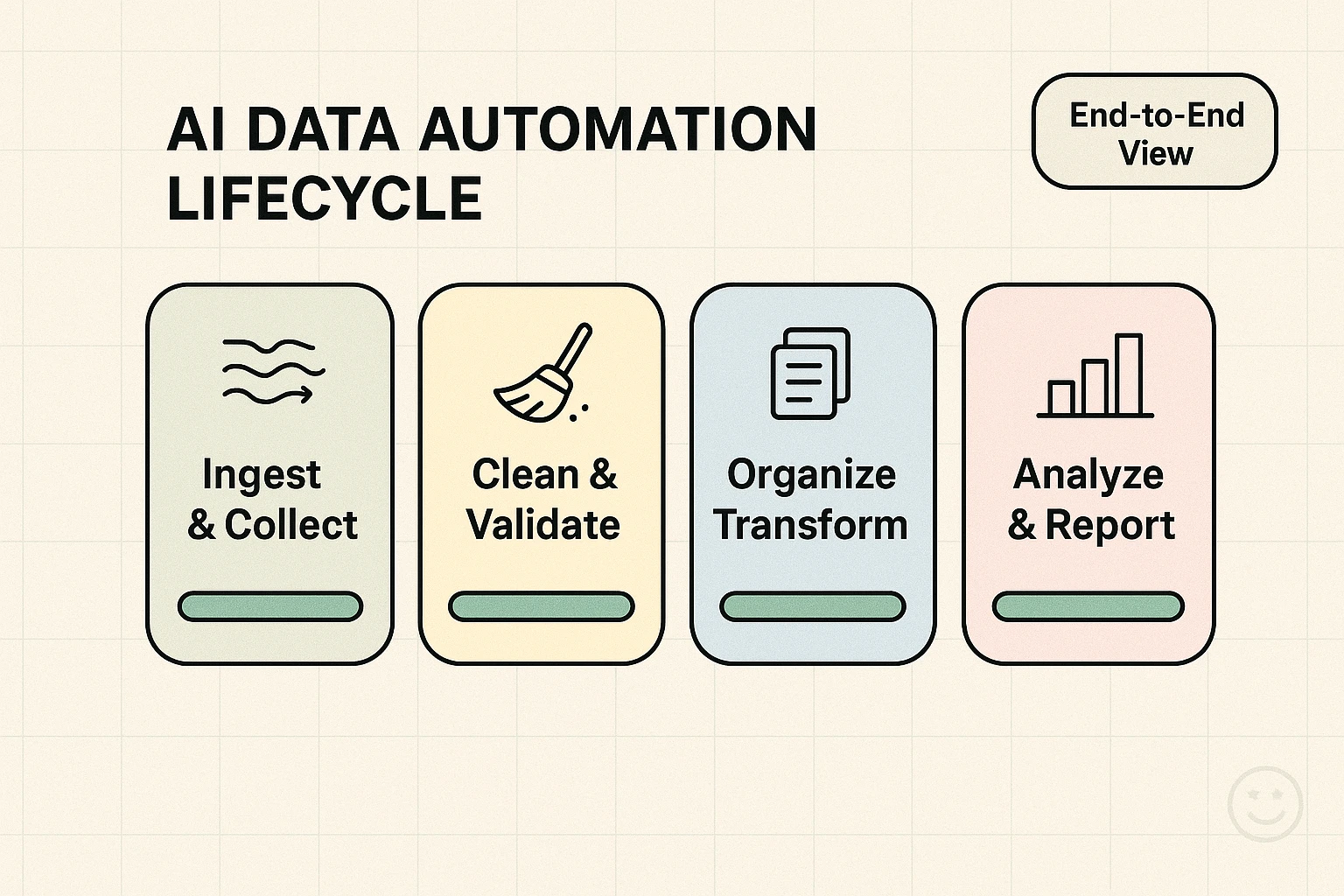
When we talk about AI-powered data management and analysis, we're not just referring to a single tool. We're talking about an integrated system that intelligently handles data from its genesis to its ultimate transformation into business intelligence. This is about automating the entire data lifecycle.
AI in Data Collection & Ingestion
Imagine a world where data flows seamlessly into your systems, automatically extracted and categorized. AI achieves this through:
- Automated Data Extraction: From unstructured text in documents and emails to precise figures in forms, AI-driven tools can pull relevant information with incredible accuracy, eliminating tedious manual entry.
- Intelligent API Integrations: AI can orchestrate complex connections between disparate data sources, ensuring real-time data streams and reducing the need for constant human oversight in managing integrations.
- Real-time Streaming Processing: For businesses relying on immediate insights—like financial trading or IoT sensor data—AI enables real-time processing and analysis, flagging critical events as they happen.
AI-Driven Data Cleaning & Quality Assurance
One of the biggest hurdles in data management is ensuring data quality. A staggering 45% of organizations grapple with data issues, leading to flawed analyses and poor decisions. AI is a game-changer here:
- Anomaly Detection: AI algorithms can swiftly identify outliers, discrepancies, and errors that would take human analysts countless hours to uncover.
- Data Profiling & Standardization: AI automatically analyzes data sets to understand their structure, identify common patterns, and apply consistent formats, ensuring uniformity across your data landscape.
- Master Data Management (MDM): AI assists in creating a single, authoritative view of your core business data, harmonizing information from various sources to eliminate duplication and inconsistency.
Automated Data Organization & Transformation
Once collected and cleaned, data needs to be structured and transformed to be useful for analysis. AI streamlines this process, often referred to as ETL (Extract, Transform, Load) or ELT:
- Schema Mapping & Evolution: AI can intelligently map data from source to target schemas, even adapting to "schema drift"—subtle changes in data structure over time—without manual recalibration.
- Automated Data Enrichment: AI can automatically augment your data with external sources, adding context or filling gaps, such as geographic coordinates for addresses or sentiment scores for customer feedback.
- Metadata Management: AI can automatically generate and update metadata, providing crucial context about your data assets, making them easier to discover and understand.
Intelligent Data Analysis & Insight Generation
This is where the rubber meets the road—turning processed data into competitive advantage. AI elevates analysis from retrospective reporting to proactive intelligence:
- Automated Report Generation: AI can compile complex reports and dashboards, summarizing key metrics and trends, freeing up analysts to focus on deeper strategic work. Consider how this can automate client reports, similar to streamlining client SEO reports with AI. For example, BenAI has found ways to automate client SEO reports.
- Natural Language Query Systems (Conversational AI for BI): Imagine simply asking a question in plain English ("What were our top 3 performing products last quarter?") and receiving an immediate, data-backed answer. AI makes business intelligence accessible to everyone, not just data scientists.
- Predictive & Prescriptive Analytics: AI moves beyond "what happened" to "what will happen" and "what should we do." It forecasts future trends and recommends optimal actions based on historical data.
Key AI Tools & Solution Categories for Your Evaluation
The market is flooded with AI tools for data. Your task isn't to try them all, but to understand which categories align with your specific needs. Rather than generic lists, let’s categorize them by their primary function within the data lifecycle.
1. Enterprise BI Platforms with AI Capabilities
These are comprehensive platforms that integrate AI-powered features directly into their business intelligence and data visualization tools. They are designed for large-scale data environments and offer robust capabilities for reporting, dashboards, and increasingly, natural language querying.
- Examples: Domo, Microsoft Power BI, Tableau (with AI extensions).
- Strengths: End-to-end solutions, strong visualization, enterprise-grade security and scalability. Often include features for automated report generation.
- Considerations: Can be complex and costly to implement, requiring significant IT resources. May have a steeper learning curve for advanced AI features.
2. No-Code/Low-Code AI for Data Analysts & Business Users
This category focuses on empowering non-technical users to leverage AI for data tasks without extensive coding knowledge. They often excel at quick analysis of structured data like spreadsheets.
- Examples: Julius AI, Formula Bot, Numerous.ai (integrating ChatGPT into Excel/Google Sheets).
- Strengths: User-friendly interfaces, rapid insights from common data formats, ideal for quick analyses and proof-of-concepts, especially within marketing for things like AI newsletter content generation or even optimizing CTAs for Meta campaigns as covered in this article on AI CTA optimization.
- Considerations: May lack the depth and scalability for complex, enterprise-wide data pipelines or highly specialized data governance needs. Often focused on the "analysis" piece rather than the full lifecycle.
3. AI for Data Engineering & Pipeline Automation
These tools are crucial for the foundational heavy lifting—automating the collection, cleaning, and transformation of data before it reaches the analysis phase. They address critical technical challenges like schema drift and integration with legacy systems.
- Examples: Tools focused on automated ETL/ELT, data orchestration platforms with AI capabilities, data quality tools with machine learning for anomaly detection.
- Strengths: Essential for building robust, scalable, and resilient data infrastructure. Solves core problems of data quality (addressing the 45% data quality challenge) and pipeline reliability.
- Considerations: Highly technical, requires expertise in data engineering. Not typically user-facing for immediate business insights but critical for the underlying data health.
4. Specialized AI for Data Governance & Compliance
An area frequently overlooked by general AI tools, but one of increasing importance, especially for large organizations. These solutions use AI to enforce data policies, monitor usage, ensure privacy, and detect compliance risks.
- Examples: AI-driven data masking tools, intelligent data cataloging for compliance, AI for identifying and classifying sensitive data.
- Strengths: Mitigates risk, ensures regulatory compliance, builds trust in data assets. Critical for ethical AI deployment.
- Considerations: Often niche and may require integration with existing governance frameworks.

Navigating the Challenges: Technical & Ethical Considerations
Implementing AI for data management isn't without its complexities. A trusted solution provider doesn't just promise benefits; it guides you through the pitfalls.
Data Quality & Bias: The AI Paradox
While AI is excellent at improving data quality by identifying anomalies and standardizing formats, it can also amplify biases present in historical data. If your training data reflects past inequalities or skewed perspectives, the AI models built upon it will perpetuate those biases in analysis and predictions.
- Mitigation: Robust data governance practices are paramount. This involves careful selection and cleansing of training data, continuous monitoring for bias, and regular audits of AI model outputs. We emphasize the development of ethical AI frameworks as a core component of any AI strategy.
Integration with Legacy Systems
Many organizations operate with a mix of new and old technologies. Integrating cutting-edge AI automation tools with legacy systems can be a significant technical challenge. This can involve complex API development, data format conversions, and ensuring seamless data flow without disrupting existing operations.
- Solution: A phased approach with expert implementation is key. We develop custom integration strategies that leverage modern data interchange formats and robust middleware, ensuring your existing investments are protected while you scale with AI. This is a common hurdle BenAI helps businesses overcome, such as in reducing manual SEO workflows with AI.
Skills Gap & Team Development
Even with the most automated AI tools, a human element remains crucial for strategic oversight and interpretation. However, a significant skills gap exists, with 42% of organizations lacking generative AI skills. Your team needs to evolve to effectively manage, monitor, and leverage AI capabilities.
- Empowerment: Beyond tool implementation, we offer comprehensive training and development programs to upskill your workforce. This ensures your team can confidently engage with AI systems, interpret their outputs, and drive actionable insights. For a deeper dive into assessing your organization's readiness, explore our guide on how to assess AI readiness for strategic planning.
Data Security & Privacy
Automating data processes means granting AI systems access to sensitive information. Ensuring these systems are secure, compliant with regulations like GDPR or CCPA, and uphold data privacy standards is non-negotiable.
- Best Practices: Implementing strong access controls, encryption, anonymization techniques, and regular security audits are vital. Ethical considerations, as emphasized in our approach, ensure that AI data processing aligns with the highest standards of data protection.
Achieving Strategic Impact: The ROI of AI Data Automation
"What's the real return?" This is the question decision-makers ask, and AI-powered data management has compelling answers.
- Reduced Operational Costs: By automating repetitive, manual tasks across the data lifecycle, businesses can significantly reduce labor costs and reallocate human talent to higher-value initiatives.
- Faster, More Accurate Decision-Making: Real-time insights derived from AI-processed data mean quicker responses to market changes, identification of new opportunities, and mitigation of risks. This directly translates to competitive advantage.
- Enhanced Productivity: With AI handling the heavy lifting, data analysts, marketers, recruiters, and managers can focus on strategic thinking and innovation. AI is projected to boost labor productivity by 30-37% by 2035.
- Improved Compliance & Risk Management: Automated data governance and quality assurance reduce the risk of non-compliance fines and data breaches.
The business case is clear. Companies that embrace AI for data management don't just optimize; they transform. They move beyond reactive analysis to proactive, intelligent action.

Frequently Asked Questions
Q1: Is AI data automation only for large enterprises?
While large enterprises benefit immensely and often have the resources for extensive custom implementations, AI data automation is increasingly accessible for businesses of all sizes. No-code/low-code tools and specialized AI solutions can empower small to medium-sized businesses to automate specific data tasks and gain significant efficiencies. The key is to start with high-impact areas.
Q2: How long does it take to see ROI from AI data automation?
The timeline for ROI varies based on the scope and complexity of the implementation. However, by focusing on automating high-volume, repetitive tasks, businesses can often see immediate productivity gains. Studies show early adopters of AI see a significant return on investment, averaging $3.70 for every dollar spent, sometimes within months for targeted automation initiatives.
Q3: What if our data isn't perfectly clean yet? Can AI still help?
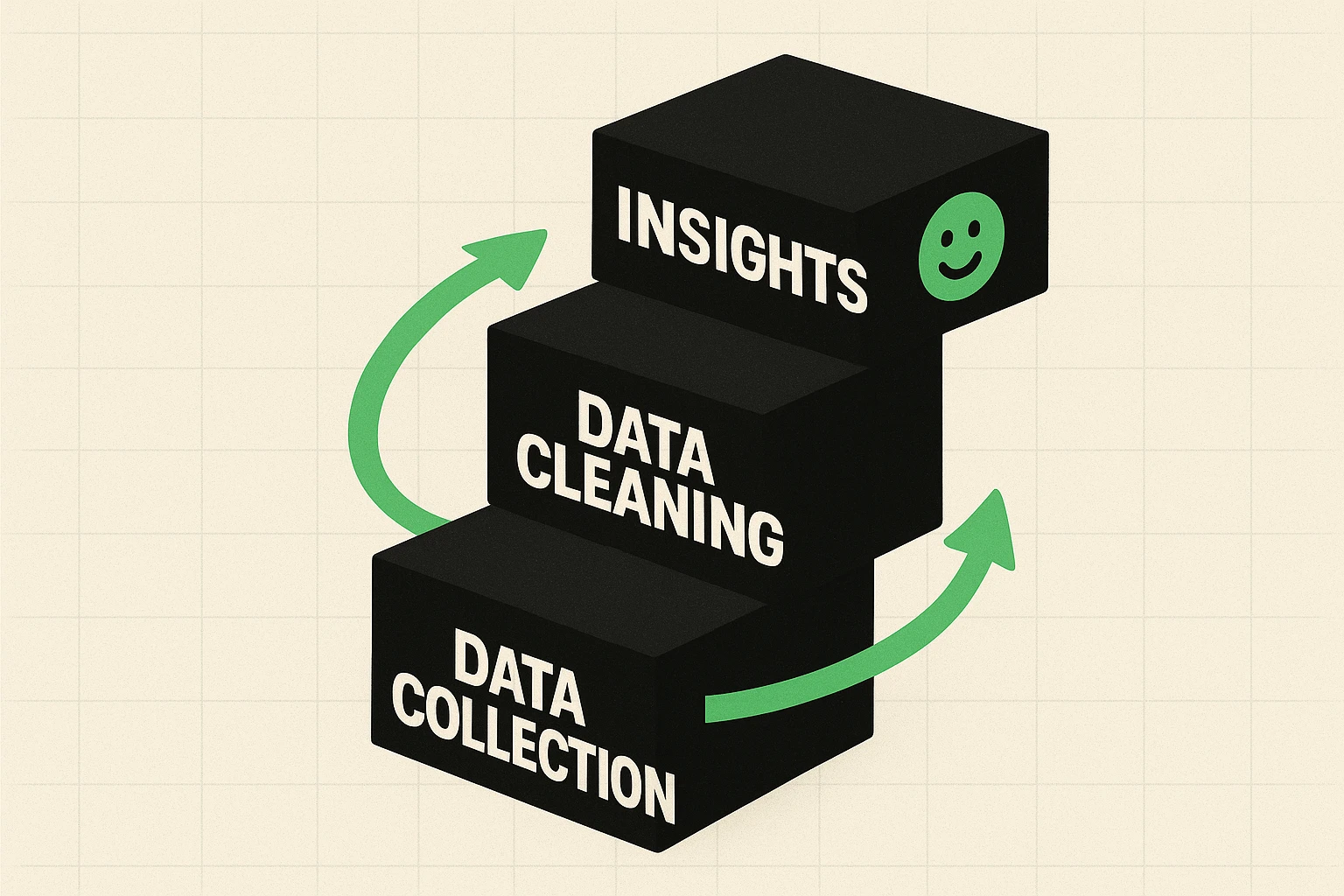
Absolutely. One of AI's most powerful applications is in data cleaning and quality assurance. AI can identify inconsistencies, flag missing values, and even suggest corrections, dramatically improving data quality even before deep analysis begins. It's about a continuous improvement loop, where AI helps clean the data, which then allows for better AI models, and so on.
Q4: How do we ensure data security and privacy when using AI tools for data management?
Data security and privacy are paramount. A trusted AI partner will implement robust security protocols, including encryption, access controls, and data anonymization techniques. Furthermore, adherence to industry regulations (like GDPR) and ethical AI principles is crucial. Regular security audits and transparent data handling policies are non-negotiable.
Q5: What's the difference between AI-Powered BI and self-service analytics?
Self-service analytics tools allow business users to create their own reports and analyze data without needing IT. AI-powered BI takes this a step further by using AI algorithms to automate insights, suggest analyses, and even respond to natural language queries. It's about AI actively assisting and guiding the user to faster, deeper insights, rather than just providing the tools to explore.
Q6: Can AI help with real-time data analysis?
Yes, AI is excellently suited for real-time data processing and analysis. For sectors like finance, e-commerce, or manufacturing, where immediate action based on incoming data is critical, AI-driven systems can monitor data streams, detect anomalies, forecast trends, and trigger automated responses instantly.
Q7: What are the main challenges when integrating AI into existing data pipelines?
Integrating AI can present technical challenges like ensuring data compatibility, managing "schema drift" (changes in data structure over time), and connecting with various legacy systems. Finding solutions to these requires expert knowledge in data engineering and intelligent integration strategies. It’s about careful planning and often requires custom development to bridge existing systems with new AI capabilities.
Your Roadmap to Data Automation Excellence
The journey to becoming an AI-first company capable of transforming data chaos into strategic clarity is within reach. You've evaluated the landscape, understood the comprehensive lifecycle, and recognized the critical considerations. The question isn't whether to adopt AI for your data, but how to deploy it intelligently, ethically, and for maximum impact.
At BenAI, we don't just provide tools; we offer a strategic partnership. We guide you through custom AI implementations, targeted training, and expert consulting to ensure your AI data management strategy delivers tangible results. Whether you're an agency looking to scale your operations with AI Marketing Solutions or a large enterprise needing bespoke AI solutions for complex data pipelines, we're here to help you lead the way in AI adoption.
Ready to move beyond evaluation to real-world transformation? Navigate the complexities of AI-powered data management with a trusted advisor. Let's discuss a tailored strategy for your business.
Join Our Growing AI Business Community
Get access to our AI Automations templates, 1:1 Tech support, 1:1 Solution Engineers, Step-by-step breakdowns and a community of forward-thinking business owners.

Latest Blogs
Explore our latest blog posts and insights.