The promise of AI has long been about efficiency, but for businesses today, the question isn't if you'll use AI, but how comprehensively you'll integrate it. You've likely moved past the initial excitement of individual AI tools. Now, as you evaluate solutions, you're recognizing the deeper potential: AI agents working together, autonomously, across your entire operation. This pivotal shift from isolated AI solutions to orchestrated AI agent ecosystems is where true competitive advantage is forged.
This isn't about simply automating tasks—it's about intelligent delegation on a massive scale. It's about designing, deploying, and governing an entire network of AI agents that function as a cohesive digital workforce. You're looking for solutions that not only deliver powerful AI capabilities but also provide the frameworks to manage their interactions, monitor their performance, and guarantee their collective effectiveness. This guide is your compass in that evaluation, providing the deep insights you need to make confident decisions.
The Strategic Leap: Why Orchestrating AI Agents is Your Next Imperative
The market for AI agents isn't just growing; it's exploding. Projections estimate it will expand from $7.92 billion in 2025 to a staggering $50.31 billion by 2030. This isn't hype; it's a fundamental shift towards reasoning-based autonomous systems across industries. A recent PwC survey revealed that 79% of companies globally have already adopted AI agents, with 66% reporting increased productivity. The message is clear: the future of business operations is agent-driven.
But what does this mean for you, actively evaluating solutions for your business? It signifies a move beyond simple automation to what thought leaders at Forbes refer to as the "agentic layer," where AI agents become intelligent collaborators woven into the architectural fabric of your enterprise. This isn't just about streamlining individual processes; it's about reimagining entire workflows, as McKinsey highlights, to unlock truly transformative gains. You’re not just building point solutions; you’re cultivating a sophisticated, collaborative intelligence.
This translates into tangible benefits: BCG's research in 2025 indicates that AI agents can cut low-value work time by 25-40% and accelerate business processes by 30-50%. These aren't incremental improvements; they're game-changing efficiencies that directly impact your bottom line and free human talent for strategic, creative work (McKinsey, 2025).
Building Blocks: Designing Your AI Agent Architecture
As you move from conceptual understanding to practical implementation, defining the architecture for your AI agent ecosystem becomes crucial. This isn't a one-size-fits-all problem; different business needs require different frameworks for agent collaboration.
Consider the core components:
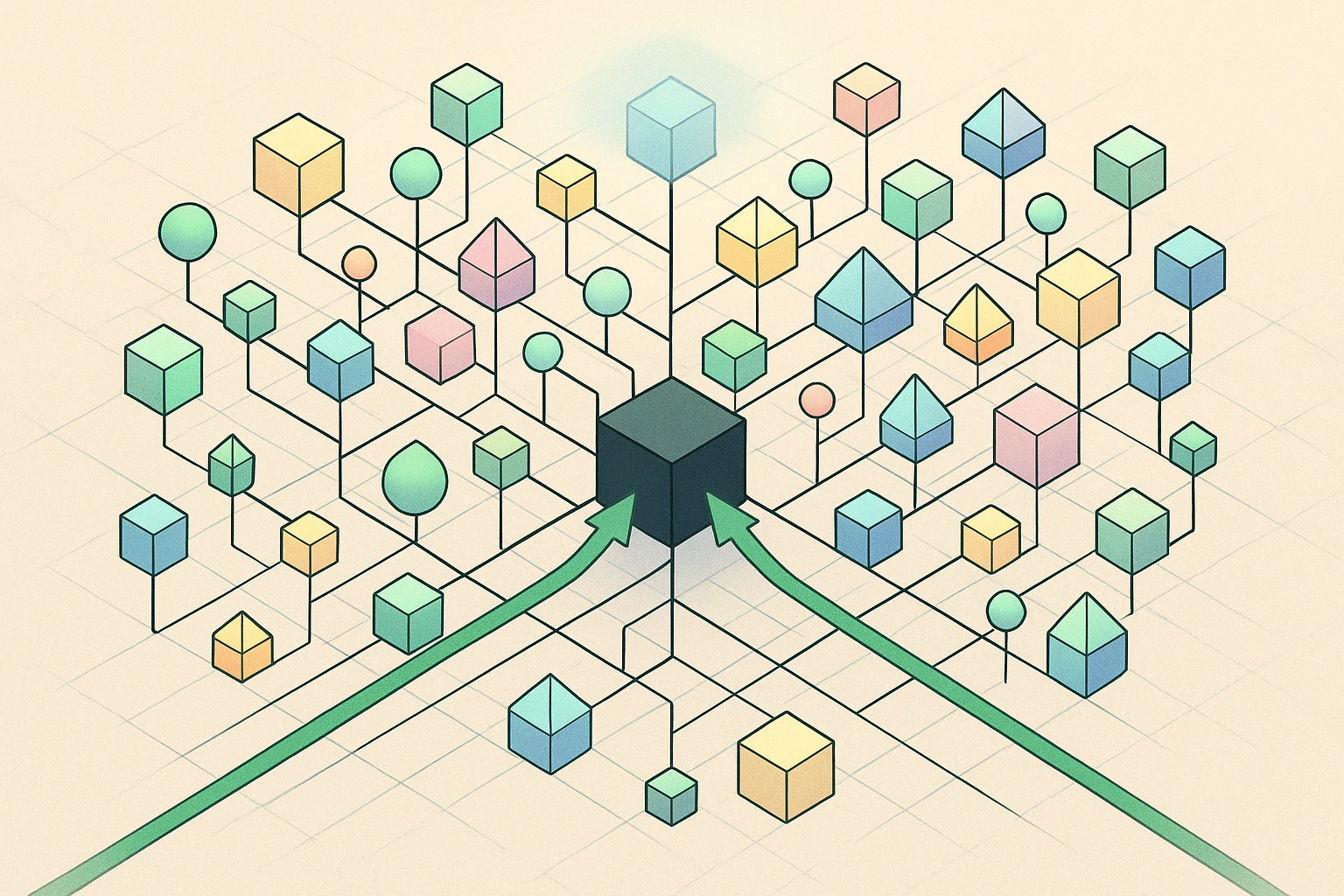
- Specialized Agent Teams: Imagine a team of AI agents, each an expert in a specific domain—one for content generation, another for SEO analysis, and a third for outreach. These agents communicate and pass information seamlessly, mimicking a human team. For instance, an AI content structurer could feed optimized outlines to a content generation agent, which then passes the draft to an editing agent.
- Hierarchical Agents: Think of a project manager agent overseeing several specialized agents. The manager assigns tasks, monitors progress, and intervenes when necessary. This provides a clear chain of command and simplifies control.
- Shared Knowledge Bases: All agents in your ecosystem need access to a common repository of data, rules, and best practices. This ensures consistency and prevents agents from operating in silos.
The goal is to design a modular, decentralized architecture that fosters scalability. You need frameworks that allow agents to interact, share data, and learn collaboratively, moving beyond the capabilities of individual tools like those DigitalOcean details in their exploration of AI agent types.
Early evaluation: Architecture comparison section
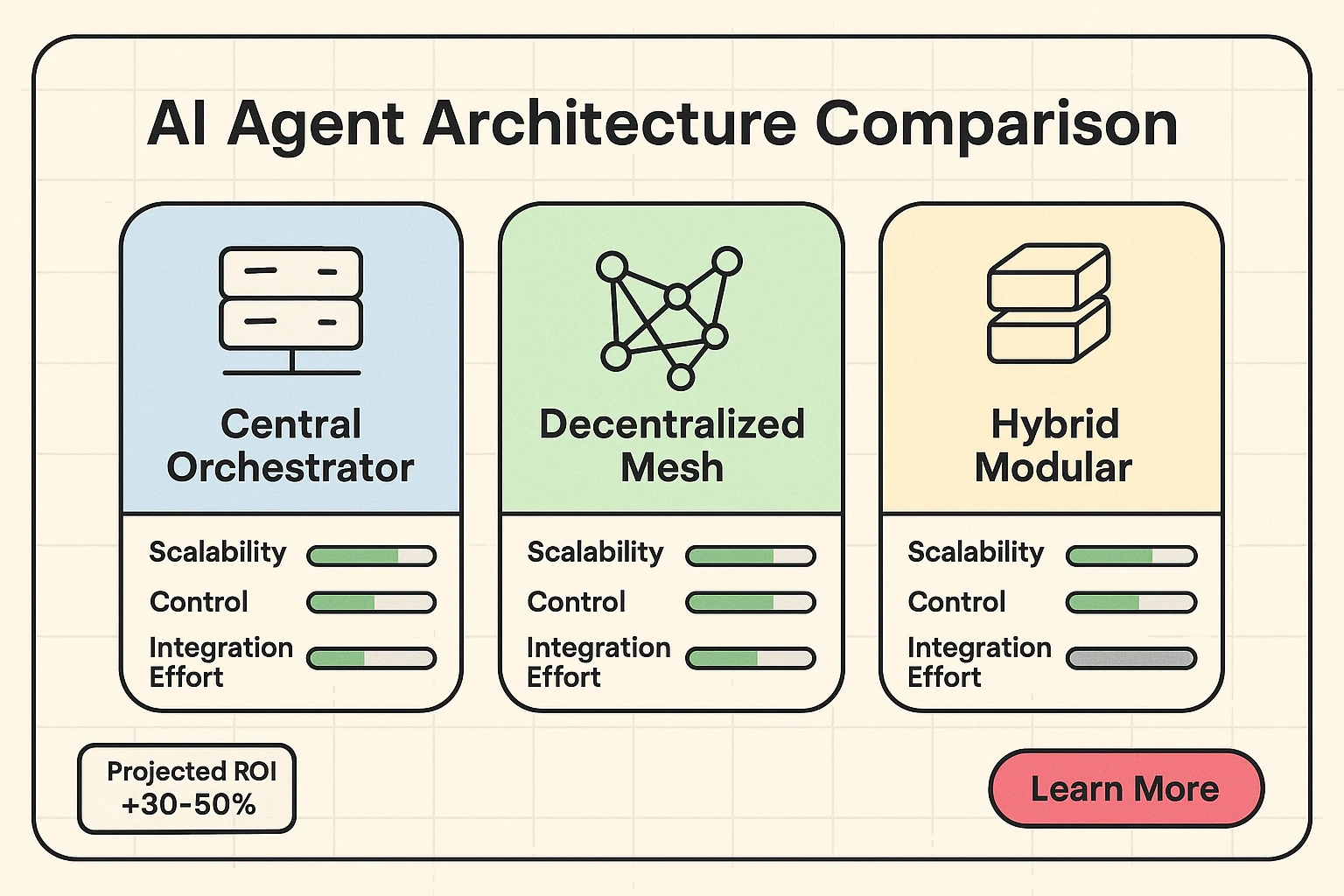
This approach not only enhances efficiency but also allows for greater flexibility. If one agent needs an update or replacement, the entire ecosystem doesn't grind to a halt.
Deployment & Integration: Bridging the Gap
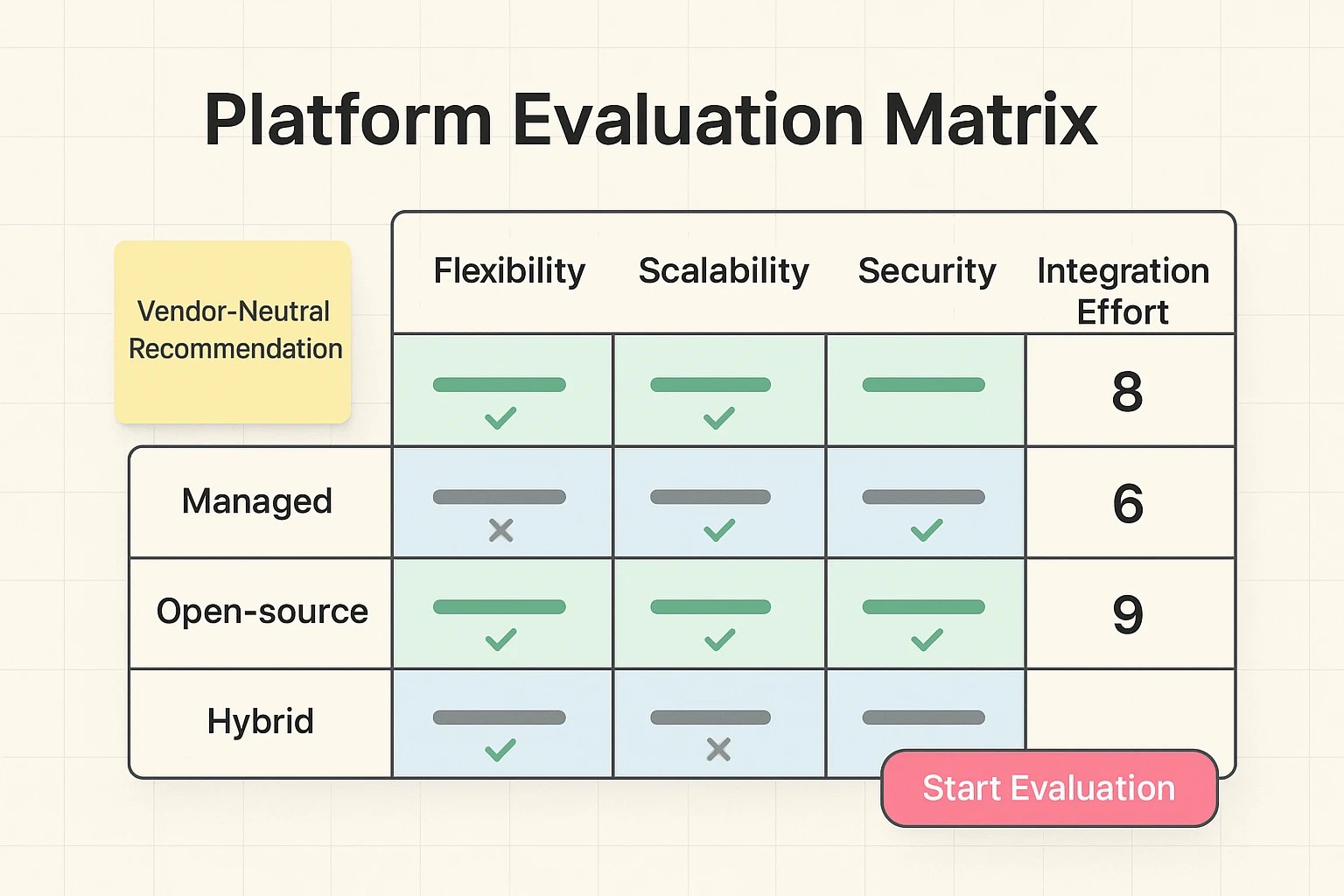
Once you've designed your ecosystem, the next critical step is bringing it to life—integrating these intelligent agents with your existing enterprise systems. This means connecting with your ERPs, CRMs, marketing automation platforms, and other essential APIs. Your chosen solution must offer robust, vendor-neutral strategies to ensure seamless data flow and interoperability.
Many platforms offer integration capabilities, but you need to look beyond the surface. While tools like Make (formerly Integromat) and n8n provide extensive integrations and user-friendly interfaces, your evaluation should focus on the underlying flexibility, scalability, and security they offer for multi-agent orchestration, not just simple automation.
Consider questions like:
- How easily can new agents be onboarded and integrated into the ecosystem?
- What mechanisms are in place to prevent "infinite loops" and manage unreliable LLM outputs, a known challenge highlighted by Dextralabs and UiPath?
- Can the system handle dynamic task assignment and re-prioritization as business needs evolve?
Effective integration frameworks are paramount. Without them, even the most sophisticated agents will struggle to deliver their full potential, remaining isolated rather than truly contributing to a collaborative intelligence. Explore how BenAI's custom implementations can bridge these gaps and integrate AI agents seamlessly into your existing tech stack, as demonstrated in our approach to building an AI SEO marketing stack integration.
Governance & Oversight: Trust, Ethics, and the Human-in-the-Loop
The leap to autonomous AI agents brings with it critical questions of control, risk, and ethics. For decision-makers evaluating AI agent solutions, trust is paramount. PwC emphasizes the "augmented intelligence" approach, advocating for a "human-at-the-helm" model. It’s not about full autonomy from day one, but about establishing clear frameworks for oversight.
You need solutions that prioritize:
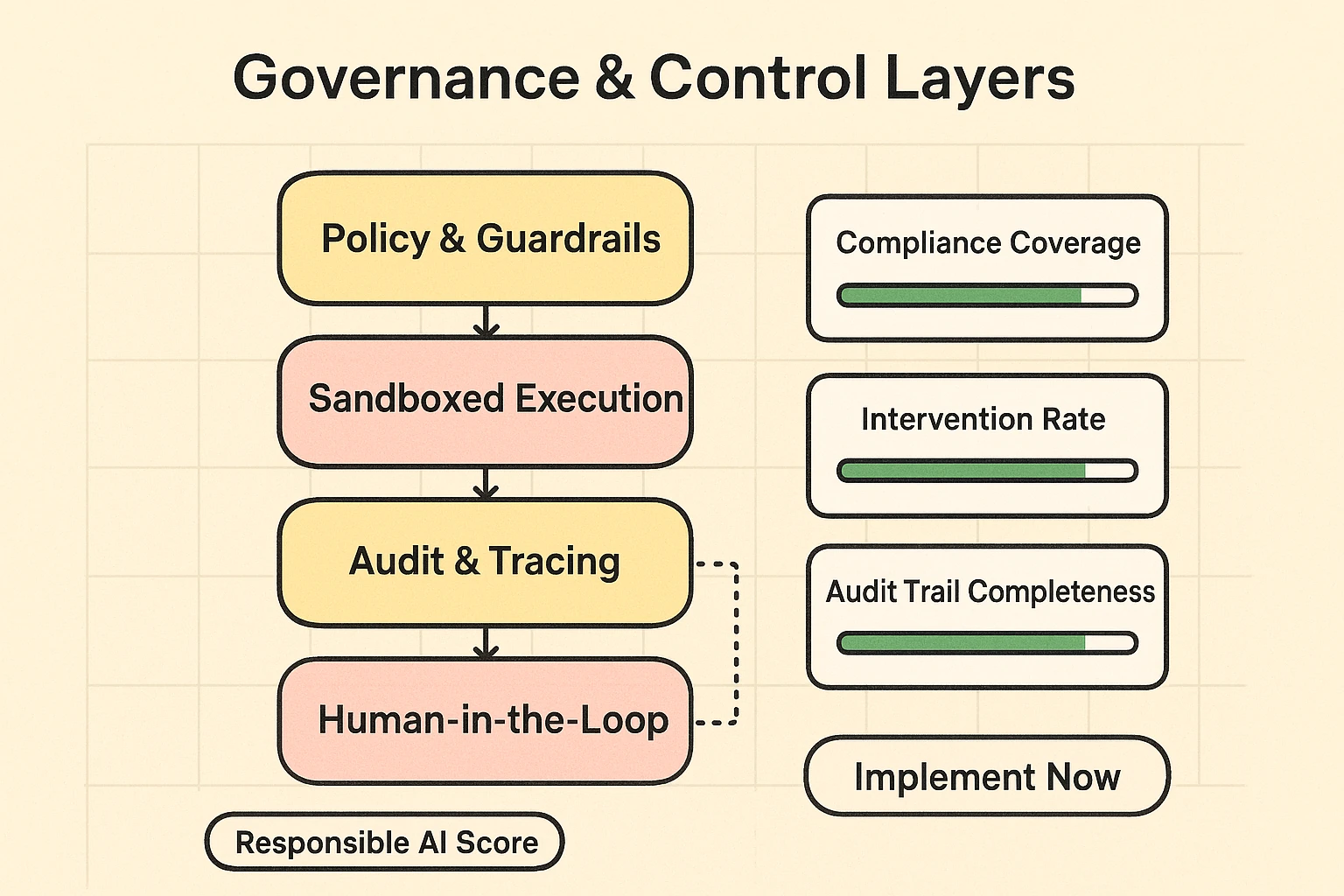
- Clear Guardrails: Defining precise boundaries for what autonomous agents can and cannot do.
- Human-in-the-Loop: Implementing strategic intervention points where human judgment is required before critical actions are taken. This iterative feedback loop is crucial for refinement and safety.
- Ethical AI Development: Ensuring your agents are built on principles of fairness, transparency, and accountability. This includes audit trails for agent decisions and understanding how they arrive at their conclusions.
- Compliance: Navigating regulatory requirements like GDPR and HIPAA in environments where agents handle sensitive data.
Overlooking these considerations can lead to "AI sprawl"—a chaotic proliferation of uncontrolled, unmonitored agents that become liabilities rather than assets. Deloitte's insights underscore the operational challenges of a lack of clear governance. Our content, like this piece on AI content structuring, touches on the fundamental need for structured inputs and outputs, which underpins effective governance.
Governance & risk assessment module in the article
Performance Monitoring & Optimization of Agent Networks
Just as you monitor human teams, a sophisticated AI agent ecosystem demands continuous performance monitoring. It’s not enough to deploy agents; you need to measure their collective effectiveness, identify bottlenecks, and continuously optimize their interactions.
Key metrics for your evaluation should include:
- Task Completion Rates: Are agents successfully completing their assigned tasks?
- Error Rates: How often do agents make mistakes or require human intervention?
- Latency: How quickly do agents process information and execute actions?
- Resource Utilization: Are agents using computing resources efficiently?
- Inter-agent Communication Success: Is information flowing effectively between collaborative agents?
Strategies for optimization include A/B testing agent configurations, refining prompts, and leveraging the continuous learning capabilities of the ecosystem. Dextralabs emphasizes the importance of adaptive systems that feed insights back into the system for continuous improvement. Robust logging, tracing, and audit trails are essential for debugging multi-agent systems, as highlighted by Deloitte. For instance, in our own work, optimizing AI LinkedIn campaign performance involves constant monitoring and refinement.
Performance monitoring & ROI section toward end of article
Security Considerations for Autonomous AI Systems
As AI agents become more autonomous and integrate deeply into your business operations, their security becomes a paramount concern. An ecosystem of interacting agents presents unique vulnerabilities beyond those of individual applications.
For decision-makers, evaluating a solution means understanding how it addresses:
- Secure Inter-agent Communication: Mechanisms to encrypt and authenticate communications between agents, preventing eavesdropping or malicious interference.
- Data Sharing Controls: Granular control over what data each agent can access, process, and share, adhering to the principle of least privilege.
- Sandboxing Agents: Isolating agents in secure environments to contain potential breaches or misbehaviors and prevent them from impacting critical systems.
- Threat Modeling: Proactively identifying and mitigating potential security risks specific to autonomous agent architectures, including adversarial attacks and data poisoning.
These considerations are not merely technical; they are fundamental to maintaining the integrity, confidentiality, and availability of your business operations. A robust AI agent ecosystem solution must offer comprehensive security features built into its core, ensuring the same level of protection you'd expect from any mission-critical system.
Your Path to Strategic AI Implementation
Building and managing an AI agent ecosystem is a complex undertaking, but the benefits—from unprecedented efficiency gains to strategic competitive advantages—are transformational. It requires a partner who understands not just the technical nuances of AI but also the strategic imperatives of business. You need a trusted advisor who can guide you through the intricacies of architecture design, seamless integration, robust governance, continuous optimization, and watertight security.
At BenAI, we specialize in transforming businesses into AI-first entities. We provide proven AI systems, custom implementations, and expert consulting to ensure your AI agent ecosystem is not just effective but also scalable, secure, and aligned with your strategic objectives. Whether you're a marketing agency looking to automate content and outreach, a recruiting firm streamlining hiring, or an enterprise seeking comprehensive AI solutions, we offer the tailored expertise to lead the way in AI adoption.
Ready to move beyond individual AI tools and orchestrate a powerful AI agent ecosystem that drives real business growth?
Frequently Asked Questions (FAQs)
Q1: What exactly is an "AI agent ecosystem," and how is it different from just using AI tools?
An AI agent ecosystem refers to a network of multiple AI agents—each with specific capabilities—working collaboratively and autonomously towards shared business objectives. Unlike individual AI tools (which typically perform single, isolated tasks), an ecosystem manages the interactions, data flow, and collective decision-making of these agents to execute complex, multi-step workflows. It’s about orchestration, not just automation. For example, instead of just an AI tool that writes an email, an ecosystem might have an agent that identifies a lead, drafts a personalized email using another agent, sends it, monitors engagement with a third agent, and then follows up automatically.
Q2: How can I justify the investment in a complex AI agent ecosystem to my stakeholders?
The justification lies in the significant ROI. AI agents can cut low-value work time by 25-40% and accelerate business processes by 30-50%. This translates directly into reduced operational costs, increased productivity, and the ability to scale operations without proportionally increasing headcount. Beyond efficiency, ecosystems enable new levels of data-driven insights and personalized customer experiences, fostering innovation and competitive advantage. We provide frameworks and detailed ROI projections to help you present a compelling business case, often showing how to build an entire marketing team with 37 AI agents and similar initiatives.
Q3: What are the main risks associated with deploying an AI agent ecosystem, and how are they mitigated?
Key risks include security vulnerabilities, ethical concerns (e.g., bias, lack of transparency), control issues (agents acting unexpectedly), and integration complexities. Mitigation involves establishing robust governance frameworks, implementing a "human-in-the-loop" oversight model, ensuring ethical AI development principles, and applying advanced security measures like secure communication protocols, data access controls, and sandboxing for agents. Regular performance monitoring and adaptive learning loops also help refine agent behavior over time, reducing unintended outcomes.
Q4: Will AI agent ecosystems replace human jobs entirely?
Our philosophy, aligned with thought leaders like McKinsey and PwC, emphasizes "augmented intelligence" and "human-AI skill partnerships." AI agents are designed to automate repetitive, data-intensive tasks, freeing human employees from tedious work. This allows your team to focus on higher-value activities requiring creativity, critical thinking, strategic planning, and interpersonal skills. The goal is to create capacity and enable innovation, not to eliminate the human element. For example, our AI SEO automation guide shows how agents handle technical SEO, allowing human experts to focus on strategic content and user experience.
Q5: How does BenAI support businesses in building these ecosystems, especially if we have limited internal AI expertise?
BenAI offers comprehensive services, including custom AI implementations, in-depth training, and strategic consulting. We start by understanding your specific business needs and strategic goals. From there, we design a tailored AI agent architecture, help you select appropriate technologies (vendor-neutral), and manage the deployment and integration with your existing systems. Our training programs upskill your team to manage and optimize the ecosystem, while our consulting ensures continuous strategic alignment and performance. We act as your end-to-end partner in becoming an AI-first company.
Join Our Growing AI Business Community
Get access to our AI Automations templates, 1:1 Tech support, 1:1 Solution Engineers, Step-by-step breakdowns and a community of forward-thinking business owners.
Latest Blogs
Explore our latest blog posts and insights.