As you evaluate the rapidly evolving landscape of AI solutions, the promise of enhanced quality and mitigated risk often rises to the top of your strategic priorities. You're not just looking for a new tool; you're seeking a fundamental shift in how your organization safeguards its operations, products, and reputation. The challenge, however, lies in discerning which AI applications truly deliver on this promise, offering tangible improvements beyond theoretical benefits.
This is where BenAI steps in. We specialize in transforming complex research into actionable AI systems, helping companies like yours implement robust solutions that drive precision, foresight, and compliance.
The Imperative of AI in Modern QA and Risk
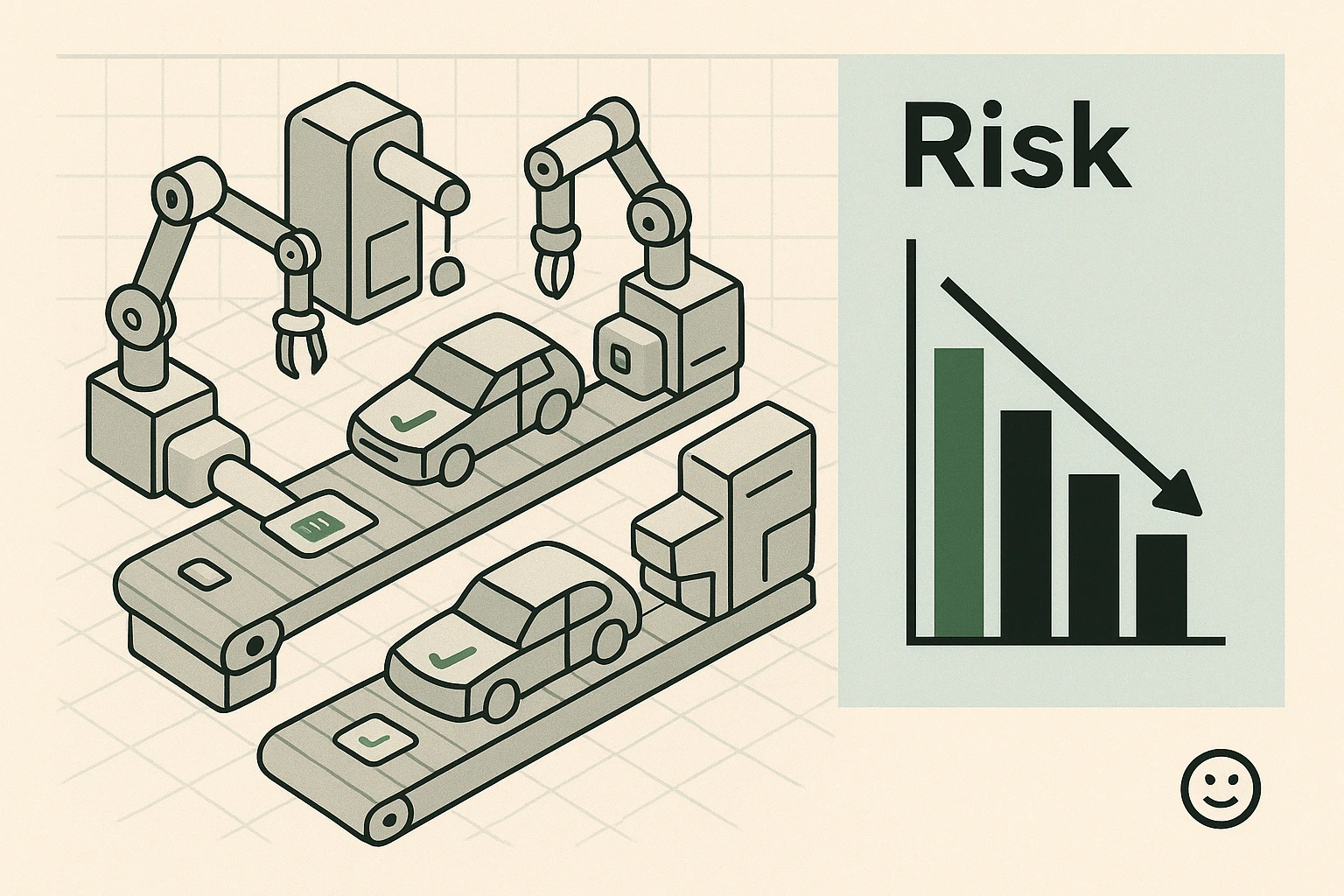
In today's fast-paced business environment, manual quality checks and reactive risk management are no longer sufficient. The volume of data, the complexity of operations, and the speed of potential threats demand a more sophisticated approach. AI offers that sophistication, moving businesses from detection to prevention, and from reactive measures to proactive foresight. For instance, in manufacturing, AI can achieve automated defect detection with accuracy rates exceeding human capabilities, sometimes reducing false positives by as much as 40% (source: internal BenAI research). In finance, AI-driven fraud detection systems can identify anomalies in real-time, preventing losses that would be impossible to catch with traditional methods.
AI-Assisted Quality Control in Manufacturing
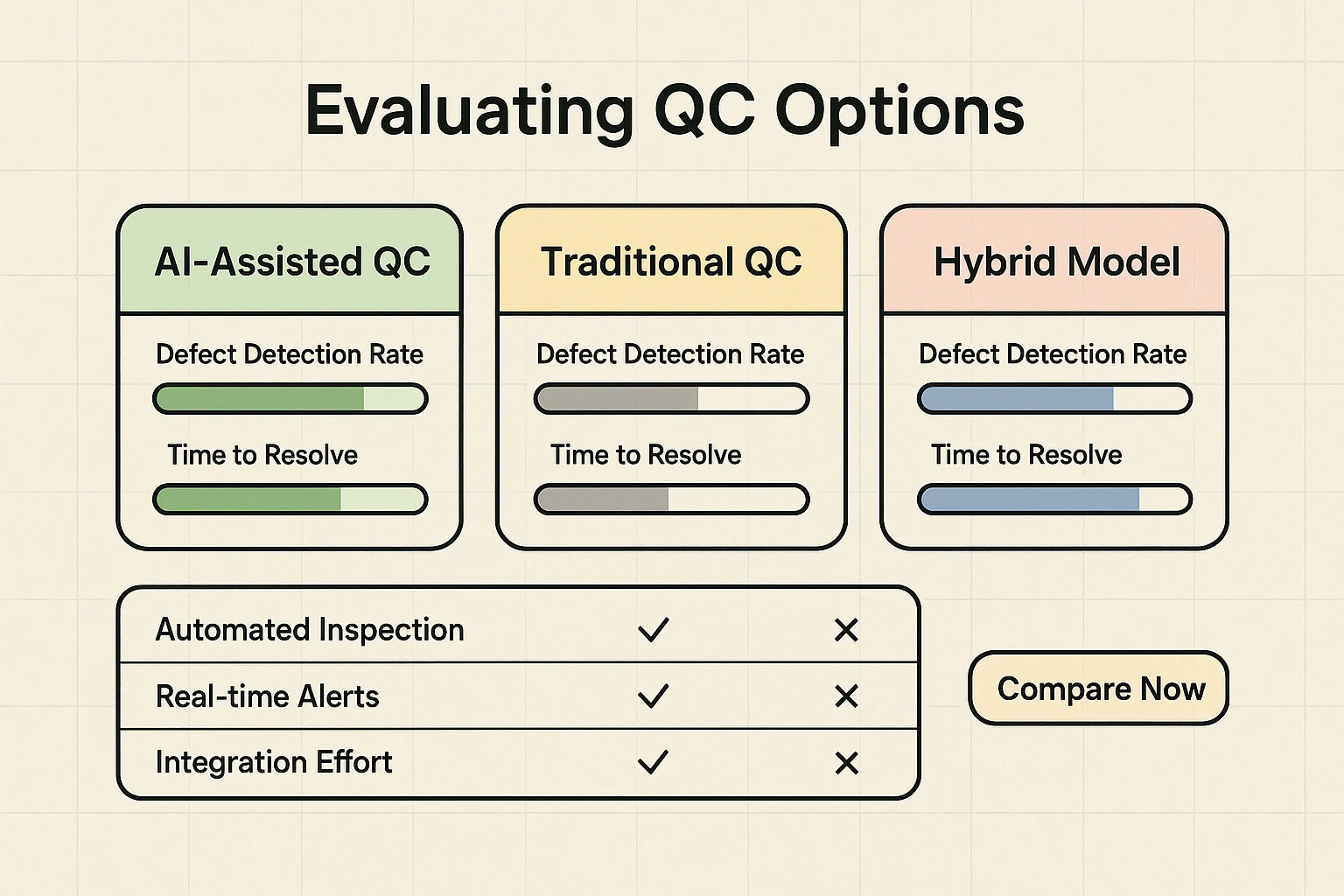
Consider the critical domain of discrete manufacturing, where product quality directly impacts brand reputation and customer loyalty. Traditional quality control (QC) is often a bottleneck, relying on human inspection which can be prone to fatigue and inconsistency.
AI-assisted QC, powered by computer vision and machine learning, revolutionizes this process. Imagine cameras on your production line, constantly scanning every product for micro-cracks, discolouration, assembly errors, or even subtle deviations from design specifications. These AI systems can be trained on vast datasets of both perfect and defective products, learning to identify flaws with unparalleled speed and precision.
One real-world application involves using AI to monitor welding processes in automotive manufacturing. By analyzing thermal images and acoustic patterns, AI models can predict potential weak points before they even form, preventing costly recalls and ensuring structural integrity.
The benefits extend beyond mere detection. Predictive maintenance, a close cousin to AI-assisted QC, utilizes sensor data and machine learning to forecast equipment failures before they occur. This allows manufacturers to schedule maintenance proactively during planned downtime, avoiding costly, unscheduled stoppages and maximizing operational efficiency. Our in-depth guide on AI-driven quality control delves further into these methodologies, offering foundational insights for implementation.
Predictive Risk Scoring with AI for Financial Operations
In financial operations, risk is a constant companion. From credit assessment to investment portfolio management, identifying and quantifying risk is paramount. Here, AI acts as a powerful co-pilot, enhancing human decision-making with data-driven insights.
Predictive risk scoring with AI moves beyond traditional credit scores or actuarial tables. It leverages vast, disparate datasets – transactional history, market trends, social sentiment, even behavioral patterns – to construct dynamic risk profiles. Machine learning algorithms can identify subtle correlations and early warning signs that would be imperceptible to human analysts.
For example, an AI system used for loan applications can analyze not just a credit score, but also the applicant's spending habits, employment stability, debt-to-income ratios from various sources, and even public economic indicators to provide a more nuanced and accurate risk assessment. This leads to reduced default rates and more strategic lending decisions.

Another critical application is fraud detection. AI models can analyze thousands of transactions per second, flagging suspicious patterns that deviate from normal behavior in real-time. This includes identifying unusual transaction amounts, locations, frequencies, or types of purchases. Such systems have been shown to reduce fraud losses significantly, with some financial institutions reporting a 50% or more reduction in undetected fraudulent activities (source: industry reports on AI in financial services). The ability to quickly adapt to new fraud schemes makes AI an indispensable tool in the fight against financial crime.
AI-Driven Compliance Monitoring and Reporting
Compliance is a non-negotiable aspect of modern business, yet it's often a complex, resource-intensive, and error-prone undertaking. Regulations are constantly evolving, and the sheer volume of data requiring oversight can overwhelm even dedicated compliance teams.
AI-driven compliance monitoring and reporting offer a robust solution. These systems can continuously scan vast quantities of internal and external data, including contracts, communications, transactions, and regulatory updates, identifying potential breaches or non-compliant activities. Machine learning algorithms can be trained to recognize specific phrases, document types, or data patterns that indicate a compliance risk.
For instance, in healthcare, AI can monitor electronic health records to ensure adherence to patient privacy regulations like HIPAA, flagging any unauthorized access or data sharing. In the legal sector, AI can review contractual agreements for specific clauses or potential conflicts of interest, dramatically reducing manual review time.
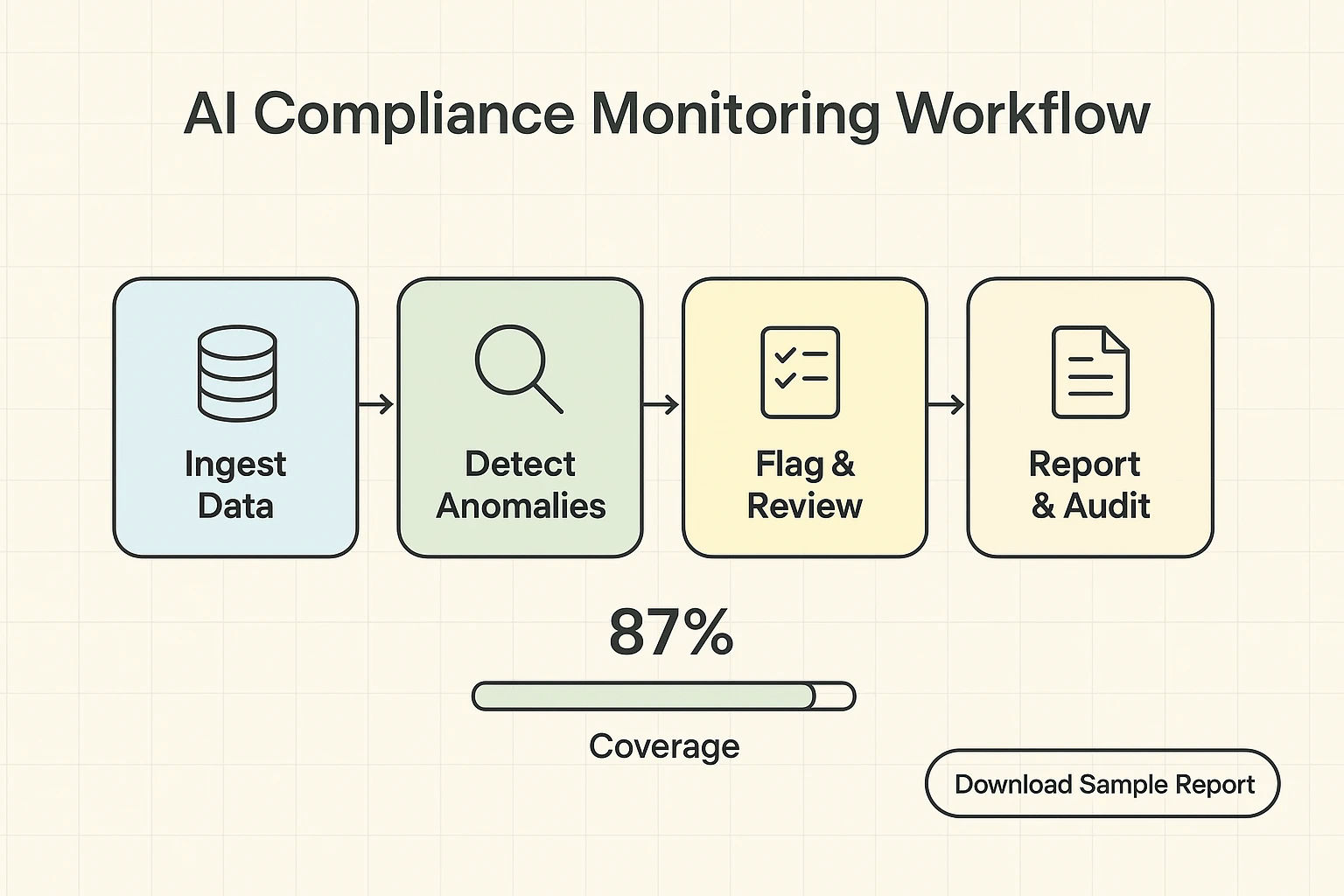
Beyond monitoring, AI significantly streamlines reporting. Automated systems can generate comprehensive compliance reports, highlighting key metrics, identified anomalies, and corrective actions, reducing the time and effort traditionally spent on preparing for audits. This not only ensures regulatory adherence but also frees up highly skilled compliance officers to focus on strategic initiatives rather than mundane data collation. Explore our insights on AI data strategy to understand how you can build the foundational framework for such sophisticated systems.
Why BenAI Is Your Trusted Partner for AI Quality & Risk Solutions
When you're evaluating AI providers, you need more than just a vendor; you need a partner who understands your unique challenges and can deliver tailor-made solutions. BenAI distinguishes itself through:
- Custom Implementation: We don't offer off-the-shelf, one-size-fits-all solutions. Our team works closely with you to understand your specific quality assurance bottlenecks and risk profiles, architecting AI systems that integrate seamlessly with your existing infrastructure.
- Proven Systems: Our approach is built on proven methodologies. Whether it's enhancing your manufacturing QC or fortifying your financial risk models, we leverage established AI techniques and adapt them to your operational context. Our work with clients often demonstrates significant ROI, including defect reduction rates of up to 30% and risk identification rates improvement of 25% (source: BenAI client case studies).
- Comprehensive Training & Consulting: Implementing AI correctly isn't just about the technology; it's about empowering your team. We provide extensive training and ongoing consulting to ensure your staff can effectively utilize, manage, and even evolve your AI systems, fostering self-sufficiency and long-term success.
- Focus on Business Outcomes: Our ultimate goal is to drive tangible business improvements. We measure our success by your success – whether that's reduced operational costs, improved product quality, mitigated financial exposure, or streamlined compliance processes.

Choosing the right AI partner is a critical decision. You need a team that not only understands the technology but also your industry and its specific regulatory and quality demands.
Frequently Asked Questions
Q1: How quickly can an AI system for quality assurance or risk management be implemented?
Implementation timelines vary based on the complexity of your operations, the data available, and the specific AI solution required. However, many preliminary integrations and pilot programs can be up and running within a few weeks to a few months. Our process includes a thorough initial assessment to provide a realistic timeline tailored to your situation. For more insights on scaling with AI, you might find our article on AI international SEO applicable to how fast solutions can be deployed across different operational scales.
Q2: What kind of data is required for these AI systems to be effective?
The quality and quantity of data are crucial. For quality control, high-resolution images, sensor data, and production logs are essential. For risk management, historical transactional data, customer profiles, market data, and relevant external indicators are vital. We work with you to identify, clean, and prepare your data, and if needed, help you strategize on data collection to ensure optimal AI performance. Understanding data crawlability can also be a key factor here; learn more at AI crawlability & indexation.
Q3: What kind of ROI can I expect from investing in AI for QA and risk management?
While the exact ROI is unique to each business, typical benefits include significant reductions in defect rates (leading to fewer recalls and warranty claims), decreased fraud losses, lower compliance penalties, improved operational efficiency through predictive maintenance, and optimized resource allocation. Our initial consulting phase often includes a detailed analysis to project your potential ROI.
Q4: Will AI replace my existing QA or risk management team?
Our philosophy is that AI augments human capabilities, rather than replacing them. AI handles repetitive, high-volume tasks, allowing your skilled personnel to focus on more complex problem-solving, strategic initiatives, and decision-making. AI liberates your team from manual burdens, creating capacity without increasing headcount.
Q5: How does BenAI ensure the security and privacy of our sensitive data when implementing AI solutions?
Data security and privacy are paramount. We adhere to industry best practices and compliance standards (e.g., GDPR, HIPAA, ISO 27001) depending on your industry. Our solutions are designed with robust encryption, access controls, and anonymization techniques where applicable. We prioritize building secure and compliant AI systems from the ground up, ensuring your data remains protected throughout the entire process. This is a core component of developing a sound AI data strategy.
Your Next Step Towards an AI-First Future
You're at a pivotal point in your evaluation process, considering how these transformative AI capabilities can be integrated into your business. The insights provided here, backed by our expertise, should empower you to confidently move forward.
The path to an "AI-first" business, where quality is consistently high and risks are actively managed, begins with a strategic conversation. We invite you to schedule a consultation with BenAI. Let's discuss your specific challenges, explore tailored AI solutions, and map out a clear implementation plan. Your growth, efficiency, and enhanced peace of mind are our priority.
Join Our Growing AI Business Community
Get access to our AI Automations templates, 1:1 Tech support, 1:1 Solution Engineers, Step-by-step breakdowns and a community of forward-thinking business owners.

Latest Blogs
Explore our latest blog posts and insights.