Imagine running a business that thrives during certain times of the year, then slows to a crawl at others. Maybe you own a bustling ice cream parlor in summer, a popular costume shop for Halloween, or a landscaping service during growing seasons. While these seasonal peaks bring excitement and revenue, they also create a constant tightrope walk: How do you scale up flawlessly for demand, then efficiently scale down without bleeding resources during the off-season?
It's a familiar challenge for countless businesses. Yet, what if there was a way to navigate these turbulent waters not just with resilience, but with strategic precision? What if you could anticipate demand with uncanny accuracy, optimize operations on the fly, and even discover new growth opportunities during those quiet periods?
Enter Artificial Intelligence (AI) – not as a magic bullet, but as a compass and a lever for businesses with seasonal demand fluctuations. Many entrepreneurs might believe AI is too complex or costly for their particular rhythm, or that it simply "runs on autopilot." But the reality is far more nuanced and, frankly, accessible. The key isn't just implementing AI; it's developing a phased AI strategy that harmonizes with your business's natural cycles.
This guide will walk you through how to do just that, transforming your seasonal variability from a headache into a strategic advantage.
Why Seasonal Businesses Need a Different AI Playbook
Generic AI implementation advice often misses the mark when it comes to businesses with significant seasonal demand. Why? Because the very nature of seasonality throws unique curveballs:
- Data Scarcity & Variability: During off-peak, you might have less data, and during peak, it might be overwhelming and rapidly changing. AI models thrive on consistent, rich data, so handling these swings requires a specialized approach.
- Resource Constraints: Budget and staffing can be tight during the off-season, making large-scale AI projects seem daunting. During peak, every resource is dedicated to fulfilling immediate demand.
- Risk Aversion During Peak: Introducing radical new systems during your busiest times is a recipe for disaster. The margin for error is razor-thin.
- Lost Opportunities in Off-Peak: Quiet periods are often seen as times to simply weather the storm, rather than strategic opportunities for innovation and preparation.
Without a tailored approach, AI projects can quickly become expensive distractions. But with a phased strategy, you can minimize risk, maximize impact, and ensure AI genuinely supports your business goals through every ebb and flow.
The Phased AI Advantage for Seasonal Demand
Think of it like preparing for a marathon: you don't just show up and run. You train, build endurance, and refine your technique over time. A phased AI strategy applies this same principle, allowing you to:
- Mitigate Risk: Start small, learn, and iterate before scaling.
- Optimize Resource Allocation: Leverage off-peak periods for foundational work and training.
- Build Internal Expertise: Grow your team's AI literacy steadily without overwhelming them during critical periods.
- Achieve Measurable ROI Sooner: Focus on high-impact projects first, demonstrating value early on.
Here’s a high-level look at how a phased strategy can unfold:

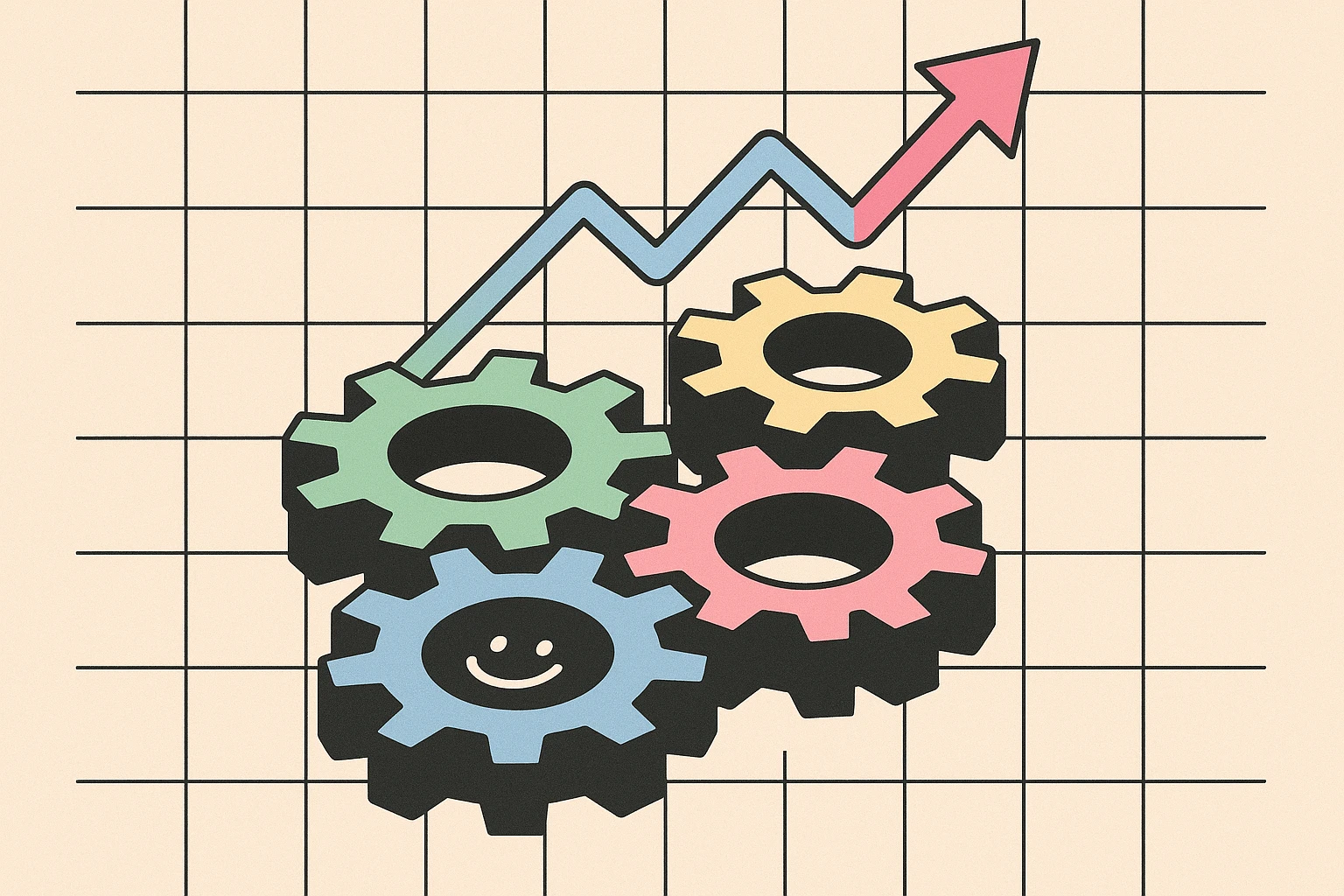
High-level hub visualization of a phased AI strategy aligned to seasonal business needs—shows four clear phases and their roles in the roadmap.
Building Your Seasonal AI Blueprint: A Four-Phase Approach
The core idea is to synchronize your AI deployment with your business's unique rhythm. Each phase capitalizes on the specific conditions of your operational cycle – whether you're ramping up, in full swing, winding down, or in a lull.
Phase 1: Assessment & Strategy Alignment (Off-Peak Focus)
The quiet season isn't downtime; it's prime time for strategic planning. This is where you lay the groundwork, identifying where AI can make the biggest difference without the pressure of imminent, high-stakes operations.
- Identify High-Impact Use Cases: Don't chase every shiny AI object. Focus on seasonal pain points. Where do you consistently lose money or efficiency during peak?
- Demand Forecasting: Can AI predict your holiday rush, summer surge, or autumn lull with greater precision? Companies like Church Brothers Farms increased forecasting accuracy by 40% with AI, significantly reducing waste.
- Inventory Optimization: Avoid stockouts and overstocking. Unilever uses AI to optimize its ice cream supply chain, adapting to local weather and events.
- Pricing Strategy: Dynamic pricing can optimize revenue during peak and stimulate demand during off-peak.
- Marketing Personalization: Leverage off-peak customer data to craft hyper-targeted campaigns for the next peak season. For insights on AI-driven personalization, explore our article on AI LinkedIn Message Personalization.
- Data Readiness Assessment & Collection: AI is only as good as its data. Use your off-peak to:
- Audit Historical Data: What data do you have from past seasons? Sales, weather, promotional activities, website traffic, social mentions – gather everything.
- Clean and Structure: This is crucial. Inaccurate or inconsistent data will derail your AI. Invest time in cleaning datasets now.
- Identify Gaps: What data are you missing that would be valuable? Plan how to collect it in the next cycle.
- Define Measurable Goals: Goals must be specific, measurable, achievable, relevant, and time-bound (SMART), and critically, aligned with your seasonal context. (e.g., "Reduce seasonal stockouts by 15% next summer," "Increase off-peak booking conversions by 10%").
- Build the Business Case: Quantify the potential ROI. How much could better forecasting save you in waste or lost sales? How much could optimized marketing boost revenue? This is vital for securing internal buy-in, especially when budgets are seasonal.
Phase 2: Pilot & Proof-of-Concept (Pre-Peak/Ramp-Up)
As you approach your busy season, this phase is about small, controlled experiments. You're testing the waters, not diving in headfirst.
- Select a Focused Pilot Project: Choose a small scope, high potential ROI, and non-critical area. This minimizes disruption during ramp-up. For example, instead of forecasting all products, start with your top 5 seasonal sellers.
- Develop & Test Initial AI Models: This could involve creating a simple demand forecasting model or an AI agent to automate routine customer service inquiries specific to your busy period.
- Integrate Without Disruption: Ensure your pilot AI can integrate with existing systems seamlessly. The goal is to prove value, not overhaul your tech stack during a sensitive time.
- Measure & Learn: Track KPIs from Phase 1 religiously. What's working? What's not? The beauty of a phased approach is the ability to iterate quickly.
- Upskill Your Team: Involve key team members in the pilot. This builds internal AI literacy and champions. For those interested in automation from a technical POV, our guides on how to build a multi-channel sales agent can provide practical insights.
Phase 3: Scaled Deployment & Integration (Peak & Post-Peak Optimization)
Now, with a successful pilot under your belt, you can strategically expand AI's role, often during peak, with refinement continuing into the winding down period leading into post-peak.
- Gradual Expansion: Scale successful pilots across more products, more functions, or to a wider customer base. This might involve expanding your AI-driven demand forecasting from 5 to 20 products, or deploying your AI customer service agent to handle a broader range of queries.
- Synchronize Deployment: Crucially, align full AI model deployment with natural seasonal transitions. For example, roll out new predictive models before your peak season fully kicks off, giving them time to learn from early data.
- Real-Time Adaptation: During peak, your AI models need to be nimble. Implement systems for real-time data feeding and model recalibration. This allows your AI to adapt to unexpected weather changes affecting sales, sudden supply chain disruptions, or shifts in consumer behavior. Walmart uses AI to understand how local events and weather impact demand.
- Post-Peak Analysis & Refinement: Once the intensity of the peak subsides, use the lessons learned. Analyze AI performance during stress, capture new data unique to the season, and identify areas for iterative model improvement and process optimization. This is also a good time to fine-tune your content strategy with AI. Learn more about improving your content with our guide on AI content refresh. For efficiency, our article on reducing manual SEO workflows with AI offers great perspectives.
Here's how a season-aligned process flow might look:

A season-aligned process flow showing when to run assessment, pilot, deployment, and optimisation activities so AI work syncs to business peaks.
Phase 4: Continuous Optimization & Innovation (Year-Round Cycle)
AI isn't a one-and-done project; it's a continuous journey. This phase integrates AI into your business's DNA, fostering a culture of innovation that leverages every part of the year.
- Ongoing Monitoring & Evaluation: Establish dashboards and alerts to track AI model performance. Are forecasts still accurate? Are personalized recommendations effective?
- Iterative Model Improvement: Regularly retrain and refine your models with new data. The more data they consume (especially across diverse seasonal cycles), the smarter they become.
- Explore Advanced Applications: Once foundational AI is in place, you can explore more sophisticated uses, such as:
- Proactive Demand Shaping: Using AI to dynamically adjust pricing or promotions to flatten demand peaks and fill off-peak troughs.
- Personalized Customer Journeys: AI guiding customers through tailored experiences that optimize purchasing regardless of the season.
- AI-Driven Talent Management: Optimizing staffing levels for peak season by using AI to predict labor needs and automate recruitment tasks. For example, our AI recruiting solutions can help with this.
- Build an AI-Driven Culture: This means fostering curiosity, continuous learning, and encouraging employees to identify new AI opportunities. It's about empowering your team to use AI as a tool, not simply replacing them with it.
The Vendor Dilemma: Build In-House vs. Outsourced Expertise
A critical decision for seasonal businesses involves how you acquire AI capabilities. Given fluctuating resources, the build vs. buy (or outsource) question takes on added significance.
Should you invest in building an internal AI team, which offers greater control but higher upfront cost and time? Or should you leverage external expertise, which provides speed and specialized knowledge but might come with less long-term control?
Here's a decision grid to help weigh your options:

A compact decision grid to help seasonal businesses weigh building internal AI vs outsourcing—focuses on cost, control, and speed trade-offs.
For many seasonal businesses, a hybrid approach often makes the most sense. You might outsource initial AI model development and strategy to specialists, while building a lean internal team to manage and monitor models, and identify new integration opportunities. This allows you to tap into world-class expertise without the overhead of a full-time, in-house AI department, especially useful when staff needs fluctuate.
Conclusion: Embrace the Rhythm, Leverage the Future
For businesses with seasonal demand, AI isn't just about becoming more efficient; it's about transforming your fundamental relationship with unpredictability. Instead of reacting to the market, you can pro-actively shape it. Instead of merely surviving the off-season, you can strategically leverage it for growth and innovation.
Developing a phased AI strategy—tailored to your unique seasonal rhythm—is not just a smart business move; it's becoming an essential one. It allows you to introduce powerful technology incrementally, learn along the way, and build an "AI-first" business that can thrive in any season.
Ready to explore how a phased AI strategy can work for your seasonal business? We invite you to learn more about our AI Business Solutions and how we tailor AI implementation, training, and consulting for companies like yours.
Frequently Asked Questions (FAQ)
Q1: What makes AI implementation different for seasonal businesses?
A1: The primary difference lies in the extreme variability of data, demand, and resources. Seasonal businesses face periods of high data volume and rapid change (peak season) contrasted with low data volume during slower periods (off-peak). A generic AI strategy might struggle to adapt to these shifts, leading to inaccurate predictions or inefficient resource allocation. A phased approach specifically addresses how to leverage each part of the season for optimal AI development and deployment.
Q2: Is AI too expensive or complex for a small seasonal business?
A2: Not necessarily. While some enterprise AI solutions can be costly, many AI tools and services are becoming more accessible. The key is to start small with a focused pilot project during your off-peak season, proving ROI before scaling. Focusing on "low-hanging fruit" opportunities that solve critical seasonal pain points can deliver significant returns, making AI a viable investment for even smaller businesses.
Q3: What kind of data do I need to start with AI for seasonal demand?
A3: To begin, you'll need comprehensive historical data related to your sales, customer behavior (e.g., website visits, purchase patterns), marketing campaigns, external factors (like weather, local events), and operational metrics (inventory levels, staffing). The more years of consistent, clean data you have, the better your AI models can learn to recognize seasonal patterns. Data cleaning and structuring are crucial steps often best done during the off-peak.
Q4: How long does it take to see results from a phased AI strategy?
A4: The beauty of a phased approach is that you can start seeing incremental results relatively quickly, often within a single seasonal cycle for your pilot project. For example, an optimized demand forecasting model piloted during a pre-peak phase could show improved accuracy by the end of that peak season. Full transformational results, where AI is deeply integrated across various functions, typically take longer as you move through subsequent phases of scaling and optimization.
Q5: Can AI help me create demand during my off-peak season?
A5: Yes! While AI is excellent at predicting existing demand, it can also play a pivotal role in shaping or stimulating demand during quieter periods. By analyzing past customer behavior and market trends, AI can inform personalized marketing campaigns, dynamic pricing strategies, and tailored product/service recommendations that encourage purchases even when traditional demand is low. This transforms passive waiting into proactive growth.
Q6: What are common pitfalls to avoid when implementing AI in a seasonal business?
A6: Key pitfalls include:
- Trying to do too much too soon: Overambitious initial projects can quickly drain resources and lead to failure.
- Ignoring data quality: AI models will generate garbage if fed garbage data.
- Deploying during peak without testing: This can disrupt operations and harm customer experience.
- Lack of internal buy-in: Without team support, adoption will be slow.
- Forgetting about continuous monitoring: Models degrade over time; they need ongoing refinement.A phased approach helps mitigate all of these risks by emphasizing controlled iterations and strategic timing.
Join Our Growing AI Business Community
Get access to our AI Automations templates, 1:1 Tech support, 1:1 Solution Engineers, Step-by-step breakdowns and a community of forward-thinking business owners.
Latest Blogs
Explore our latest blog posts and insights.