The rise of artificial intelligence has fundamentally reshaped the way businesses operate. But beyond the headlines of automation and efficiency, lies a deeper, more critical challenge: how do you integrate AI into the very fabric of your organization's talent and workforce strategy? Are you just buying tools, or are you strategically building an AI-first culture?
Many businesses are grappling with understanding AI's true impact on their workforce, moving beyond the fear of job displacement to harness its transformative power. The truth is, AI's influence is less about replacing every human and more about fundamentally altering how humans work, creating new roles, and demanding new skills. This isn't merely a technological adoption; it's a strategic evolution of your entire talent ecosystem.
At BenAI, we're not just selling AI solutions; we're your partner in meticulously integrating AI into your talent and organizational structure. We guide you through upskilling your existing workforce, defining the AI-centric roles of tomorrow, and fostering a culture where humans and AI collaborate seamlessly to drive unprecedented growth.
The AI Workforce Landscape: Navigating Dual Realities
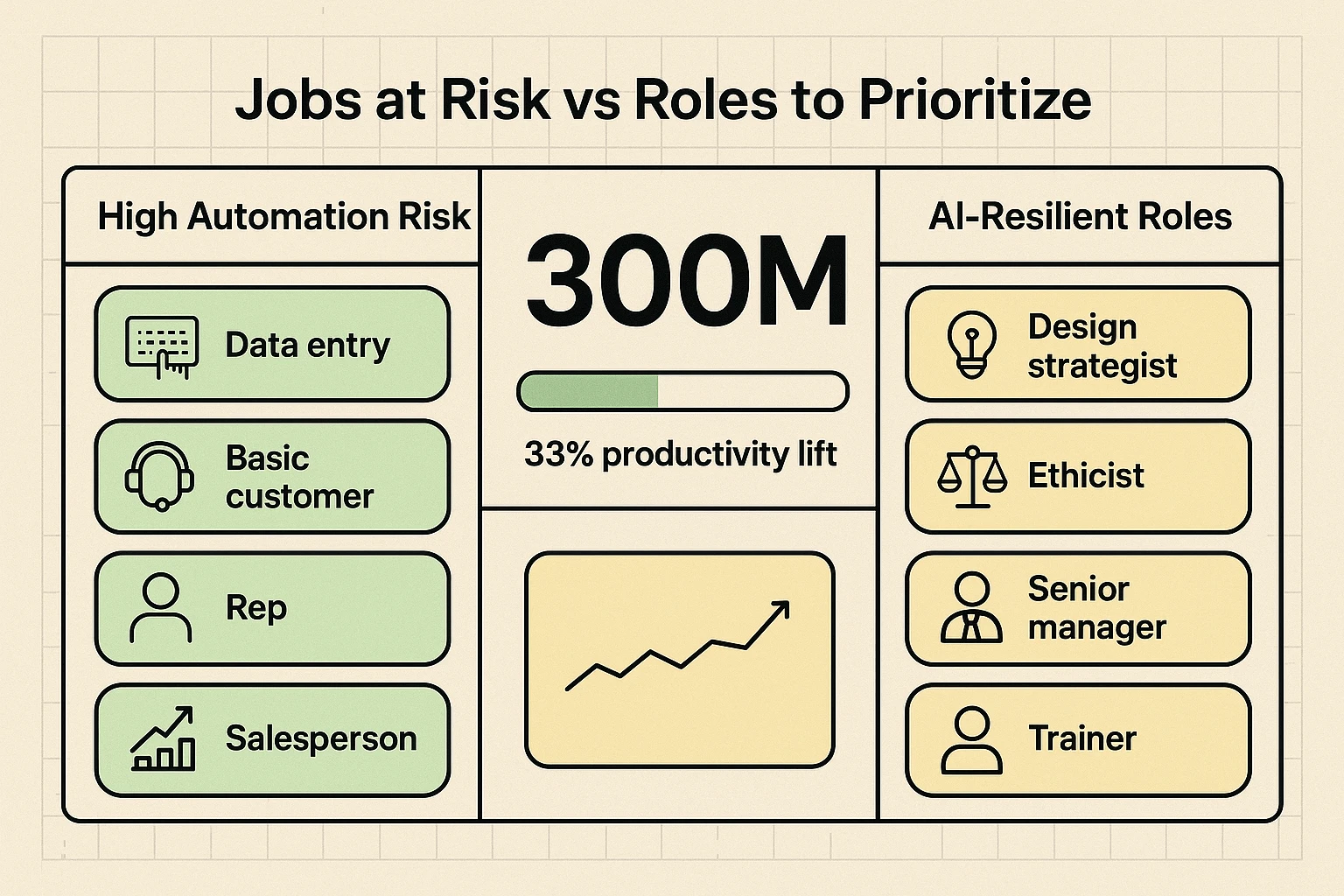
The headlines are clear: AI is set to revolutionize the job market. Goldman Sachs projects that 300 million full-time jobs globally could be replaced, with McKinsey estimating that 30% of US jobs could be automated by 2030, and a staggering 60% significantly altered. For nations like India, the impact is substantial, with NITI Aayog suggesting 2 million jobs in the tech sector alone could be affected.
The critical insight, however, isn't just about displacement; it's about transformation and augmentation. AI doesn't just take away; it creates. St. Louis Fed and IBM data show that individual worker productivity can improve by 33% on average with generative AI, with specific roles seeing even higher gains—customer support agents experienced a 14% rise, and developers using AI assistants achieved a 39% increase in commit rates.
This data isn't a forecast of doom; it's a blueprint for strategic adaptation. The key is understanding which jobs are susceptible to automation and where human potential, augmented by AI, can truly soar.
Who's Most Affected? Unveiling the Nuances
The impact isn't evenly distributed. Research from ADP and Stanford Digital Economy Lab reveals a disproportionate effect on early-career workers aged 22-25 in high-AI-exposure jobs, who experienced a 6% employment fall. Conversely, workers aged 30+ in similar roles saw 6-13% growth. This suggests that experience and adaptability play a significant role in navigating this shift. Creative jobs, often thought to be immune, could see up to 26% of tasks automated by generative AI, prompting a re-evaluation of workflows in arts, design, entertainment, and media.
This complex landscape demands a strategic approach to talent integration, moving beyond simplistic fears to embrace actionable plans.
Strategic Talent Integration: Building Your AI-First Business
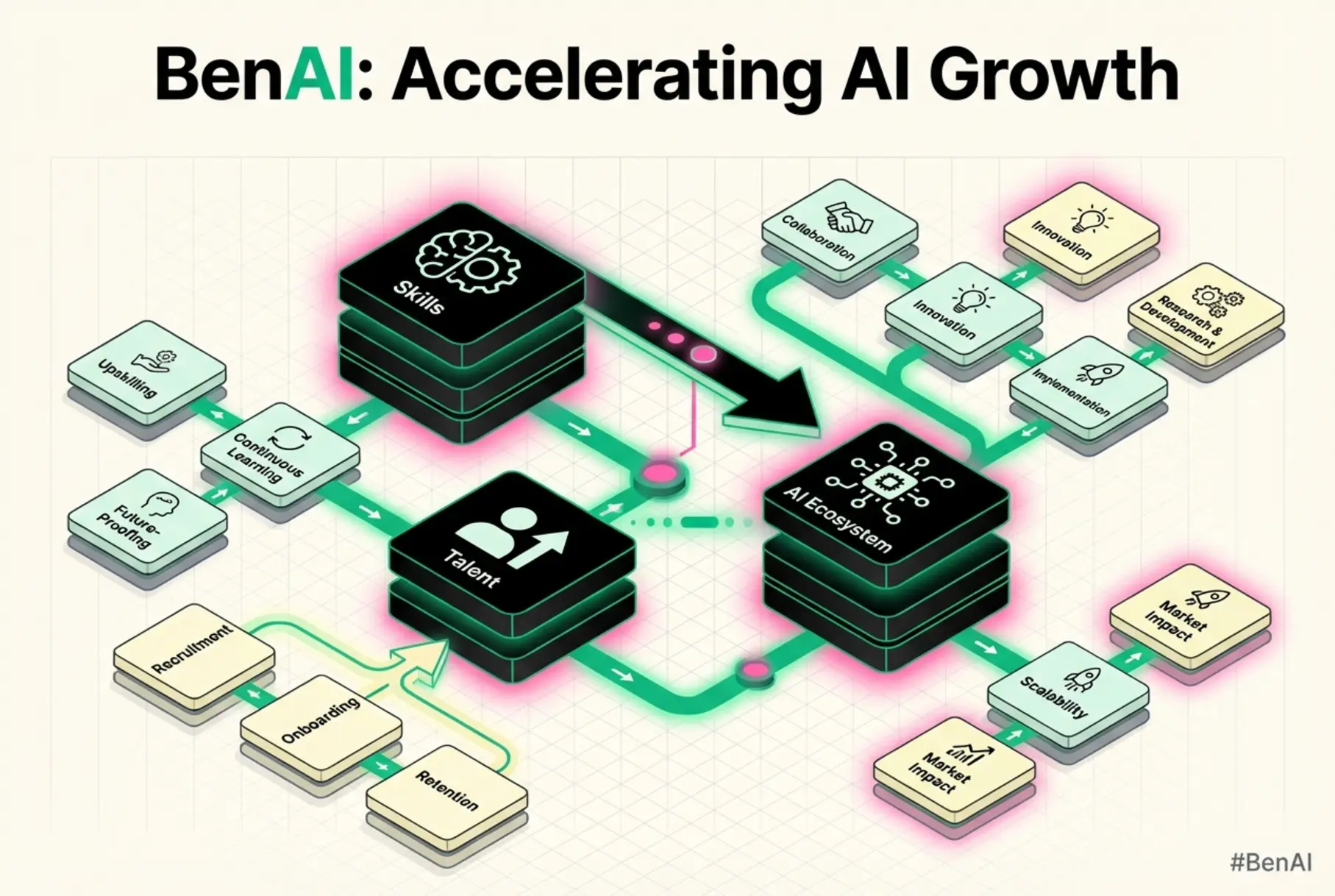
The real work isn't just about implementing AI tools; it's about integrating AI into your talent strategy to build an "AI-first" business. This means focusing on three core pillars: upskilling and reskilling, defining new AI-centric roles, and cultivating a vibrant culture of AI adoption.
Upskilling & Reskilling Blueprints
The demand for "AI fluency" has grown sevenfold in just two years, according to McKinsey. This isn't just a buzzword; it's a critical skill allowing your team to effectively use and manage AI tools. PwC data further shows that AI-related skills now command a wage premium across all sectors.
To remain competitive and retain top talent, organizations must invest in thoughtful upskilling programs. These aren't one-off workshops but structured, continuous learning pathways:
- Holistic Change Management: Frame upskilling as an organizational imperative. It’s not just about learning new software, but about fundamentally reimagining workflows. For example, consider how AI can redefine tasks in marketing, as outlined in our guide on reducing manual SEO workflows with AI.
- Skills-Based Frameworks: Identify and map future-proof skills. Digital and information-processing skills are seeing the most change, while human-centric assisting and caring skills face the least. Your upskilling strategy should leverage these insights, building upon existing human strengths.
- Personalized Learning Journeys: Use AI itself to deliver targeted training. Imagine AI identifying skill gaps in your workforce and recommending bespoke modules. This ensures relevance and maximizes engagement.
New AI-Centric Roles & Competencies
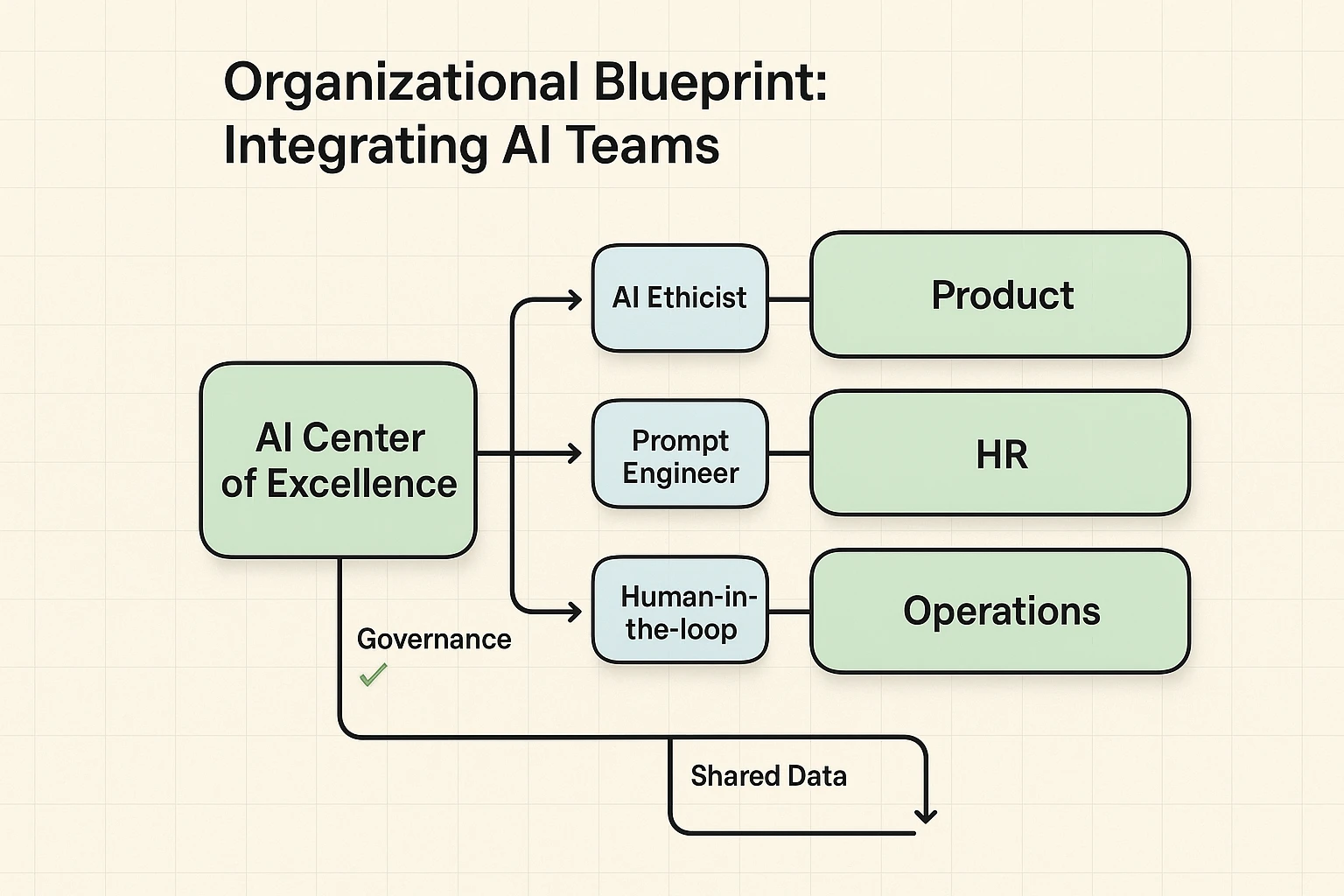
AI doesn't just augment existing roles; it creates entirely new ones. Think of roles like AI trainers, prompt engineers, AI ethicists, and "human-in-the-loop" validators. These roles are crucial for bridging the gap between technical AI development and practical business application.
For instance, understanding the intricacies of AI-driven content generation and optimization becomes a specialized skill set. A dedicated AI SEO specialist, well-versed in our AI SEO Automation Guide, can transform your digital strategy.
Fostering an AI-Ready Culture
Technology alone isn't enough. A successful AI integration hinges on your organizational culture. This means actively fostering psychological safety, encouraging experimentation, and empowering employees to become AI champions. Leadership buy-in and clear communication are paramount. When employees feel supported and see the benefits, resistance gives way to enthusiasm. This cultural shift transforms your workforce into a dynamic, adaptable force ready to embrace the future of work.
Organizational Design for the AI Era: Bridging the Gap
Integrating AI talent goes beyond individual skills; it requires a thoughtful redesign of your organizational structure. For AI to truly thrive, the traditional silos between technical AI teams and business units must be dismantled. McKinsey's concept of an "agentic organization" highlights this need—where humans, AI agents, and robots collaborate seamlessly.
Structure for Collaboration
Building effective AI teams means designing for fluid collaboration. This often involves:
- Cross-Functional Teams: Integrating AI specialists directly into business units creates a direct feedback loop, ensuring AI solutions are practical and relevant.
- AI Centers of Excellence: A centralized hub for AI expertise can disseminate best practices, develop ethical guidelines, and support decentralized AI initiatives across the organization.
- Intermediary Roles: Individuals who can translate technical AI capabilities into business value are indispensable. They bridge the communication gap and facilitate effective integration.
This blueprint helps visualize how AI expertise, critical for areas like AI automated recruiting, can be embedded across teams, fostering a truly "AI-first" operational model.
Evolving Management Roles
In an AI-augmented workforce, managers shift from mere supervision to becoming "orchestrators" of human-AI teams. Their role involves:
- Identifying AI Opportunities: Pinpointing where AI can enhance team performance and free up human potential.
- Facilitating Collaboration: Ensuring smooth interaction between human and AI contributors.
- Performance Evaluation: Developing new metrics that account for AI contributions and assess team effectiveness in a hybrid environment.
Data-Driven Governance
Continuous optimization and ethical alignment are crucial. This means establishing clear governance frameworks for AI usage, data privacy, and model monitoring. Tools like AI for LinkedIn message personalization highlight the need for careful oversight to ensure ethical and effective use.
Ethical AI: Building Trust and Responsibility into Your Workforce Strategy
As AI becomes central to talent management, ethical considerations are non-negotiable. Building trust and ensuring responsible AI deployment is not just about compliance; it's about fostering an inclusive and fair workplace. Salesforce's Trusted AI Principles—Accuracy, Safety, Transparency, Empowerment, and Sustainability—provide a strong foundation.
Practical Application in HR and Talent Management
- Mitigating Bias in AI-Powered Tools: AI used for recruitment, performance reviews, or career development must be rigorously audited for bias. This involves cleaning data sets, testing models, and implementing human oversight mechanisms. Without this, you risk perpetuating and even amplifying existing organizational biases.
- Transparency and Explainability: Employees need to understand how AI influences decisions affecting their careers. Providing clear explanations of AI outputs builds trust and reduces anxiety.
- Privacy and Data Security: With AI processing vast amounts of employee data, robust privacy protocols and secure data handling are paramount.
- Continuous Monitoring: AI models can drift over time. Continuous monitoring ensures they remain fair, accurate, and aligned with ethical guidelines.
Measuring Success: Quantifying Your AI Talent Integration
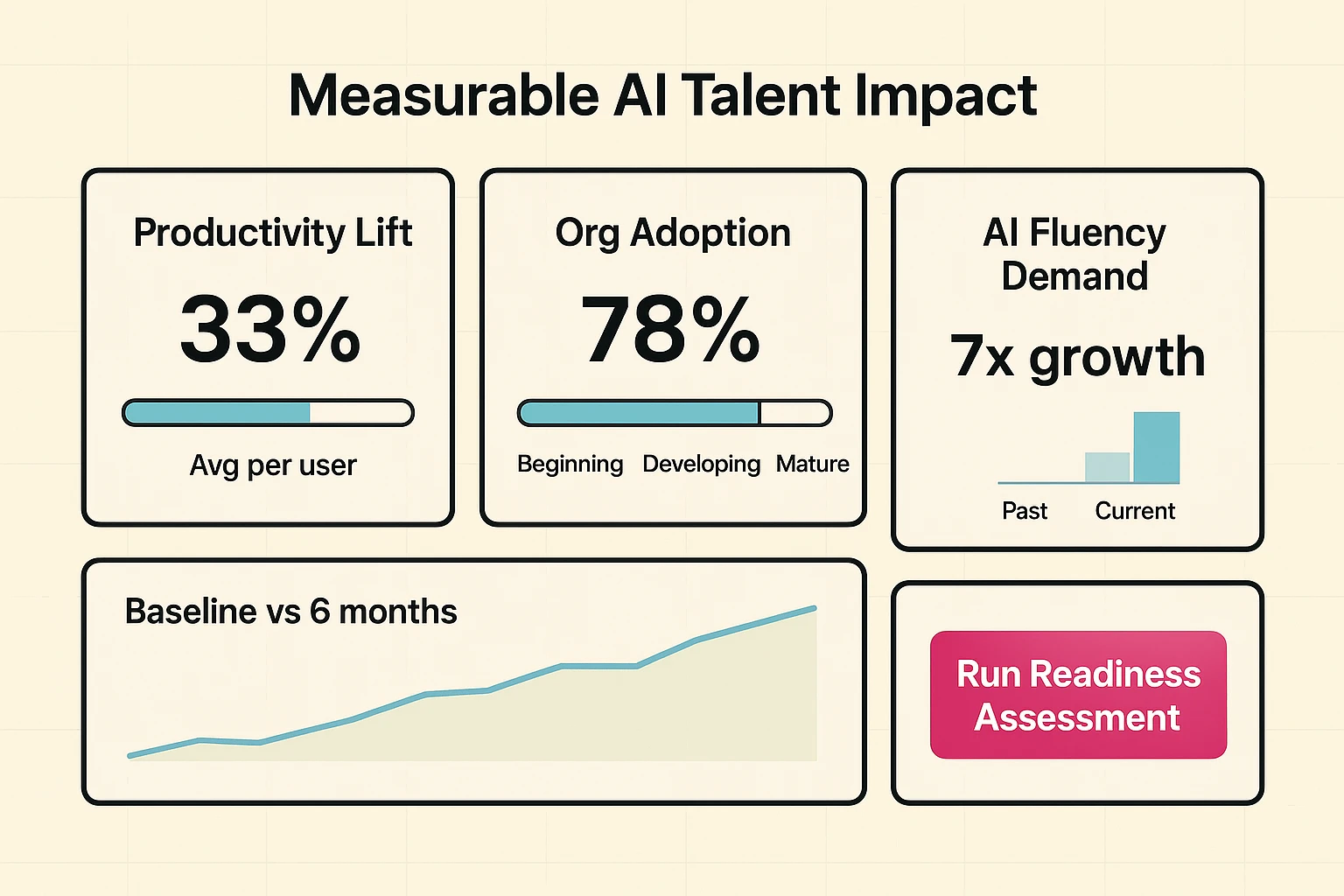
How do you know your AI talent integration efforts are actually generating ROI? Success isn't just about productivity gains; it's about building a resilient, future-ready workforce. Turn headline statistics into actionable KPIs to justify your investment decisions.
Key metrics should include:
- Productivity Uplift: Directly track the percentage increase in efficiency for roles augmented by AI, validating the reported 33% individual productivity gains often seen.
- AI Fluency Rate: Measure the percentage of your workforce proficient in using and managing AI tools, reflecting the growing demand for such skills.
- Employee Engagement with AI: Monitor adoption rates and satisfaction levels with new AI tools and processes.
- Internal Mobility Rates: Track how many employees transition into new AI-centric roles within your organization.
- Retention of AI-Skilled Talent: Ensure those you upskill remain valuable assets within your company.
Implementation Roadmap: Your Path to an AI-First Workforce
Transitioning your workforce to an AI-first model requires a structured, phased approach.
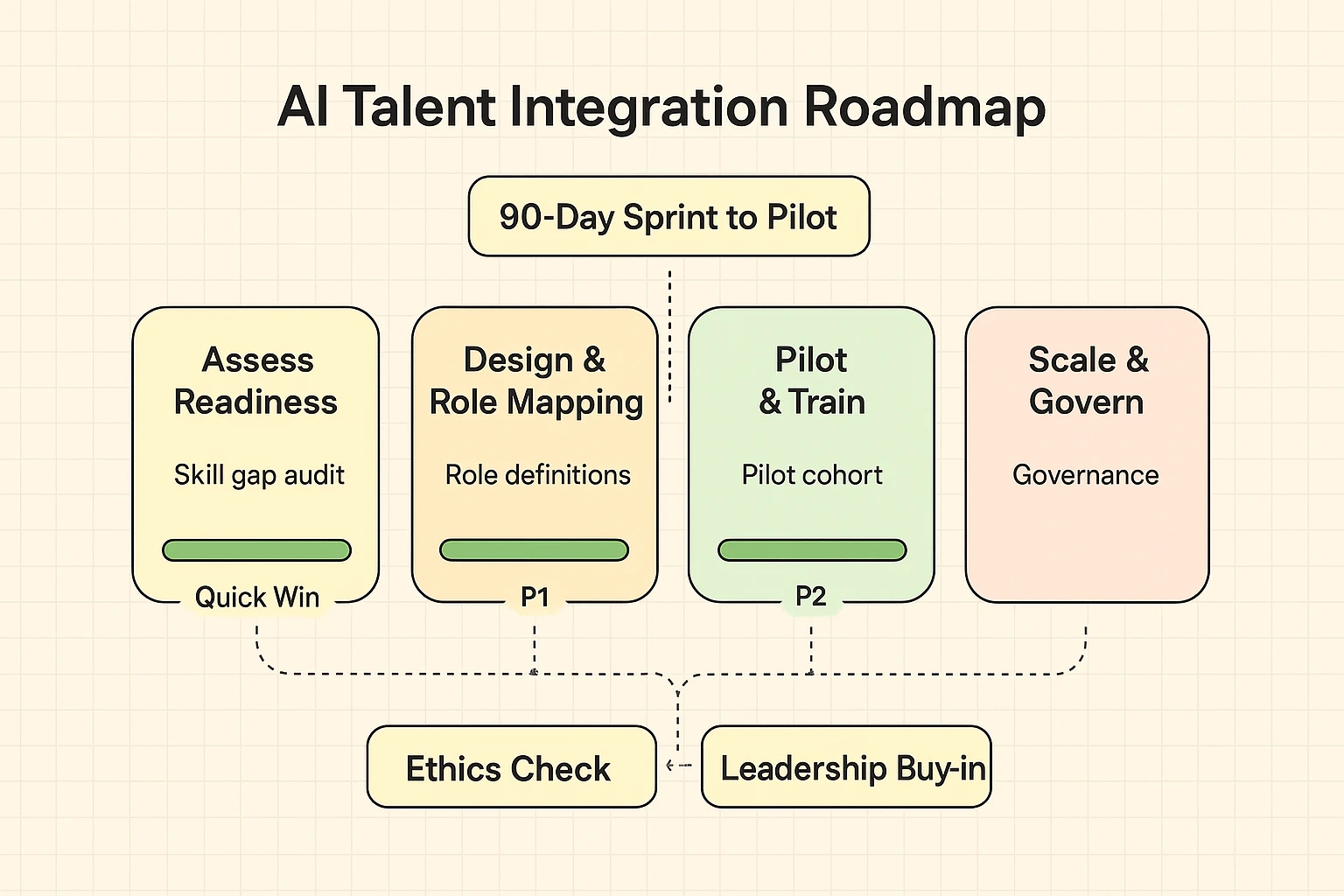
- Assess AI Readiness: Understand your current organizational AI maturity and identify critical skill gaps. Our AI Workforce Readiness Assessment Tool can help you pinpoint exactly where your organization stands and where to focus efforts.
- Redefine Roles & Map Skills: Conduct a thorough analysis of existing roles to determine which tasks can be automated, augmented, or newly created by AI. For example, explore future AI SEO automation trends to prepare your marketing team for what's next.
- Pilot Upskilling Programs: Start with targeted, role-specific training initiatives. Focus on departments that stand to benefit most from AI efficiency, such as those covered in our AI SEO Content Generation & Optimization guide.
- Scale with Governance: Expand successful pilot programs across the organization, ensuring robust ethical guidelines and governance frameworks are in place.
- Foster Continuous Learning: Implement mechanisms for ongoing skill development and adaptation, recognizing that the AI landscape is constantly evolving.
Frequently Asked Questions About AI Talent & Workforce Integration
Q: Is AI truly going to take all our jobs, or is it more nuanced?
A: While AI will automate many tasks, particularly repetitive ones, the consensus from institutions like McKinsey and Goldman Sachs is that it will primarily augment human work and create new roles. Many jobs will be significantly altered rather than completely replaced, requiring new skills for human-AI collaboration.
Q: What are the primary skills my workforce needs to develop for an AI-first future?
A: AI fluency—the ability to use and manage AI tools—is paramount, with demand growing sevenfold according to McKinsey. Beyond that, inherently human skills like critical thinking, creativity, ethical reasoning, complex problem-solving, and emotional intelligence will become even more valuable as AI handles routine tasks.
Q: How can we bridge the gap between technical AI developers and our business users?
A: This is critical. Strategies include forming cross-functional teams where AI specialists work directly with business units, establishing AI Centers of Excellence, and nurturing "translator" roles who can articulate technical AI capabilities in terms of business value. BenAI specializes in designing these structures for seamless integration.
Q: What's the role of ethical considerations in AI talent integration?
A: Ethics are foundational. It's about designing AI systems that are fair, transparent, and accountable, especially in HR functions like recruitment and performance management. This includes actively mitigating bias in AI tools, protecting employee data privacy, and ensuring continuous oversight. Ignoring ethics erodes trust and can lead to significant organizational issues.
Q: Our employees are resistant to AI adoption. How can we overcome this?
A: Resistance often stems from fear and uncertainty. Overcoming it requires transparent communication from leadership, showcasing AI's benefits (e.g., freeing up time for more meaningful work), creating psychological safety for experimentation, and involving employees in the AI adoption process. Practical training and early successes (even small ones) can build enthusiasm.
Q: How can BenAI specifically help my organization with AI talent and workforce integration?
A: BenAI offers tailored AI growth systems that include custom AI implementations, in-depth training, and strategic consulting. We work with you to assess your current state, design targeted upskilling programs, define new AI-centric roles, and implement organizational structures that optimize human-AI collaboration. We provide the expertise and proven systems to transform your business into an AI-first entity.
Your AI-First Workforce Starts Here
The future of work is not just about AI; it's about how humans and AI will collaborate to unlock unprecedented potential. This journey is strategic, complex, and demands a partner who understands both the technology and the human element.
At BenAI, we empower businesses to navigate this evolution with confidence. We move beyond generic advice, providing actionable strategies, custom implementations, and world-class training to ensure your workforce isn't just prepared for the AI era—it leads the way.
Ready to transform your talent strategy and build an AI-first workforce?
Talk to an Expert to discuss your unique challenges and explore how BenAI can tailor a solution for your organization.
Join Our Growing AI Business Community
Get access to our AI Automations templates, 1:1 Tech support, 1:1 Solution Engineers, Step-by-step breakdowns and a community of forward-thinking business owners.
Latest Blogs
Explore our latest blog posts and insights.