Imagine a world where your Meta ads consistently grab attention, resonate deeply with your audience, and drive conversions – all without spending endless hours brainstorming, writing, and testing copy variations. What if you could harness the power of artificial intelligence to generate compelling headlines and primary text that are not just creative, but also optimized for engagement and conversion based on your specific target audience and campaign goals?
This isn't a futuristic dream; it's the present reality for savvy marketers. The rise of AI-driven text generation is revolutionizing how we approach Meta advertising, transforming the tedious into the strategic, and the speculative into the data-informed. But how does it actually work? And more importantly, how can you leverage it effectively to elevate your campaigns?
Let's dive in.
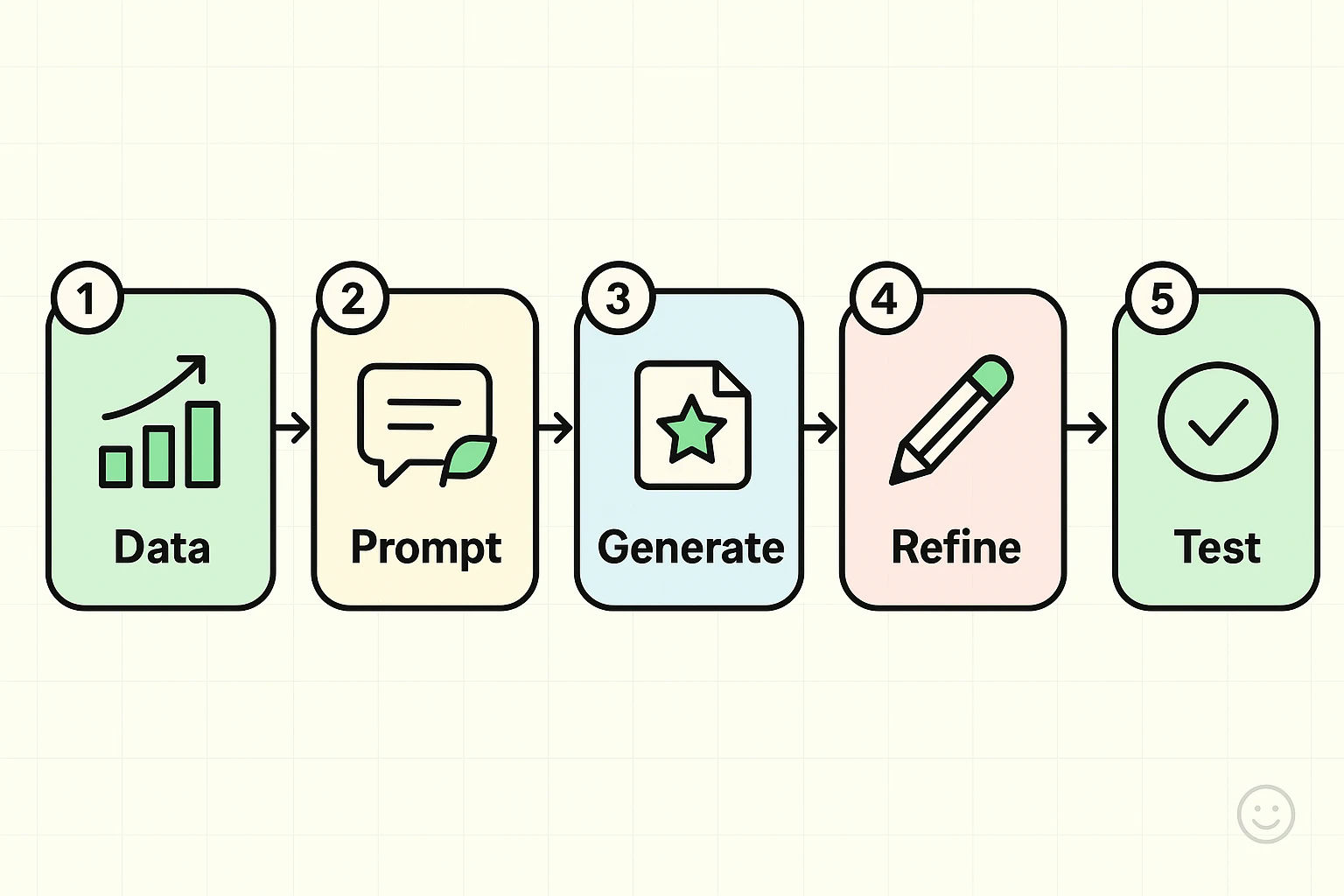
The Core Concept: How AI Creates Compelling Ad Copy
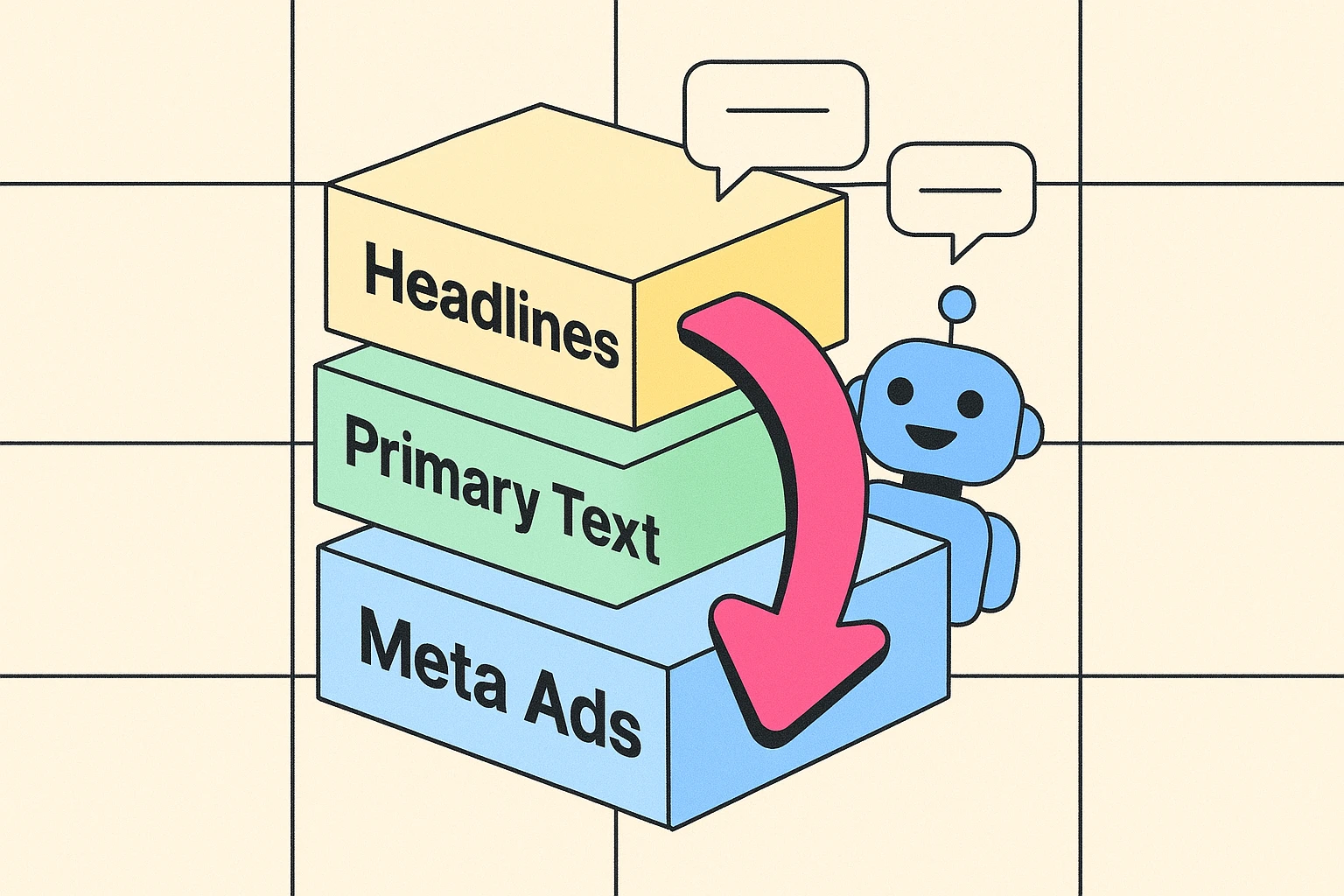
At its heart, AI-driven headline and primary text generation for Meta ads boils down to large language models (LLMs) and natural language processing (NLP). These sophisticated AI technologies are trained on vast datasets of text, allowing them to understand context, generate human-like language, and even infer intent.
When applied to advertising, this means AI can:
- Analyze and Understand: It can process your inputs—like your product description, target audience demographics, desired tone, and campaign objectives—to understand the essence of your message.
- Generate Variations: Based on its training and your specific instructions (known as "prompts"), AI can rapidly generate a multitude of headlines and primary text options. These variations might explore different angles, tones, or psychological triggers.
- Optimize for Impact: Some advanced AI tools can even predict which variations are more likely to perform well based on historical data, guiding you toward more effective copy.
Think of it as having a tireless, super-creative copywriter who can produce hundreds of options in minutes, armed with insights from millions of successful ads.
Why This Matters: Efficiency, Performance, and Scale
The traditional process of crafting ad copy involves extensive brainstorming, writing multiple variations, A/B testing, and then refining. This is time-consuming and often relies heavily on intuition. AI streamlines this entire workflow, offering significant advantages:
- Unmatched Efficiency: Generate dozens of unique ad copy options in a fraction of the time it would take a human.
- Enhanced Performance: AI can tap into data patterns and psychological frameworks (like AIDA—Attention, Interest, Desire, Action) that might be missed by human intuition, leading to higher-converting copy.
- Scalability: Easily adapt and generate copy for numerous ad sets, audiences, and campaign goals, allowing you to scale your advertising efforts without proportionately increasing workload.
- Reduced Creative Block: Say goodbye to staring at a blank screen. AI provides a powerful starting point, sparking new ideas and angles.
- Strategic Precision: Tailor messaging with unprecedented specificity, aligning headlines and primary text perfectly with distinct audience segments.
Navigating Meta's AI Landscape: Native Tools vs. Third-Party Innovators
Meta understands the power of AI, which is why they've integrated generative AI capabilities directly into their Ads Manager. However, the ecosystem extends far beyond Meta's walls, with a robust market of third-party AI writing tools.
Meta's Native AI Tools
Meta's built-in generative AI features are designed to make ad creation more intuitive within their platform:
- Text Generation: Within Ads Manager, you can often provide basic inputs (e.g., product, service, target audience) and Meta's AI will suggest various headlines and primary text options directly. This feature is becoming increasingly sophisticated, even supporting different languages and tailoring tonality (e.g., playful, direct, professional).
- Advantage+ Creative: This suite of features automatically optimizes creative elements, including ad copy, images, and videos. It can dynamically mix and match headlines, primary text, and descriptions to show the most effective combinations to different audiences.
- Business AI: This broader initiative by Meta aims to infuse AI across its business tools, with text generation being a key component. This means more seamless AI integration in the future, from ad creative to customer interactions.
Unique Value: The primary benefit of Meta's native tools is their seamless integration and direct access to Meta's vast advertising data, which can inform their generation process. They are often the first place to experience new AI functionalities within the Meta advertising environment.
Limitations: While convenient, Meta's native tools can sometimes lack the deep customization and fine-grained control offered by specialized third-party tools. They might also be less adept at maintaining a highly specific brand voice without significant human oversight.
Third-Party AI Ad Copy Generators
The market is buzzing with specialized AI writing tools designed specifically for ad copy, such as Jasper, Copy.ai, Anyword, and Koast.ai.
How They Work: These platforms typically offer dedicated templates for various ad types (including Meta ads), allowing you to input key information about your product, audience, and campaign. They then generate multiple copy variations, often with options to adjust tone, length, and focus.
Unique Value:
- Advanced Features: Many offer more advanced functionalities like built-in plagiarism checkers, SEO optimization suggestions for longer copy, or even predictive performance scoring for ad variations.
- Broader Flexibility: They are often agnostic to the advertising platform, meaning you can use them to generate copy for Google Ads, LinkedIn Ads, and more, fostering consistency across channels.
- Deeper Customization: While Meta's tools are improving, third-party platforms often provide more granular control over the output, allowing for more specific prompt engineering.
Limitations: Using third-party tools requires integrating them into your workflow, which might mean copying and pasting text into Ads Manager. Also, their predictive insights might not always be as robust for Meta-specific performance as Meta's own internal data.
The Art of Precision: Prompt Engineering & Human-AI Collaboration
The real magic happens when you move beyond basic inputs and learn to "speak" to the AI effectively. This is where prompt engineering comes in – crafting clear, detailed instructions to guide the AI toward generating optimal ad copy.
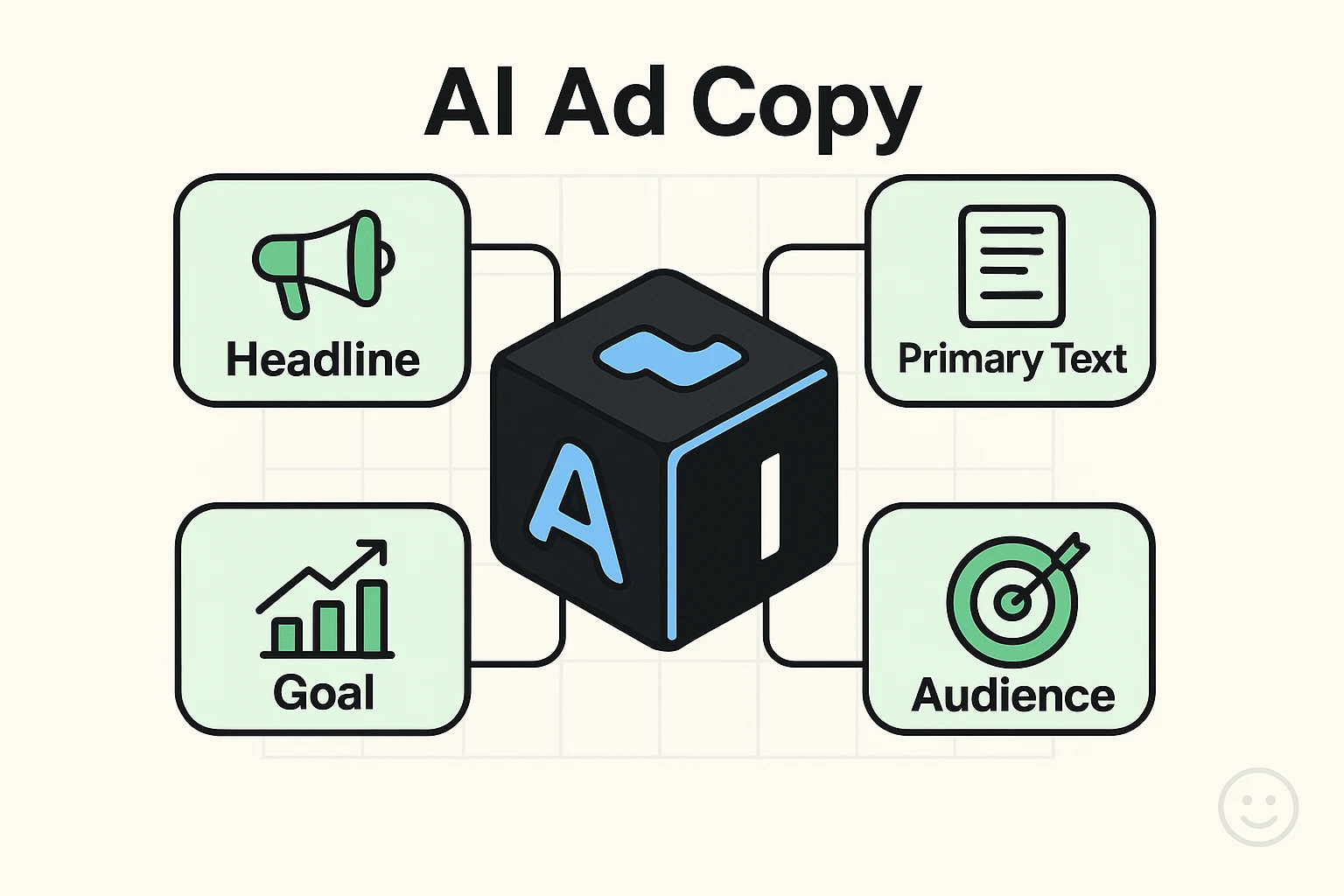
Crafting Effective Prompts for Meta Ads
Think of your prompt as a blueprint. The more detailed and specific you are, the better the final output. Here's what goes into a powerful prompt:
- Define Your Goal: What do you want the ad to achieve? (e.g., drive website traffic, generate leads, increase app installs, boost sales).
- Describe Your Product/Service: Clearly explain what you're offering. Include unique selling propositions (USPs) and key benefits.
- Identify Your Target Audience: Who are you trying to reach? What are their demographics, psychographics, pain points, and desires?
- Specify Tone and Style: Do you want the copy to be casual, authoritative, humorous, urgent, empathetic, or inspiring? Provide examples if possible.
- Include Keywords: If relevant for SEO or specific messaging, incorporate important keywords.
- Provide Constraints: Specify character limits for headlines and primary text, and any phrases to include or avoid.
- Leverage Psychological Frameworks: Guide the AI to use established marketing frameworks.
- AIDA (Attention, Interest, Desire, Action): Prompt the AI to structure copy that first grabs attention, builds interest, creates desire, and then calls for action.
- PAS (Problem, Agitate, Solution): Ask the AI to identify a problem, agitate the pain points, and then present your product as the solution.
Example of a Strong Prompt (Meta Primary Text):
"Generate 5 variations of primary text for a Meta ad. Our product is a 'Smart Home Security System with AI-powered anomaly detection.' Target audience: busy parents (ages 30-55) who are concerned about family safety and want peace of mind. Tone: Reassuring, authoritative, and slightly urgent. Focus on the benefit of knowing their home is always protected, even when they're away. Include a strong call to action to 'Learn More & Get a Free Quote.' Emphasize 'AI-powered' and 'no false alarms.' Word limit: 90 words per variation."
For a deeper dive into optimizing your AI interactions, explore our guide on Mastering Prompt Engineering for AI Agents and Automation Systems.
The Essential Human Touch: Refining AI-Generated Copy
While AI is powerful, it's not a set-it-and-forget-it solution. The best results come from a synergistic human-AI collaboration:
- Brand Voice Alignment: AI might generate grammatically correct and compelling text, but only a human can ensure it perfectly matches your unique brand voice, values, and personality. Does it sound like your brand?
- Accuracy and Nuance: Review for factual accuracy, subtle nuances in language, and avoidance of clichés that AI can sometimes fall into.
- Compliance and Ethics: Ensure the copy adheres to advertising regulations and ethical guidelines. AI can inadvertently generate biased or misleading content, especially in regulated industries like finance or healthcare.
- Strategic Refinement: A human marketer can identify opportunities to make the copy even more impactful, perhaps by adding a specific cultural reference, a recent event, or a more emotional appeal that AI might miss.
- Injecting Emotion and Creativity: While AI can simulate emotion, genuine human empathy and creativity can take copy from good to great.
Remember, AI is a tool to augment your creativity and efficiency, not replace your strategic thinking or brand stewardship.
Optimizing & Measuring Performance: The Feedback Loop
Generating copy is just the first step. The true power of AI in Meta ads comes from its ability to fuel rapid iteration and optimization.
A/B Testing AI-Generated Variations
One of the most significant advantages of AI-driven copy generation is the sheer volume of variations you can produce. This makes A/B testing more feasible and impactful:
- Test Hypotheses: Instead of just guessing, use AI to generate copy that tests specific hypotheses (e.g., "Will a benefit-focused headline outperform a fear-based one for this audience?").
- Run Experiments: Utilize Meta's A/B testing features (or Advantage+ Creative) to run simultaneous experiments with different headlines and primary text combinations generated by AI.
- Analyze Results: Pay close attention to key metrics. Isolate which elements (headline, primary text) are driving the best performance for specific audience segments.
- Iterate and Improve: Use the data to refine your prompts for future AI-generated copy. If a certain tone or benefit resonates, instruct the AI to explore similar angles.
Key Metrics to Track
When evaluating AI-generated ad copy, look beyond just clicks. A comprehensive approach involves:
- CTR (Click-Through Rate): How many people are clicking on your ad after seeing it? This is a primary indicator of ad copy effectiveness.
- CPM (Cost Per Mille/Thousand Impressions): A lower CPM indicates your ad is being delivered more efficiently.
- CPC (Cost Per Click): How much are you paying for each click? More engaging copy should lower this.
- Conversion Rate: Ultimately, is the copy driving the desired action (purchase, lead, download)?
- ROAS (Return On Ad Spend): The ultimate measure of profitability.
- Engagement Rate: How many people are reacting, commenting, or sharing? This indicates resonance.

Consistency in tracking these metrics is crucial for understanding what truly works and validating the impact of your AI-driven efforts. For example, similar performance analysis is applied when optimizing AI-powered campaigns on LinkedIn.
Addressing Common Misconceptions About AI Ad Copy
As exciting as AI is, it's important to approach it with a clear understanding of its capabilities and limitations.
- Misconception 1: AI understands my brand voice perfectly.
- Reality: AI can emulate a tone you describe, but it won't truly understand the nuanced, lived experience of your brand. Consistent human review and specific instructions in your prompts are vital to maintain your unique voice.
- Misconception 2: AI will eliminate the need for copywriters.
- Reality: AI augments, rather than replaces, human creativity. Copywriters evolve into "AI orchestrators" and "editors," focusing on strategy, brand voice, and final refinement.
- Misconception 3: AI-generated copy is always superior.
- Reality: AI-generated copy can be generic or even nonsensical if the prompts are poor or the data it was trained on is biased. Human marketers bring critical judgment and creativity to the table.
- Misconception 4: AI is mind-reading; it knows what my audience wants.
- Reality: AI relies on the data it's trained on and the instructions you provide. It doesn't "think" independently. Accurate audience research and specific targeting are still paramount.
The Future is Collaborative: Embracing AI in Your Meta Ad Strategy
AI-driven headline and primary text generation isn't just a trend; it's a foundational shift in how effective advertising is created. By understanding the underlying principles, leveraging the right tools (both native and third-party), and mastering the art of prompt engineering combined with human oversight, you can dramatically improve your Meta ad performance.
This technology empowers you to:
- Test more, faster.
- Personalize at scale.
- Uncover winning angles you might have missed.
- Free up creative resources for higher-level strategic thinking.
Your AI-first approach to Meta advertising starts now. Embrace the tools, hone your skills, and get ready to see your ad performance soar. If you're looking to scale your marketing efforts with proven AI systems, explore how BenAI's AI Marketing Solutions can transform your agency.
Frequently Asked Questions (FAQ)
What is AI-driven headline and primary text generation for Meta ads?
It's the process of using artificial intelligence to automatically create various versions of headlines and primary text for your Facebook and Instagram ads. AI tools analyze your inputs (product, audience, goals) and generate compelling copy designed to grab attention and drive conversions.
How does AI generate ad copy for Facebook and Instagram?
AI, particularly large language models (LLMs) and natural language processing (NLP), is trained on vast amounts of text data. When you provide a "prompt" (detailed instructions and context), the AI uses its understanding of language patterns, marketing principles (like AIDA, PAS), and tone to generate relevant and engaging headlines and primary text variations.
What are the main benefits of using AI for Meta ad copy?
The key benefits include significant time savings, increased efficiency in producing multiple copy variations, the ability to test more ideas rapidly, improved ad performance through data-informed suggestions, and the capacity to scale advertising efforts without increasing manual workload.
Can Meta's Ads Manager generate ad copy directly?
Yes, Meta has integrated generative AI features directly into Ads Manager. These allow you to input basic information and receive suggested headlines and primary text variations. Features like Advantage+ Creative also dynamically optimize creative elements, including copy.
Should I only use Meta's native AI tools, or are third-party tools better?
Both have their strengths. Meta's native tools offer seamless integration and leverage Meta's internal data for optimization. Third-party AI writing tools (like Jasper, Copy.ai) often provide more advanced features, deeper customization through prompt engineering, and cross-platform flexibility. Many marketers use a combination of both.
What is "prompt engineering" in the context of AI ad copy?
Prompt engineering is the art and science of crafting precise and effective instructions (prompts) for AI models. A well-engineered prompt includes details about your product, target audience, desired tone, marketing objectives, and even psychological frameworks, guiding the AI to generate high-quality, relevant ad copy.
Will AI replace human copywriters for Meta ads?
No, AI is a powerful assistant, not a replacement. Human copywriters and marketers are essential for strategic input, maintaining brand voice, refining AI-generated content, ensuring compliance, and adding the nuanced emotional and creative touches that AI currently cannot replicate. The role evolves into one of an "AI orchestrator."
How can I ensure AI-generated copy aligns with my brand voice?
This requires human oversight. Start by giving the AI very specific instructions about your brand's tone, style, and vocabulary in your prompts. Always review and edit the AI's output, making adjustments to ensure it perfectly reflects your unique brand voice before publishing.
What are the potential pitfalls of using AI for ad copy?
Potential pitfalls include generating generic or nonsensical content, losing your unique brand voice, inadvertently creating biased or misleading copy, or over-relying on AI without human strategic oversight. It's crucial to always review, edit, and ethically consider the AI's output.
How do I measure the effectiveness of AI-generated Meta ad copy?
You measure its effectiveness using standard advertising metrics such as Click-Through Rate (CTR), Cost Per Click (CPC), Conversion Rate, Return on Ad Spend (ROAS), and Engagement Rate. A/B testing different AI-generated variations is crucial for identifying what resonates best with your audience.
Are there any ethical considerations when using AI for ad copy?
Yes. It's important to consider potential biases in the AI's training data, which could lead to discriminatory or inappropriate messaging. Always ensure AI-generated copy is truthful, compliant with advertising regulations, and avoids stereotypes or manipulative language.
Can AI help with other aspects of Meta ads beyond text generation?
Absolutely! AI is also used for audience targeting, bid optimization, creative optimization (e.g., dynamically adjusting images/videos), campaign budgeting, and performance prediction. AI is increasingly becoming a central nervous system for powerful AI SEO automation and broader AI-driven content generation.
Join Our Growing AI Business Community
Get access to our AI Automations templates, 1:1 Tech support, 1:1 Solution Engineers, Step-by-step breakdowns and a community of forward-thinking business owners.
Latest Blogs
Explore our latest blog posts and insights.