You're evaluating solutions to drive growth and efficiency. You know AI is critical, but the sheer volume of off-the-shelf tools versus the promise of custom, integrated agents can make the decision feel overwhelming. You need clarity on how to move beyond basic automation to truly leverage AI as a transformative force within your organization.
This guide is designed to cut through that complexity, providing a comprehensive framework for conceiving, developing, deploying, and managing AI agents that act as true 'digital employees.' We’ll explore the strategic imperative of custom AI agents, how they differ from generic tools, and the critical components for successful implementation, ensuring you make an informed decision for your business's future.
Beyond Off-the-Shelf: Why Custom AI Agents Are Your Strategic Advantage
The market is awash with AI tools promising to automate tasks. While these tools offer quick fixes for isolated problems, they often fall short when it comes to integrated, strategic business transformation. What you need is not just a tool, but a digital workforce tailored to your unique operational DNA. This is where strategic AI agent design and management become indispensable.
Consider the difference: a generic AI tool might help you automate a single marketing email. A custom AI agent, however, can act as a full-fledged "digital marketing specialist," orchestrating complete campaigns from content creation and distribution to performance analytics, all while learning and adapting. In fact, we've seen scenarios where 37 AI agents effectively built an entire marketing team, demonstrating the scalability and power of this approach.
The Problem with Plug-and-Play AI for Strategic Operations
Off-the-shelf AI solutions are designed for broad applicability, meaning they rarely align perfectly with your specific workflows, data structures, or strategic objectives. This often leads to:
- Fragmented Automation: Siloed tools that don't communicate, creating new manual tasks for integration.
- Limited Customization: Inability to adapt to nuanced business rules or integrate deeply with proprietary systems.
- Data Security Concerns: Generic tools may not meet your organization's specific data governance and compliance requirements.
- Suboptimal Performance: Because they're not trained on your unique data or optimized for your specific goals, performance can plateau quickly.
Custom AI agents, on the other hand, are engineered to become an organic extension of your operations. They are "trained" on your data, understand your internal logic, and are designed to collaborate seamlessly with your human teams. This shift isn't just about efficiency; it's about building a sustainable, AI-first business that can scale without continually adding headcount.
Custom vs. Off-the-Shelf: A Decision Framework
When evaluating AI solutions, it’s crucial to weigh the trade-offs between readily available tools and strategically designed custom agents. Here's how they compare:

For marketing agencies, for instance, custom AI agents can automate highly specific content structuring processes, integrate with your unique SEO marketing stack, and fine-tune LinkedIn campaigns with unprecedented precision, a level of detail generic tools simply can't match. This allows agencies to scale their service delivery 10x faster and take on more clients without increasing headcount, a key value proposition for BenAI's AI Marketing Solutions.
The Blueprint: Designing Your AI Agent Architecture
Designing AI agents is akin to designing a new department or hiring a specialized team member. It requires a clear understanding of roles, responsibilities, and decision-making hierarchies.
Architecting Your Digital Workforce
The architecture of a strategic AI agent system involves several key considerations:
- Defining the Agent's Mandate: Each agent needs a clear purpose, scope of work, and key performance indicators. Is it a "SEO Content Creator" or a "Candidate Sourcing Specialist"?
- Data Integration: Agents need access to relevant and properly structured data. This involves integrating with your existing CRM, marketing platforms, HR systems, and other data sources. A robust AI data strategy is fundamental here.
- Core Capabilities (LLMs & Tools): Determining the underlying Large Language Models (LLMs) or other AI models, along with the tools and APIs the agent can access.
- Workflow Orchestration: How the agent executes tasks, makes decisions, and adapts to new information. This includes defining its learning mechanisms.
Multi-Agent Systems for Complex Operations
For more complex business processes, a single AI agent is often insufficient. Multi-agent systems involve several specialized AI agents working together, each handling a specific part of a larger task. This parallel processing capability drastically accelerates execution and enhances overall efficiency.
Imagine a recruitment firm using a multi-agent system:
- Agent 1 (Sourcing Specialist): Identifies potential candidates from various platforms.
- Agent 2 (Engagement Specialist): Initiates personalized outreach and screens initial responses.
- Agent 3 (Data Analyst): Compiles candidate profiles, identifies best matches based on job requirements, and provides insights to the human recruiter.
- Agent 4 (Interview Scheduler): Coordinates interviews with both candidates and hiring managers.
This collaborative approach streamlines the entire recruitment lifecycle, significantly reducing time-to-hire and increasing candidate quality, directly addressing the needs of our AI Recruiting Solutions ICP.

Measuring Success: AI Agent Performance Monitoring & Optimization
Deploying AI agents is not a "set it and forget it" operation. Continuous monitoring and optimization are critical to ensure they deliver on their promise and adapt to evolving business needs.
Key Metrics for AI Agent ROI
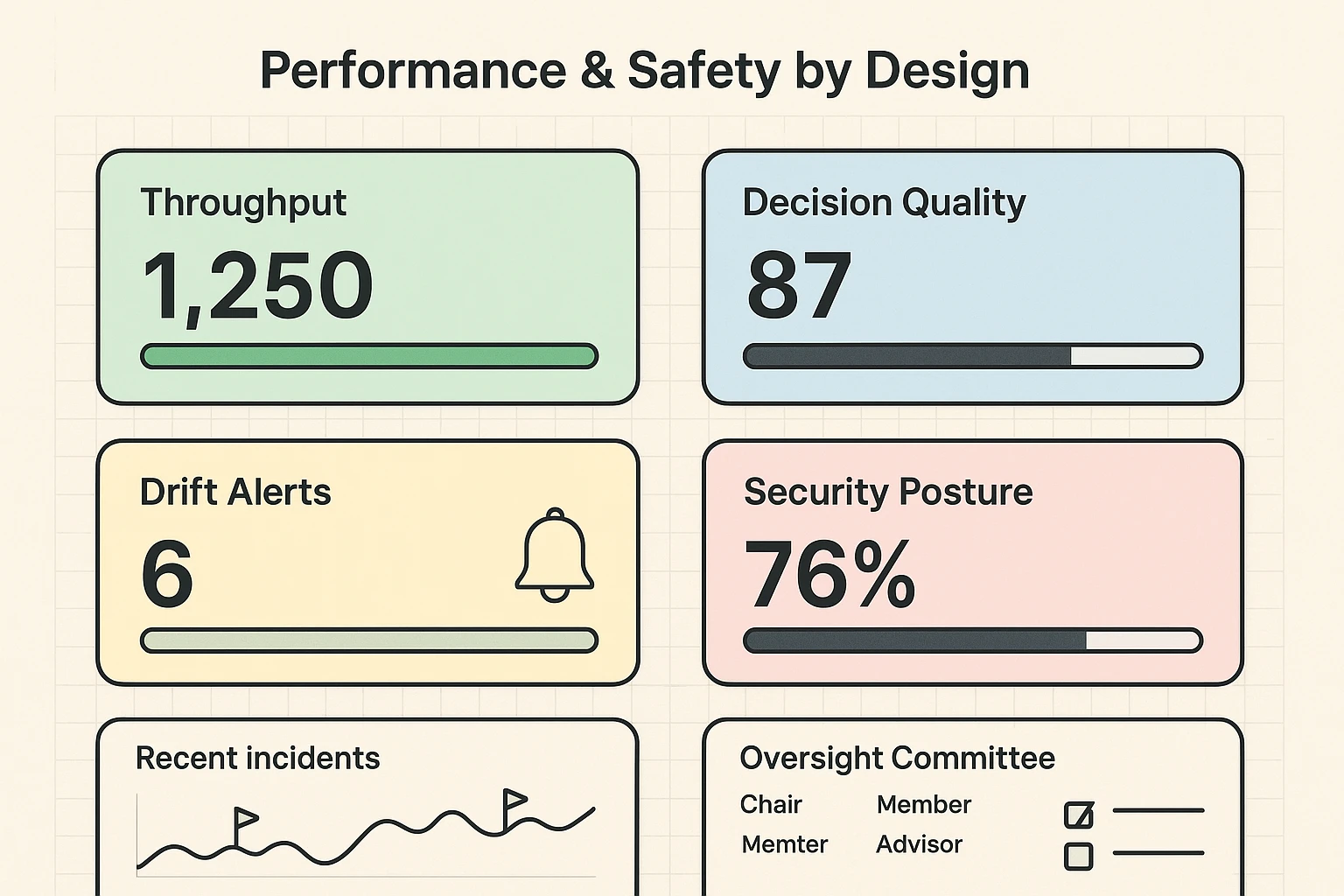
To validate your investment and ensure agents are performing effectively, you need a robust set of performance metrics. These include:
- Task Completion Rate: Percentage of assigned tasks successfully executed by the agent.
- Error Rate: Frequency of errors or incorrect outputs.
- Cost Savings: Quantifiable reduction in operational costs (e.g., FTE hours saved).
- Time Savings: Reduction in cycle times for specific processes.
- Quality Improvement: Enhanced output quality (e.g., better lead generation, higher-quality content).
- Human-in-the-Loop Interventions: How often human oversight or correction is needed.
Tracking these metrics allows you to understand the tangible return on investment from your AI agents. For enterprises, integrating these AI initiatives into broader digital transformation strategies is paramount.
Iterative Optimization
AI agents, like human employees, benefit from feedback and continuous improvement. This involves:
- Feedback Loops: Establishing clear mechanisms for human teams to provide feedback on agent performance.
- Retraining and Fine-tuning: Using performance data and feedback to retrain underlying AI models and adjust agent behaviors.
- A/B Testing: Experimenting with different agent configurations or strategies to identify optimal approaches, similar to how we might optimize an AI-powered LinkedIn campaign.
- Scaling: As agents prove their value, identifying opportunities to expand their scope or deploy similar agents in other areas of the business.
This iterative approach ensures your AI agents remain high-performing assets, constantly evolving to meet operational demands and capitalize on new opportunities.
Trust & Integrity: Security and Compliance for AI Agents
Deploying AI agents, especially those handling sensitive data or customer interactions, brings critical considerations around security, privacy, and compliance. Ignoring these aspects can lead to significant reputational and financial risks.
Building Secure AI Agents
Security must be embedded into the very design of your AI agent architecture:
- Access Controls: Restricting agent access to only the data and systems absolutely necessary for its function.
- Data Encryption: Ensuring all data processed and stored by agents is encrypted both in transit and at rest.
- Vulnerability Management: Regularly scanning AI agent systems for security vulnerabilities and implementing timely patches.
- Audit Trails: Maintaining comprehensive logs of agent activities to ensure traceability and accountability.
Navigating Regulatory Landscapes
Depending on your industry and geographic location, your AI agents will need to comply with various regulations:
- GDPR, CCPA, etc.: For agents handling personal data.
- HIPAA: For agents in healthcare.
- Industry-Specific Regulations: Financial services, legal, etc., often have their own specific compliance requirements.
BenAI emphasizes implementing AI the "right way" through world-class AI implementations, training, and consulting. This includes embedding security and compliance best practices from day one, which is vital for any enterprise considering custom AI solutions.
Collaboration & Control: Human and AI Agent Frameworks
The most effective AI agent strategies aren't about replacing humans entirely, but empowering them. It's about optimizing the unique strengths of both human intelligence and artificial intelligence through seamless collaboration.
Task Delegation and Hand-off Protocols
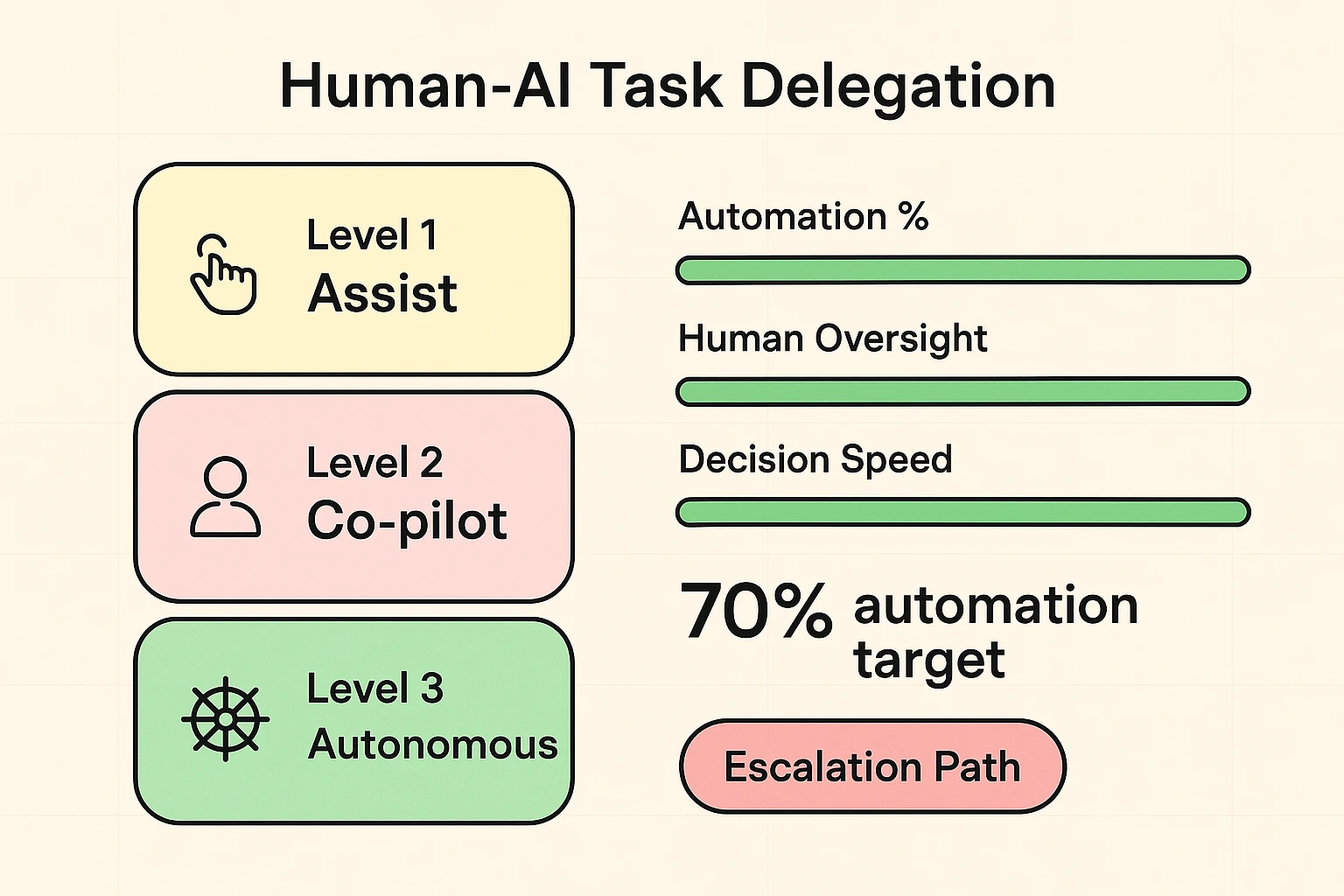
Defining clear frameworks for task delegation between humans and AI agents is crucial:
- AI for Repetitive, Data-Intensive Tasks: Agents excel at automating workflows like content structuring, initial data analysis, or generating initial drafts. As one of our blog posts explores, AI can significantly reduce manual SEO workflows.
- Humans for Creativity, Strategy, and Complex Problem-Solving: Human teams can then focus on higher-value activities: strategic direction, creative ideation, complex client negotiations, and nuanced decision-making.
- Clear Hand-off Points: Establishing defined moments and protocols for agents to hand off tasks to humans, or vice versa. This ensures continuity and avoids confusion. For example, an AI agent might identify potential leads, but a human sales rep closes the deal.
- Human Oversight and Approval: Implementing checks and balances where humans review and approve critical outputs from AI agents before final deployment. For instance, an AI agent might generate compliance reports, but a human legal professional gives final sign-off.
Training for the Hybrid Workforce
Integrating AI agents successfully also requires preparing your human workforce. This involves:
- AI Literacy Training: Educating employees on what AI agents are, how they function, and their benefits.
- Workflow Adjustments: Training teams on new processes that incorporate AI agent collaboration.
- Focus on New Skills: Equipping employees with skills to leverage AI outputs, manage agents, and focus on higher-order tasks that create more value.
By thoughtfully designing these collaborative frameworks, businesses can unlock exponential gains in productivity and innovation. This is precisely the kind of strategic guidance and hands-on staff training that BenAI offers through its Enterprise Solutions to help organizations lead the way in AI adoption.
Frequently Asked Questions (FAQ)
Q1: How do custom AI agents differ from platforms like ChatGPT?
While platforms like ChatGPT are powerful large language models (LLMs) for general-purpose tasks, custom AI agents are built on top of or integrated with such models, along with other tools and data sources, to perform specific, multi-step business functions. They are "digital employees" with defined roles, integrated into your workflows, and trained on your proprietary data, offering a much higher degree of customization, automation, and security than a generic conversational AI.
Q2: What kind of businesses benefit most from strategic AI agent design?
Businesses facing repetitive, high-volume tasks, those with complex data analysis needs, or organizations looking to scale operations without proportional headcount increases are ideal candidates. This includes:
- Marketing Agencies: Automating content, SEO, social media, and lead generation.
- Recruiting Firms: Streamlining candidate sourcing, screening, and engagement.
- Large Enterprises: For custom solutions in areas like customer service, finance, HR, and IT operations.
- Any business aiming to become truly "AI-first" by integrating AI at the core of its operational strategy.
Q3: How long does it take to implement custom AI agents?
The timeline varies significantly depending on the complexity of the agent, the number of integrations, and the availability of structured data. Simple agents might be deployed in weeks, while complex multi-agent systems for enterprise solutions can take several months. BenAI offers phased implementation strategies to ensure quick wins and measurable ROI throughout the process.
Q4: What about the security of my data when using AI agents?
Security is paramount. When BenAI designs custom AI agents, we prioritize robust security protocols, including access controls, data encryption, and compliance with relevant regulations (e.g., GDPR, HIPAA). Agents are built with minimal necessary access and strong audit trails to ensure data integrity and privacy. We ensure bespoke solutions are developed and implemented with expert guidance and adherence to industry-leading security practices.
Q5: Can AI agents replace my human workforce?
The goal of strategic AI agent design is not to replace humans but to empower them. AI agents excel at automating repetitive, data-intensive, and time-consuming tasks, freeing up your human team to focus on higher-value activities that require creativity, strategic thinking, and nuanced decision-making. They act as force multipliers, creating capacity and enabling your existing workforce to achieve more without increasing headcount. This is about building a synergistic human-AI partnership.
Ready to Design Your Digital Workforce?
The future of business is AI-first. Strategic AI agent design and management offer a clear pathway to operational excellence, scalable growth, and a significant competitive advantage. This isn't just about adopting AI; it's about fundamentally transforming how your business operates.
If you're ready to explore how custom AI agents can revolutionize your marketing campaigns, streamline your recruiting processes, or drive enterprise-wide efficiency, it's time for a conversation. BenAI specializes in providing world-class AI implementations, training, and consulting to help businesses like yours adopt AI the right way.
Visit our homepage at benai.co to learn more about our tailored AI growth systems and how we can help you build your digital workforce. Your AI-first business starts here.
Join Our Growing AI Business Community
Get access to our AI Automations templates, 1:1 Tech support, 1:1 Solution Engineers, Step-by-step breakdowns and a community of forward-thinking business owners.
Latest Blogs
Explore our latest blog posts and insights.