The decision to invest in advanced operational technologies is rarely simple. You're balancing potential gains against significant commitment, navigating buzzwords, and trying to quantify real-world impact. When it comes to something as transformative as AI for predictive operations and maintenance, the stakes are even higher. You're not just buying a tool; you're often rethinking how your entire operation functions.
This guide is designed to cut through the noise, offering clear, data-backed insights to empower your evaluation. We’ll explore how AI transforms operations and maintenance, quantify its benefits, dissect implementation challenges, and outline a strategic path forward—ensuring you have the comprehensive understanding needed to make a confident, informed decision.
AI for Predictive Operations & Maintenance: The Definitive Guide to Unlocking Efficiency & Eliminating Downtime
The AI Imperative: Reshaping Operations
For decades, organizations have wrestled with the inherent unpredictability of operational assets. From manufacturing lines to IT infrastructure, the specter of unplanned downtime has loomed large, exacting a hefty toll in lost productivity, emergency repairs, and supply chain disruptions. Traditional maintenance approaches—reactive (fix it when it breaks) and preventive (fix it on a schedule)—have tried to mitigate these issues, but often fall short, leading to either unnecessary costs or costly failures.
Enter AI-powered predictive maintenance (PdM). This isn't just an incremental improvement; it's a fundamental shift in how we approach operational reliability. By moving from scheduled guesswork or emergency repairs to precise, data-driven forecasting, AI allows businesses to predict equipment failures with unprecedented accuracy, sometimes 30-60 days in advance with 85-95% precision. The result? A significant reduction in downtime and a dramatic improvement in operational efficiency.
The market acknowledges this profound shift. Projections indicate the predictive maintenance market will surge to over $100 billion by 2035, driven by organizations eager to capture its substantial benefits. If you're evaluating how to maintain a competitive edge, embracing AI in your operations isn't just an option—it's fast becoming a strategic imperative.
Understanding AI-Powered Predictive Maintenance
At its core, AI-powered predictive maintenance leverages sophisticated data analysis and machine learning to forecast when, and under what conditions, an operational asset is likely to fail. Unlike preventive maintenance, which relies on fixed schedules or usage thresholds, PdM uses real-time and historical data to identify subtle patterns that precede equipment degradation.
How It Works: A Data-Driven Cycle
The process begins with robust data collection. Sensors, embedded within machinery or infrastructure, continuously gather vast amounts of information—temperature, vibration, pressure, acoustics, current, and more. This data stream is then fed into AI and machine learning models. These models, trained on historical data sets that include both operational norms and failure events, learn to identify intricate correlations and anomalies indicative of impending issues. Once a potential failure is predicted, the system alerts operators, recommending specific maintenance actions. This allows maintenance teams to intervene proactively, scheduling repairs precisely when needed, before a critical failure occurs.
Key Technologies Enabling PdM
- Internet of Things (IoT): The backbone of data collection. IoT sensors and gateways enable the ubiquitous monitoring of physical assets, transforming them into data generators.
- Machine Learning (ML): At the heart of predictive analytics. ML algorithms, including classification, regression, and anomaly detection, sift through complex data patterns to identify precursors to failure.
- Cloud & Edge Computing: Provides the necessary infrastructure for processing and storing massive datasets. Edge computing allows for real-time analysis closer to the data source, critical for immediate alerts, while cloud platforms handle large-scale historical analysis and model training.
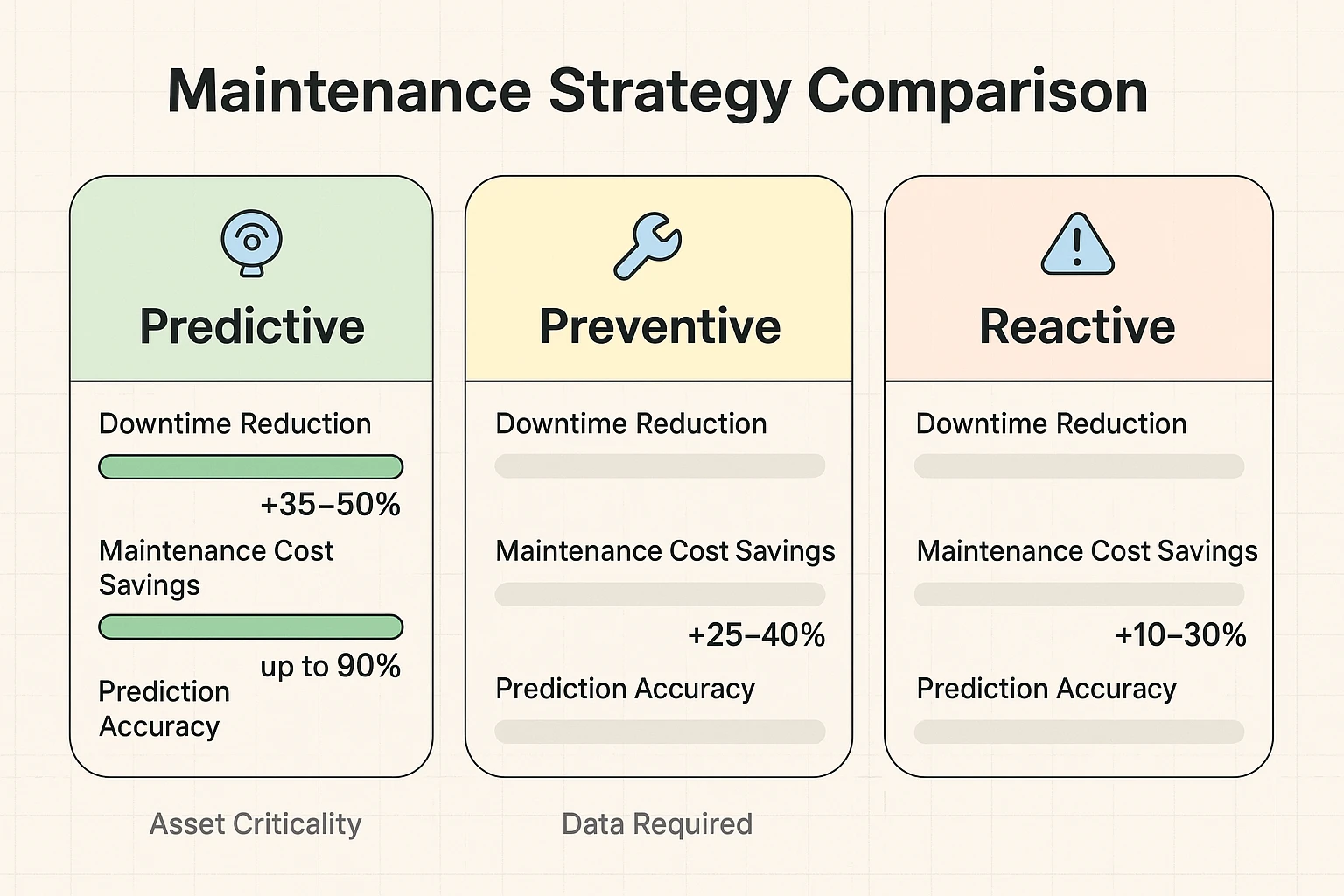
Predictive vs. Preventive vs. Proactive: A Crucial Distinction
It’s vital to understand the nuanced differences between these approaches to determine the right strategy for your assets.
Predictive maintenance stands out by striking an optimal balance, ensuring maintenance is performed only when truly necessary, avoiding the inefficiencies of preventive methods and the high costs of reactive ones.
The Transformative Benefits: Quantifying the Impact
The shift to AI-powered predictive maintenance isn't just about feeling more prepared; it translates directly into significant, measurable business advantages. For decision-makers, understanding these quantifiable impacts is paramount to building a strong business case.
Reduced Downtime: A Direct Boost to Productivity
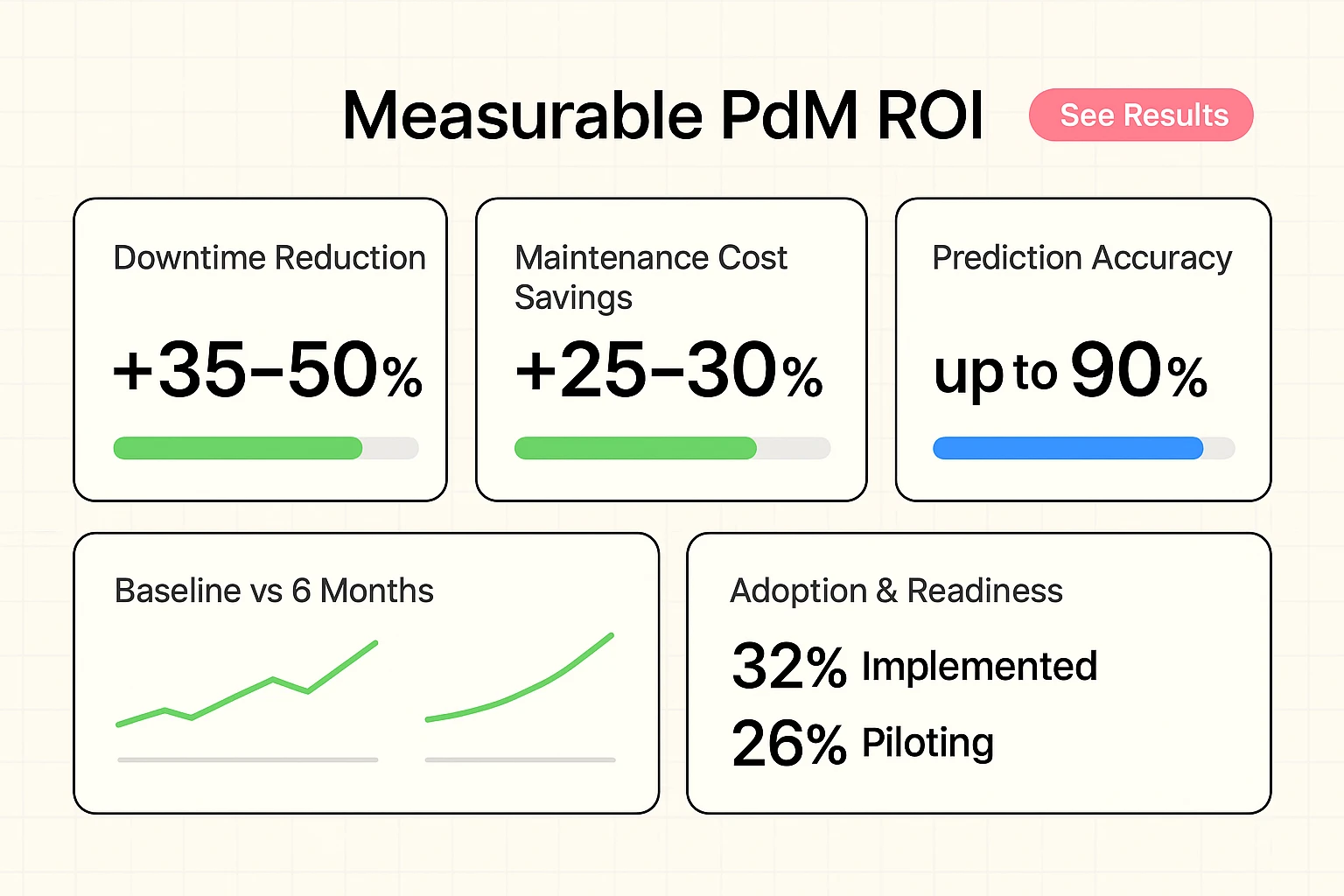
Unplanned downtime is a silent killer of productivity. For instance, 50% of manually scheduled machine maintenance can be futile, meaning assets are taken offline unnecessarily. AI changes this equation entirely. By predicting failures with accuracy up to 90%, organizations can schedule maintenance strategically, outside of peak operational hours. This precision can lead to a 35-50% reduction in unplanned downtime. Imagine the implications for manufacturing output, logistics efficiency, or cloud service availability.
Significant Cost Savings: More Than Just Repairs
The financial benefits extend far beyond avoiding emergency repair bills. Predictive maintenance can cut overall maintenance costs by 25-30%. This saving accrues from:
- Optimized Spare Parts Inventory: Predicting failures means knowing exactly which parts you'll need and when, reducing overstocking and costly rush orders.
- Reduced Labor Costs: Maintenance teams work more efficiently, performing planned tasks rather than scrambling with emergencies. This can lead to a 5-20% increase in labor productivity.
- Extended Asset Lifespan: Proactive, precise interventions slow down degradation, safely extending the operational life of expensive machinery.
Improved Operational Efficiency & Productivity
With fewer unexpected disruptions, your entire operational flow becomes smoother and more reliable. This stability allows for better production planning, tighter supply chain management, and generally higher throughput. The ripple effect means resources—human and capital—are deployed more effectively across the organization.
Enhanced Safety & Compliance
Predicting equipment failures improves safety for personnel by reducing exposure to dangerous machinery during unexpected breakdowns. Critical components are serviced before they become hazardous. For heavily regulated industries, predictive insights can also help ensure continuous compliance by preempting issues that could lead to regulatory violations.
Illustrative ROI: What This Looks Like In Practice
The real power of predictive maintenance lies in its ability to deliver tangible return on investment across diverse sectors.
- A Manufacturing Plant: By predicting critical machine failure, a plant prevented a week-long shutdown, saving an estimated $1 million in lost production and emergency repairs.
- A Logistics Company: Optimizing maintenance for its fleet vehicles reduced roadside breakdowns by 40%, improving delivery reliability and cutting fuel consumption linked to inefficient operations.
- An IT Infrastructure Provider: Proactive identification of server component degradation allowed for timely replacement, avoiding service outages that could have impacted thousands of clients and led to significant revenue loss.
These examples underscore why 65% of organizations expect to adopt AI for maintenance within a year, with 32% already at least partially implemented. The evidence is clear: the benefits are too substantial to ignore.
Deep Dive: AI & Machine Learning Models in PdM
Effective predictive maintenance hinges on the quality of your data and the sophistication of your analytical models. Understanding these elements is crucial for evaluating solution providers.
The Lifeblood: Types of Operational Data
Predictive models thrive on a variety of data inputs:
- Time-series data: Sensor readings (temperature, vibration, current, pressure) collected over time are fundamental. These streams allow ML models to detect deviations from normal operating conditions.
- Historical failure data: Records of past equipment breakdowns, including dates, causes, and repair actions, are used to train models to recognize patterns preceding known failures.
- Maintenance logs: Detailed records of maintenance activities, parts replacements, and service interventions provide context and labels for training datasets.
- Environmental data: Factors like ambient temperature, humidity, or operational load can significantly influence asset performance and failure rates.
Common ML Algorithms and Their Applications
Different predictive tasks call for different ML approaches:
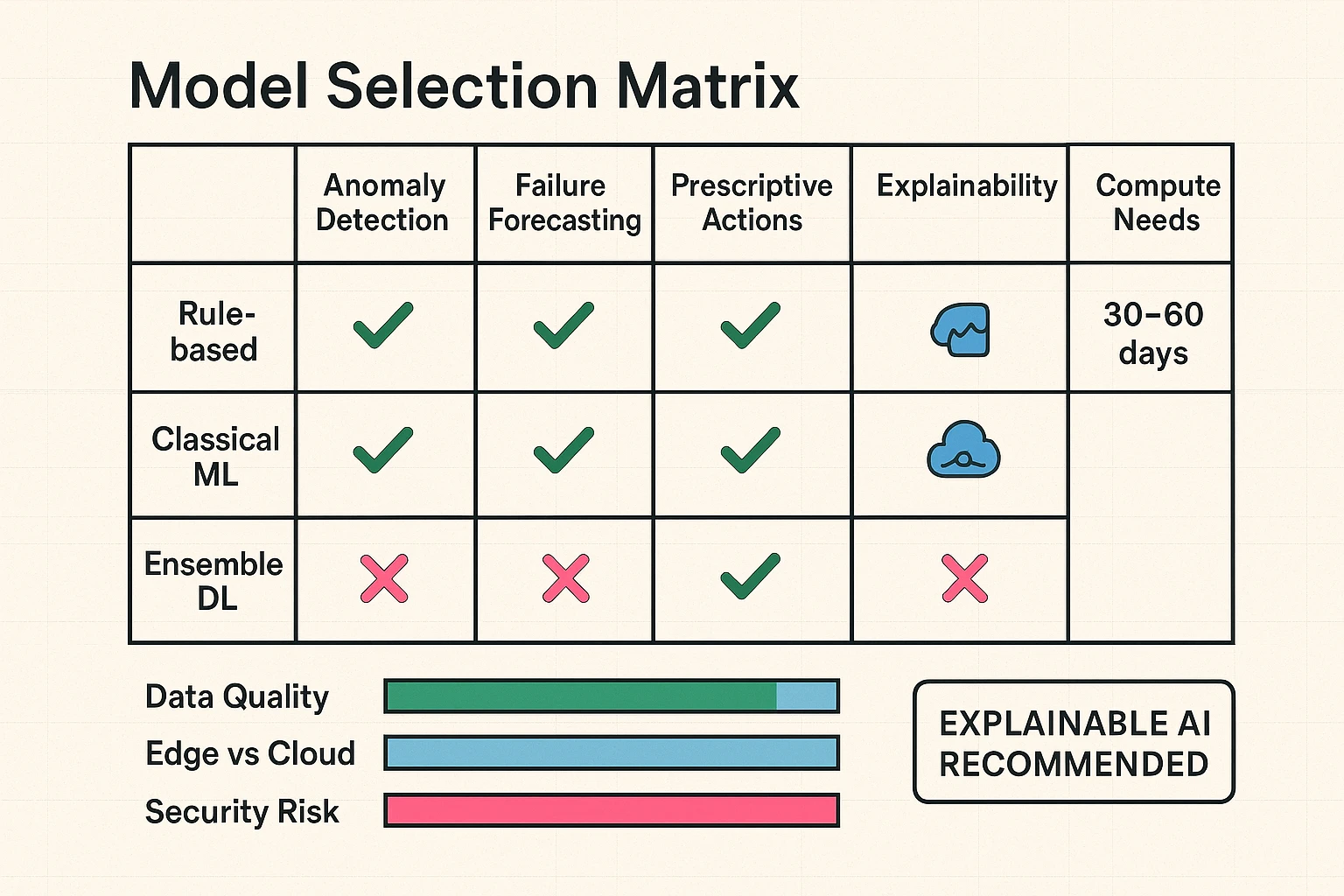
- Classification: Used to predict discrete outcomes, such as whether an asset will fail within a specific timeframe (e.g., "fail" or "not fail"). Algorithms like Support Vector Machines (SVMs), Random Forests, and Gradient Boosting Machines (GBMs) are common.
- Regression: Employed when predicting continuous values, like remaining useful life (RUL) of a component. Linear Regression, Polynomial Regression, and Neural Networks can be applied here.
- Anomaly Detection: Essential for identifying unusual patterns or outliers in real-time data that deviate from established norms, often signaling an incipient fault before it escalates. Isolation Forests, One-Class SVMs, and autoencoders are frequently used.
For complex, high-dimensional data, especially from multiple sensors operating simultaneously, Deep Learning models like Convolutional Neural Networks (CNNs) for spatial data and Long Short-Term Memory (LSTMs) networks for temporal data excel at uncovering intricate patterns that simpler models might miss.
Explainable AI (XAI): Building Trust in Predictions
While powerful, AI models can often be black boxes, making predictions without clear reasoning. This opacity can be a major barrier to adoption, especially for critical operational decisions. This is where Explainable AI (XAI) becomes invaluable. XAI techniques make AI predictions more transparent and understandable to humans. For instance, knowing not just that a motor is likely to fail, but why (e.g., "due to consistently elevated vibration readings correlated with decreasing motor efficiency"), builds trust among operators and maintenance managers. It also helps engineers diagnose problems more effectively and continuously improve the models.
Data Quality: The Foundation for Accurate Predictions
No matter how sophisticated your model, it's only as good as the data it’s fed. Poor data quality—missing values, inaccurate sensor readings, inconsistent formats—is a leading cause of failed PdM initiatives. A robust data strategy, encompassing data governance, cleansing, and preprocessing, is non-negotiable for achieving reliable and accurate predictions.
Overcoming the Hurdles: A Strategic Approach to PdM Implementation
The benefits of AI-powered predictive maintenance are clear, but the path to implementation isn't without its challenges. Approximately 25% of organizations cite budget concerns, 24% point to expertise gaps, and 22% worry about cybersecurity as barriers to AI adoption. Addressing these head-on with a strategic approach is essential for success.
Challenge 1: High Upfront Investment & ROI Justification
Implementing a comprehensive PdM system can involve significant initial costs for sensors, data infrastructure, software, and integration.
- Solution: Begin with a phased implementation. Identify high-impact, critical assets where even a small reduction in downtime yields substantial savings. Pilot projects on these assets can demonstrate rapid ROI, building internal champions and securing further investment. Develop robust ROI calculation models that factor in avoided costs (downtime, emergency repairs, premature replacements) to clearly articulate payback periods.
Challenge 2: Data Availability & Quality
Many organizations struggle with fragmented data, incompatible systems, or simply insufficient historical data to train effective AI models.
- Solution: Start by clearly defining your data strategy. This involves identifying critical data sources, planning for sensor integration, and establishing protocols for data collection, validation, and storage. Invest in data cleansing and preprocessing tools to ensure the integrity of your training data. For assets lacking sufficient historical failure data, consider using physics-based models or transfer learning from similar assets.
Challenge 3: Skill Gaps & Workforce Training
The workforce needs to evolve with new technology. A lack of internal expertise in data science, AI, and even advanced sensor technology can hinder adoption.
- Solution: Develop a comprehensive upskilling program for your existing teams. This should include data literacy training for operators, basic data analysis for maintenance technicians, and specialized AI/ML training for engineers and data scientists. Foster cross-functional collaboration between IT, operations, and maintenance departments. Recognize when external expertise, such as AI consultants, is needed for initial setup and complex model development.
Challenge 4: Integration with Existing Systems (ERP, CMMS)
New PdM systems must integrate seamlessly with existing enterprise resource planning (ERP) systems, computerized maintenance management systems (CMMS), and SCADA (Supervisory Control and Data Acquisition) systems to ensure a unified operational picture.
- Solution: Prioritize solutions built on an API-first approach, ensuring flexibility and interoperability. Opt for modular architectures that can be integrated incrementally. Thoroughly vet potential vendors for their track record in integrating with your specific legacy systems and for offering robust, well-documented APIs.
Challenge 5: Cybersecurity & Data Privacy
Connecting more sensors and systems introduces new cybersecurity vulnerabilities. Protecting sensitive operational data from breaches is paramount.
- Solution: Implement a multi-layered cybersecurity strategy specifically designed for IoT and operational technology (OT) environments. This includes network segregation, strong access controls, encryption for data in transit and at rest, and regular vulnerability assessments. Ensure compliance with relevant data privacy regulations like GDPR or CCPA for any data collected that could include personal information or proprietary operational insights.
Challenge 6: Change Management & Adoption
Any significant technological shift requires careful change management to overcome resistance and ensure enthusiastic adoption by end-users.
- Solution: Secure stakeholder buy-in early in the process, from leadership to frontline technicians. Clearly communicate the benefits to everyone involved, emphasizing how AI will augment their capabilities, not replace them. Celebrate early wins and demonstrate how AI is making their jobs easier and safer. Provide ongoing support and training to foster comfort and proficiency with the new systems.
The Future of Predictive Maintenance: Emerging Trends
The landscape of AI-powered operations is constantly evolving. Staying ahead means understanding what's next and how these advancements can further refine your predictive capabilities.
AI-Powered Prescriptive Maintenance: Beyond Prediction
Predictive maintenance tells you what will happen and when. The next evolution is prescriptive maintenance, which tells you what should be done to prevent or mitigate the predicted issue, offering actionable recommendations. This often involves more advanced AI models that simulate various intervention scenarios, considering factors like cost, resource availability, and operational impact to suggest the optimal course of action. This transforms predictions into direct, optimized strategies.
Digital Twins: Virtual Replicas for Advanced Simulation
A Digital Twin is a virtual replica of a physical asset, process, or system. Continuously updated with real-time data from its physical counterpart, digital twins allow for advanced simulation, testing, and optimization in a risk-free environment. For predictive maintenance, digital twins can simulate the impact of various failure modes, test different maintenance strategies, and even predict the long-term effects of operational changes, providing invaluable insights for operational resilience.
Edge Computing: Real-Time Analysis at the Source
As connected sensors proliferate, transmitting all data to the cloud for processing can introduce latency and bandwidth issues. Edge computing brings computational power closer to the data source—the "edge" of the network. This allows for real-time anomaly detection and immediate alerts directly on the factory floor or within remote infrastructure, crucial for rapid response to critical developments. Integrating edge computing into your PdM strategy can significantly enhance the speed and reliability of your system.
Autonomous Maintenance Systems (Human-in-the-Loop)
While fully autonomous maintenance might sound futuristic, elements are already emerging. AI systems can not only predict failures but also automatically initiate maintenance workflows, order spare parts, or even activate robotic repair systems for routine tasks. The key, however, remains a "human-in-the-loop" model, where complex decisions and final approvals are still made by expert human operators, ensuring safety and strategic oversight.
Building Your AI-Powered PdM Strategy: A Decision Framework
Navigating the complexities of AI for predictive operations requires a structured approach. Your evaluation should move beyond theoretical benefits to practical implementation considerations.
Assessing Organizational Readiness
Before committing, honestly assess your current state:
- Data Readiness: What data do you currently collect? Is it centralized, clean, and accessible? What gaps exist?
- Budget & Resources: What is your realistic financial commitment? Do you have internal technical talent, or will you need external support?
- Skills & Culture: Is your team open to new technologies? Are there existing analytical capabilities that can be leveraged?
- Asset Criticality: Which assets are most critical to your operations? These are often the best starting points for a pilot project due to their high impact on downtime.
Selecting the Right Technology Stack
The market offers a diverse range of solutions, from open-source tools to commercial, cloud-based platforms. Your choice will depend on your specific needs, existing infrastructure, and internal capabilities. Consider factors like:
- Scalability: Can the solution grow with your needs, from a pilot to enterprise-wide deployment?
- Integration: How well does it integrate with your existing ERP, CMMS, or IoT platforms?
- Customization: Can it be tailored to your unique operational environment and specific asset types?
- Vendor Support & Ecosystem: What kind of support, training, and community resources are available?
Key Vendor Evaluation Criteria
When evaluating potential partners, look beyond flashy demos. Focus on:
- Proven Track Record: Seek vendors with documented success stories and case studies relevant to your industry or asset types.
- Expertise: Does the vendor possess deep expertise in both AI/ML and operational technology?
- Data Security & Privacy: How do they handle your sensitive operational data? What certifications and compliance standards do they adhere to?
- Support & Training: What level of ongoing support, maintenance, and training do they offer? This is critical for long-term success.
- Flexibility: Can their solution adapt as your operational needs evolve?
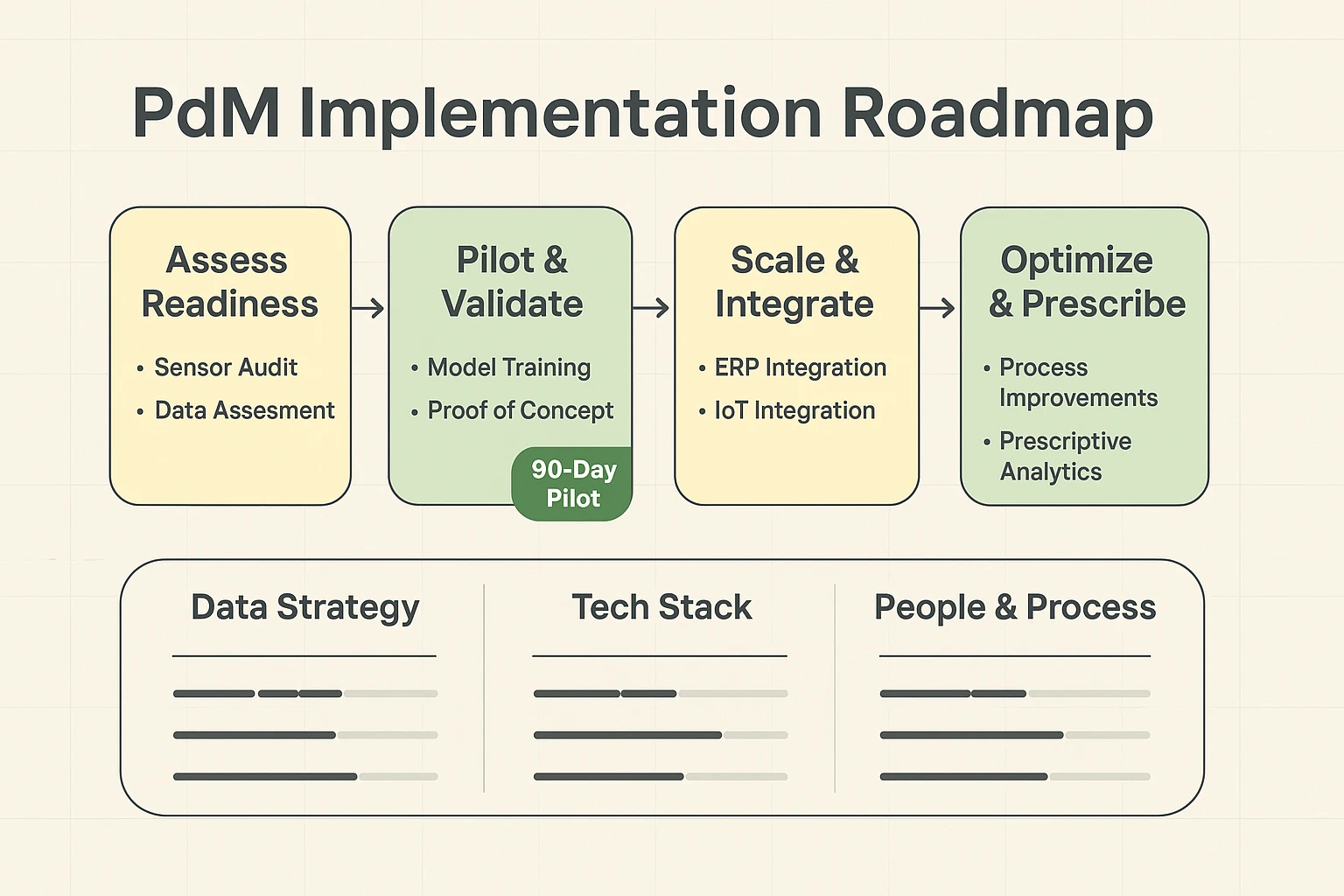
Developing a Phased Implementation Roadmap
A phased approach minimizes risk and maximizes your chances of success.
- Define Scope & Objectives: Clearly identify the critical assets for your pilot project and establish measurable KPIs for success.
- Data Collection & Preparation: Implement necessary IoT sensors, establish data pipelines, and begin the crucial work of data cleansing and structuring.
- Model Development & Training: Work with experts to develop and train initial ML models using your historical and real-time data.
- Pilot Deployment & Validation: Deploy the system on a limited set of assets. Rigorously test its predictions against actual outcomes and refine your models.
- Scaling & Optimization: Once validated, expand the system to more assets, continuously monitoring performance, retraining models, and integrating feedback.
- Continuous Improvement: Embrace AI as an ongoing journey. Regularly review your strategy, explore new technologies (like those mentioned in the future trends section), and continuously optimize your system for enhanced performance and ROI.
Conclusion: The Competitive Edge of Intelligent Operations
The decision to adopt AI for predictive operations and maintenance is a strategic one, offering a profound competitive advantage. It's about moving from reacting to problems to intelligently preventing them, from incurring unpredictable costs to achieving precise operational efficiency. With organizations poised to invest billions into this sector, the time to evaluate and act is now.
By systematically addressing implementation challenges, leveraging advanced AI capabilities like AI-powered Prescriptive Maintenance, and committing to a data-driven strategy, you can unlock significant reductions in downtime (35-50%), substantial cost savings (25-30%), and a dramatic improvement in prediction accuracy (up to 90%). Embracing these intelligent operations isn't just about survival in a competitive landscape; it's about leading the way.
Frequently Asked Questions (FAQs)
Q: Is AI-powered predictive maintenance suitable for all types of equipment and industries?
A: While highly beneficial, its suitability depends on asset criticality, data availability, and business impact. High-value assets where failure is costly (e.g., manufacturing machinery, public transport, energy infrastructure) see the greatest ROI. The principles apply across manufacturing, logistics, IT infrastructure, power generation, and more.
Q: What is the typical ROI for AI-powered predictive maintenance?
A: Studies show significant returns, with 35-50% reduction in unplanned downtime and 25-30% reduction in overall maintenance costs. Organizations often find payback periods within 1-2 years, especially when targeting critical assets.
Q: What are the biggest challenges in implementing predictive maintenance?
A: Key challenges include high upfront investment, ensuring sufficient data quality and availability, bridging internal skill gaps, integrating with existing legacy systems, and managing cybersecurity risks. However, these can all be overcome with a well-planned, phased approach and strategic partnerships.
Q: How much data do I need to start with AI-powered predictive maintenance?
A: While more data is generally better, you don't always need years of historical data to begin. Pilot projects can leverage even a few months of good quality data, combined with expert knowledge, to build initial models. The key is consistent, clean data collection moving forward. Some ML techniques can even work with limited historical failure data.
Q: What's the difference between preventive and predictive maintenance?
A: Preventive maintenance is time- or usage-based (e.g., changing oil every 5,000 miles). Predictive maintenance is condition-based; it uses real-time data and AI to predict when a failure will occur, allowing maintenance to be performed only when needed, minimizing both unnecessary downtime and unexpected breakdowns.
Q: How does BenAI help with predictive operations and maintenance?
A: BenAI specializes in providing tailored AI growth systems and custom AI implementations, training, and consulting. We work with businesses to identify high-impact use cases within their operations, develop robust data strategies, build custom AI/ML models, and integrate solutions seamlessly with existing systems. Our goal is to help you become an "AI-first" business, transforming your operations for maximum efficiency and reduced downtime.
Q: What role does human expertise play in an AI-driven predictive maintenance system?
A: While AI automates prediction, human expertise remains critical. Operators and maintenance technicians provide invaluable context for data, interpret AI predictions, perform complex repairs, and continuously improve the system. AI augments human capabilities, making teams more efficient and strategic. Ensuring your team is well-versed in new technologies is key, and this training can be supported through resources (such as this guide on mastering prompt engineering) and customized programs.
Ready to Transform Your Operations with AI?
The pathway to intelligent, predictive operations is within reach. If you’re ready to move beyond the evaluation phase and explore how custom AI solutions can significantly reduce your downtime and operational costs, we're here to help.
Let’s discuss your unique operational challenges and explore how BenAI can build a tailored AI predictive maintenance system for your business.
Join Our Growing AI Business Community
Get access to our AI Automations templates, 1:1 Tech support, 1:1 Solution Engineers, Step-by-step breakdowns and a community of forward-thinking business owners.

Latest Blogs
Explore our latest blog posts and insights.