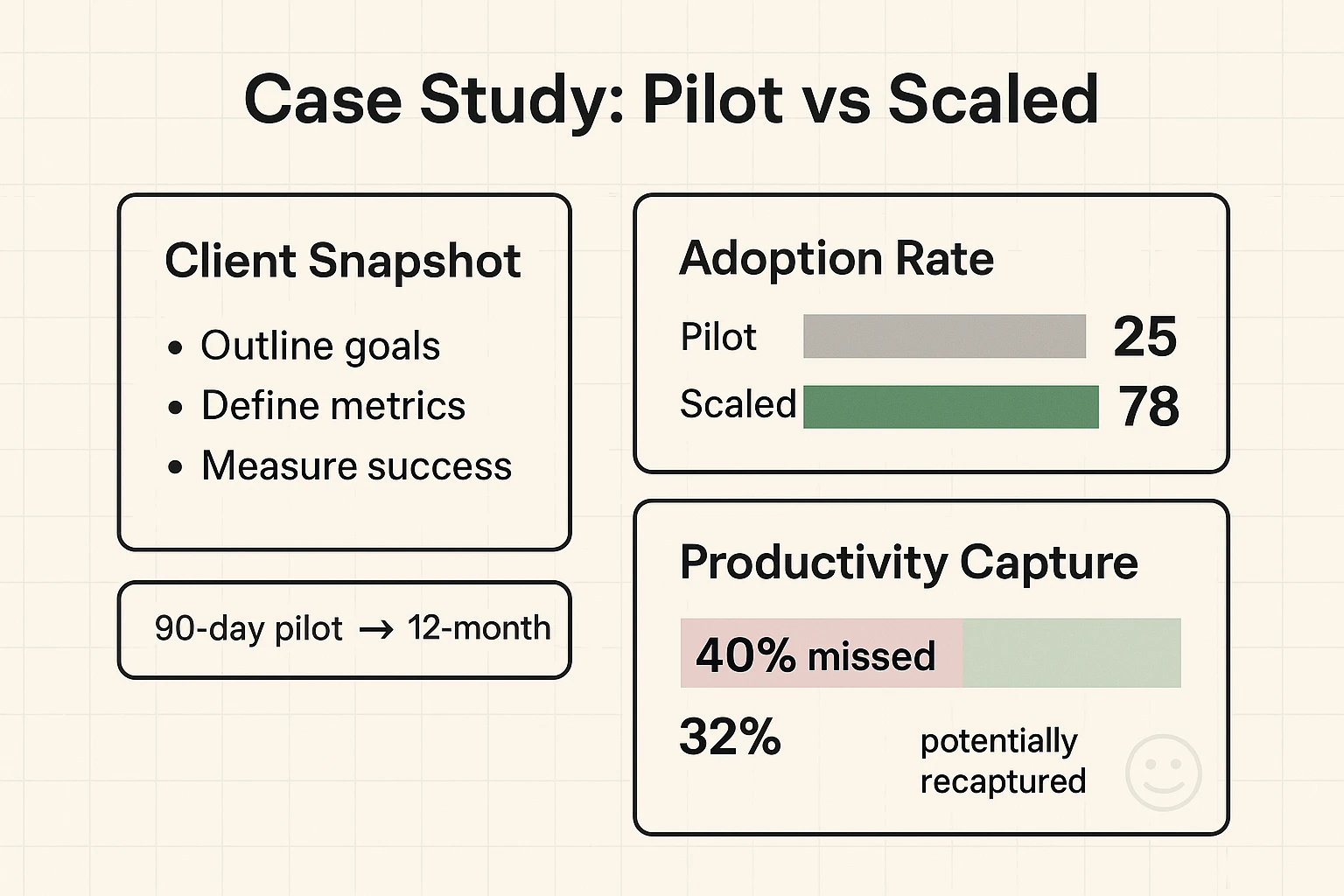
You've explored the technical promise of AI. You understand its potential to revolutionize marketing, recruitment, and enterprise operations. But as you evaluate solutions, a critical question emerges: how do you prepare your organization, your people, and your culture for a transformation of this magnitude? The truth is, 80% of organizations expect to be using AI by 2025, yet a staggering two-thirds struggle to scale AI programs beyond pilot phases. This isn't a tech problem; it's a human one.
This is where BenAI steps in. We understand that successful AI adoption hinges not just on implementing cutting-edge tools, but on masterfully managing the profound shift within your organization. We’re here to provide the authoritative guidance you need to navigate this journey with confidence, turning potential disruption into unparalleled opportunity.
The Unavoidable Truth: Why AI Demands a Human-First Change Management Strategy
Implementing AI is fundamentally different from rolling out a new software application. It reshapes roles, redefines processes, and fundamentally alters how your teams work. Ignoring the human element isn't just risky; it's the primary reason many AI initiatives fail to deliver on their promise.
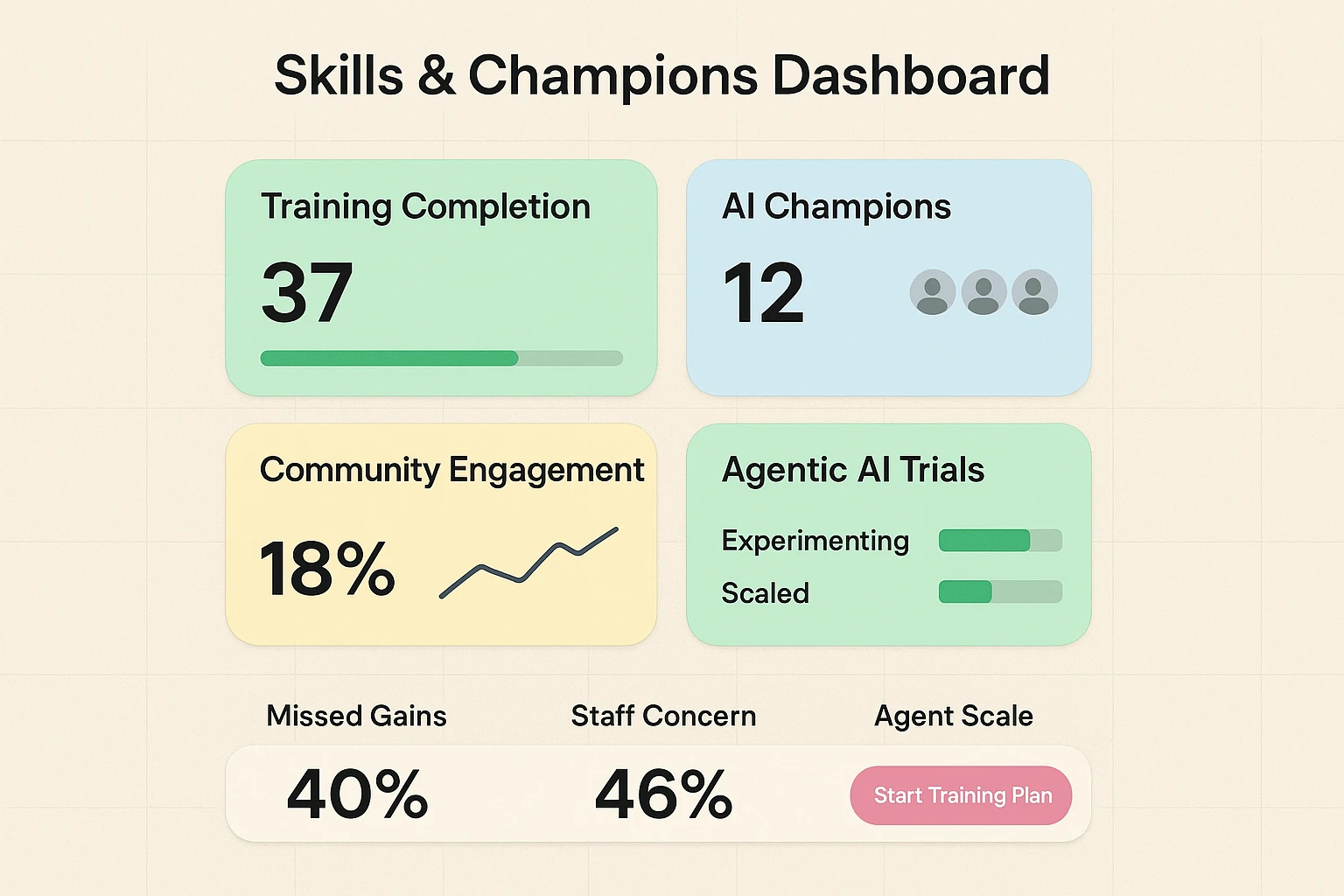
Research shows that up to 40% of potential AI productivity gains are missed due to talent strategy gaps and a lack of human readiness. This isn't about AI's capabilities; it's about your organization's capability to embrace it. While Generative AI adoption has doubled from 55% to 75% between 2023-2024, driving an 18.7% increase in private investment, the speed of technological evolution often outpaces an organization's capacity for cultural absorption.
You need a strategy that moves beyond abstract concepts and delivers concrete, actionable steps. BenAI's approach focuses on bridging this "implementation gap" by prioritizing organizational readiness and change management from day one.
Decoding Resistance: Understanding & Overcoming Employee Fears
One of the most significant barriers to successful AI integration is employee resistance. This isn't always outright defiance; it's often rooted in genuine concerns about job security, the need for new skills, and even ethical implications. In fact, 46% of employees undergoing AI transformation express job security worries. Addressing these fears head-on is crucial for fostering acceptance and turning potential resistors into AI advocates.
Common sources of resistance include:
- Job displacement anxiety: Employees worry AI will replace their roles.
- Skill obsolescence: Fear that current skills will become irrelevant.
- Lack of understanding: Confusion about how AI works and its impact.
- Ethical concerns: Apprehension about data privacy, bias, or misuse of AI.
At BenAI, we advocate for a transparent, inclusive communication strategy. This involves not just informing employees, but actively engaging them in the AI journey, allowing them to co-create solutions and see themselves as part of the transformation, rather than mere recipients of change.
The AI Readiness Audit: Assessing Your Organization's Preparedness
Before you can chart a course, you need to know your starting point. Many organizations rush into AI implementation without a clear understanding of their current state—their strengths, weaknesses, and unique cultural dynamics. This oversight can lead to fragmented efforts, unexpected roadblocks, and a significant drain on resources.
Our AI Organizational Readiness Framework helps you systematically evaluate your capacity across key dimensions, ensuring a holistic perspective. This isn't just a general assessment; it’s specifically tailored to the nuances of AI adoption.
Here's how BenAI helps you assess and build your organizational readiness:
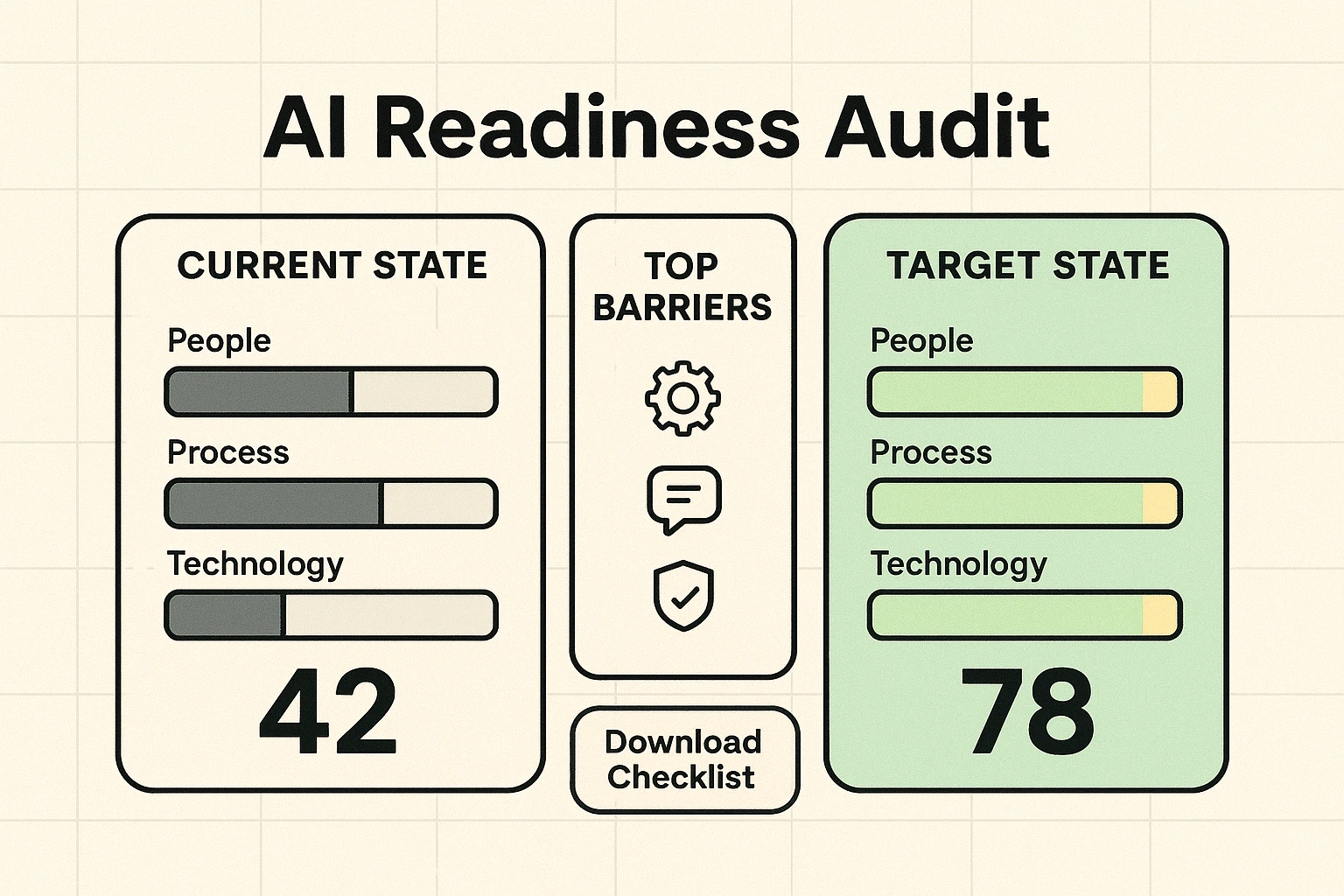
Before any significant AI adoption, an initial assessment is key. We offer an "AI Readiness Assessment Checklist" to help you evaluate your organizational context and identify areas for strategic planning. This tool helps you understand your current capabilities and plot your path forward.
Building an AI-Fluent Culture: From Skepticism to Advocacy
Building an "AI-first" business isn't just about software; it's about fostering a culture where AI is understood, embraced, and utilized effectively. Many competitors offer only generic change management advice. BenAI provides the nuance needed for AI.
For instance, 23% of organizations are already scaling AI agents—systems that plan and execute multi-step workflows. Another 39% are experimenting. This "agentic AI" presents unique cultural challenges and opportunities. Our strategy helps you:
- Establish AI Champions: Identify and empower internal advocates who can demonstrate AI's value and guide their peers.
- Create Internal Communities of Practice: Foster spaces for employees to share knowledge, best practices, and collaborate on AI initiatives. This is a powerful way to accelerate the cultural shift, as seen in how our own vibrant Free Community & Templates helps individuals and businesses learn and grow.
- Incentivize Experimentation: Encourage teams to explore AI's potential in their daily work, fostering psychological safety for learning and iteration.
- Address Ethical AI Proactively: With over 75% of companies prioritizing AI compliance and responsible practices, embedding ethical considerations into your culture from the outset is crucial for long-term trust and adoption. Read more on how to build a culture for AI innovation.
Leadership's AI Playbook: Guiding Your Organization Through Transformation
Without strong leadership buy-in and clear direction, AI adoption efforts can quickly lose momentum. Leaders are not just approving budgets; they are setting the vision, demonstrating commitment, and shaping the narrative around AI's role in the organization.
Leaders must:
- Articulate a Clear Vision: Explain the "why" behind AI adoption, connecting it to strategic business objectives.
- Champion AI Initiatives: Actively participate, communicate progress, and celebrate successes.
- Demonstrate AI Literacy: Understand AI's basics, capabilities, and limitations to make informed decisions and guide teams effectively.
- Align on Governance: Develop clear policies for AI use, addressing ethical concerns, data privacy, and compliance.
We provide frameworks that help leaders evaluate their current buy-in and governance readiness, offering clear progress indicators and actionable checklists to accelerate decision-making.
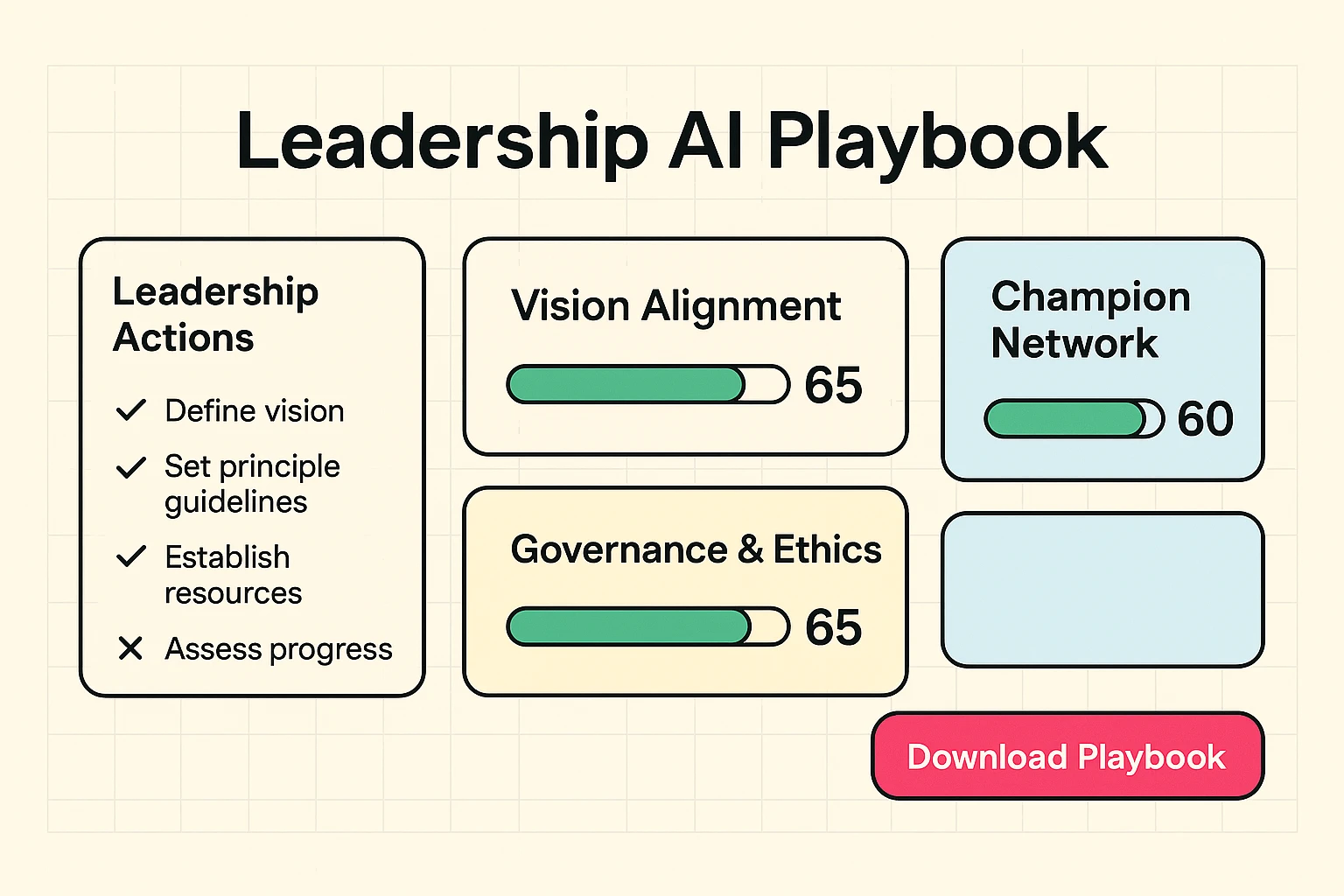
Our Enterprise Solutions are specifically designed to provide custom AI implementations, training, and consulting for large organizations, ensuring leaders are equipped to lead the way in AI adoption.
Crafting Your AI Adoption Communication Strategy
Effective communication is the bedrock of successful change management. It's not about broadcasting information; it's about creating a dialogue, addressing concerns, and generating excitement. With Generative AI rapidly becoming dominant, communication needs to be more nuanced than ever.
Key elements of an effective AI communication strategy include:
- Stakeholder Segmentation: Tailoring messages to different groups (e.g., leadership, technical teams, frontline employees).
- Transparency: Being open about the goals, processes, and potential impacts of AI.
- Addressing Risks: Proactively discussing ethical considerations and job transformation, rather than avoiding them.
- Celebrating Small Wins: Highlighting early successes to build momentum and demonstrate value.
We equip your teams with frameworks and templates to develop robust communication plans that resonate, foster understanding, and minimize resistance.
Training & Upskilling for the AI Era: Empowering Your Workforce
The rapid pace of AI innovation demands a dynamic approach to workforce development. While significant job transformation is inevitable (97 million new jobs may be created by AI, vs. 85 million lost by 2025), companies are missing immense productivity gains if they ignore skills. The focus shifts from fear to empowerment.
BenAI's training and reskilling strategies ensure your employees are ready for the AI-powered future:
- Skill Gap Analysis: Identifying current proficiencies versus future AI-driven skill needs.
- Targeted Upskilling Programs: Developing customized training modules for specific roles and AI tools. This could range from prompt engineering for marketers leveraging AI for SEO content generation and optimization to data interpretation for recruiters using AI recruiting solutions.
- Continuous Learning Mindset: Fostering a culture where learning new AI applications is an ongoing process.
- "Show, Don't Tell": Providing hands-on practical experience with AI tools to demystify them and build confidence, even through automation of tasks like reducing manual SEO workflows with AI.
We provide tools like training and champions dashboards that quantify upskilling progress and community engagement, helping you prioritize workforce investments effectively.
Measuring Success: KPIs for AI Change Management & Organizational Readiness
How do you know your change management efforts are working? Beyond technical adoption metrics, it's crucial to track organizational KPIs that reflect true readiness and cultural shift.
Key Performance Indicators (KPIs) include:
- Employee Engagement in AI Initiatives: Participation rates in training, internal AI projects, or communities of practice.
- Reduction in Resistance: Measured through internal surveys, feedback channels, or sentiment analysis.
- Internal AI Tool Usage: Adoption rates and frequency of use for new AI-powered systems.
- New AI-Driven Innovations: Number of employee-led initiatives leveraging AI.
- Productivity Metrics: Quantifiable improvements in efficiency and output due to AI (e.g., for AI-powered keyword and content gap analysis).
BenAI helps you establish a continuous feedback loop, enabling you to iterate and refine your change management strategies based on real-world data. This allows you to reclaim productivity and demonstrate impact.
The Future of Work with AI: Strategic Organizational Redesign
The rise of AI isn't just automating tasks; it's fundamentally reshaping the nature of work itself. With 23% of organizations already scaling AI agents and 39% experimenting, the concept of "agentic AI" (systems that plan and execute multi-step workflows) is becoming a critical consideration for your organizational structure.
This means rethinking roles, redesigning workflows, and developing fluid team structures that can adapt to AI integration. This isn't about replacing humans with AI; it's about augmenting human capabilities and creating new, higher-value roles.
BenAI guides you through:
- Proactive Role Redesign: Identifying which roles will be augmented, transformed, or created by AI.
- Agile Team Structures: Building flexible teams ready to integrate AI tools and adapt to evolving needs.
- Capacity Creation: Leveraging AI to offload mundane tasks, freeing up your human capital for strategic, creative, and interpersonal work—all without necessarily increasing headcount.
- Ethical Job Transition: Developing strategies for empathetic workforce transition, including reskilling and internal mobility programs, minimizing the 46% of employees who express job security worries.
Frequently Asked Questions
Q: What is AI Change Management, and why is it so important?
AI change management is the systematic approach to preparing an organization and its people for AI integration, driving adoption, and ensuring the benefits of AI are fully realized. It's crucial because technical AI implementation often fails due to neglected human and cultural factors, leading to missed productivity gains and employee resistance.
Q: How can BenAI help my organization with AI change management?
BenAI provides a holistic suite of services including custom AI implementations, expert consulting, and tailored training programs. We offer frameworks like our AI Organizational Readiness Framework, tools like communication plan templates, and strategic guidance to foster an AI-driven culture, manage stakeholder expectations, and empower your workforce to thrive with AI.
Q: We've tried implementing new technologies before and faced significant resistance. How is AI different, and how can BenAI help us overcome this?
AI differs because its impact is often perceived as more profound, potentially altering core job functions or raising ethical concerns. We address this by focusing on transparent communication, employee co-creation, and practical upskilling. Our strategies are designed to proactively address anxieties, turning resistance into advocacy by demonstrating AI's augmentative power and creating new opportunities for growth.
Q: Is AI change management relevant for small businesses or just large enterprises?
It's relevant for organizations of all sizes. While large enterprises might have more complex structures, small businesses and agencies (like the marketing and recruiting firms we serve) still face the same human challenges of adoption. Whether it's to scale your agency 10x faster with our AI Marketing Solutions or to streamline hiring with our AI Recruiting Solutions, successful implementation relies on your team's readiness and willingness to adapt.
Q: What are the typical timelines or phases involved in an AI change management project?
Timelines vary based on organizational size and complexity of AI initiatives. Generally, phases include initial readiness assessment, strategic planning, communication strategy development, pilot programs, targeted training and upskilling, full-scale implementation, and continuous monitoring and adaptation. We help you navigate these phases with customized roadmaps, ensuring a steady and sustainable transition.
Q: How does BenAI measure the success of AI change management efforts?
We measure success using a blend of quantitative and qualitative KPIs. This includes tracking employee engagement with AI, reductions in resistance, usage rates of new AI tools, the emergence of AI-driven innovations, and direct productivity improvements. We establish a feedback loop for continuous improvement, ensuring your investment yields tangible, measurable value aligned with your strategic objectives.
Your AI-First Future Starts with Human-First Strategy
The future of business is AI-first, but the path to that future is undeniably human. Your journey to maximize AI's potential, capture its productivity gains, and outpace your competition depends on how effectively you manage this organizational transformation.
BenAI is more than an AI solutions provider; we are your strategic partner in nurturing an AI-fluent culture, empowering your workforce, and aligning your leadership for success. Let's build your custom AI change management strategy together.
Ready to lead your organization through a successful AI transformation?
Join Our Growing AI Business Community
Get access to our AI Automations templates, 1:1 Tech support, 1:1 Solution Engineers, Step-by-step breakdowns and a community of forward-thinking business owners.
Latest Blogs
Explore our latest blog posts and insights.