Businesses aiming to future-proof their digital presence face the evolving challenge of optimizing for voice search, a pivotal shift in how users interact with information. The increasing prevalence of voice assistants such as Amazon Alexa, Google Assistant, and Apple Siri necessitates a sophisticated approach to search engine optimization (SEO) that extends beyond traditional text-based queries. Voice search optimization, powered by advancements in Artificial Intelligence (AI), is no longer a niche strategy but a critical component for sustained online visibility and enhanced user experience. Neglecting this domain means ceding crucial opportunities to competitors who proactively adapt to these conversational search patterns.
How Artificial Intelligence Influences Voice Search Algorithms
Artificial Intelligence fundamentally reshapes how voice search algorithms process and respond to spoken queries. Unlike conventional text-based searches, which often rely on precise keyword matching and character-based analysis, voice search leverages sophisticated AI capabilities, including natural language processing (NLP), machine learning (ML), and neural networks. These technologies enable voice assistants to decipher the intent, context, and semantic meaning behind conversational queries, translating spoken language into actionable search results.
NLP, a core AI component, empowers voice search engines to understand human language as it is naturally spoken, accounting for nuances like slang, idioms, and sentence structure. According to research published in Computers in Human Behavior, individuals tend to use longer, more conversational phrases when speaking to voice assistants compared to typing their queries. This shift necessitates that content strategies move beyond traditional short-tail keywords towards a focus on long-tail variations that mirror spoken language. Additionally, AI algorithms employ machine learning to continuously improve their accuracy and relevance. For example, as more users ask voice assistants for "the best Italian restaurant near me," the AI refines its understanding of user preferences, location data, and even real-time factors like business hours and popularity, as reported by Google's DeepMind research. This iterative learning process ensures that voice search results become progressively more personalized and contextually accurate, driving increased visibility for businesses that successfully integrate these AI-driven optimization techniques.
Strategies for Long-Tail Keyword Optimization in Voice Search
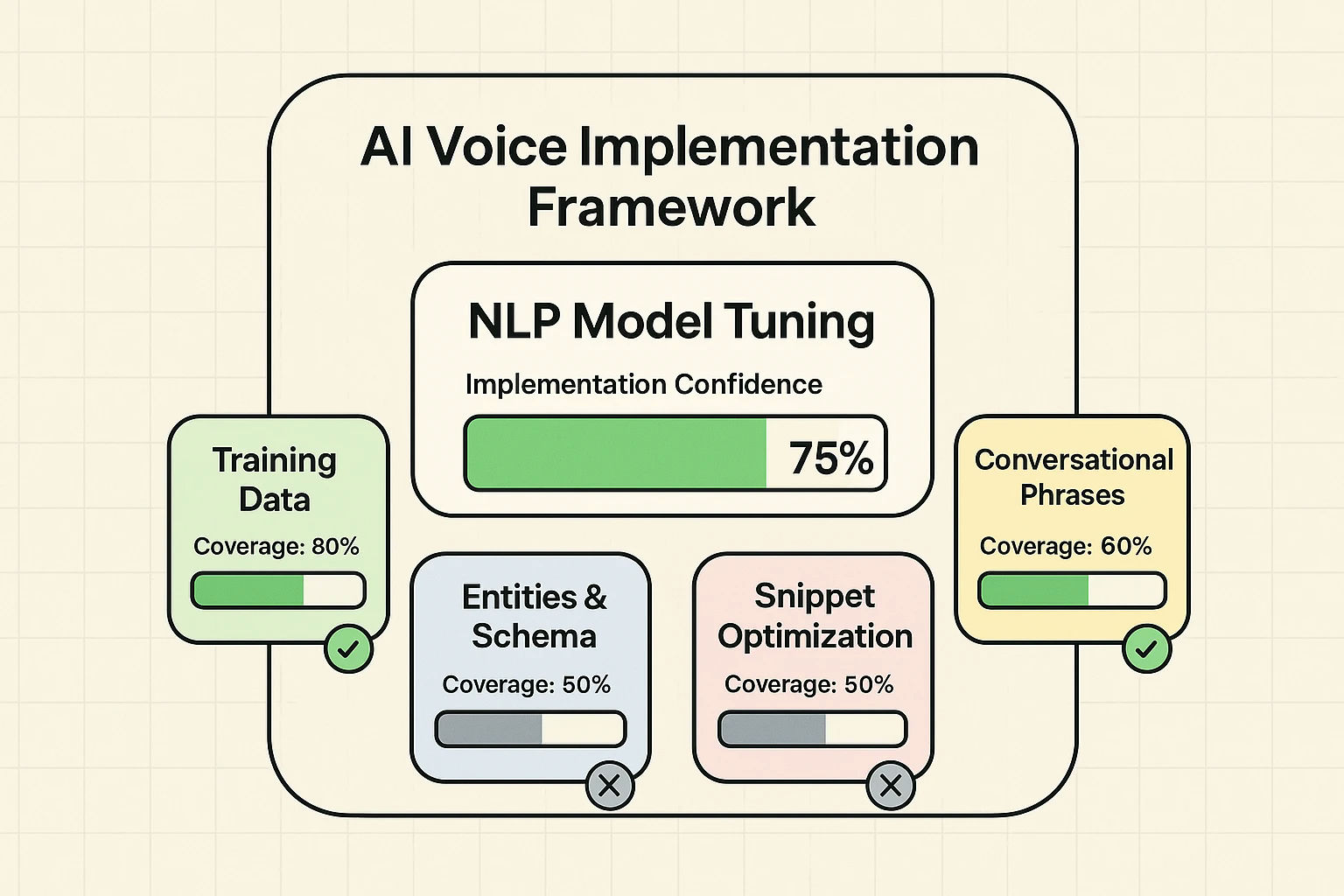
Optimizing content for voice search fundamentally requires a strategic pivot towards long-tail keywords, reflecting the conversational nature of spoken queries. Voice searches are typically longer and more detailed than typed searches; for instance, a user might type "weather" but ask a voice assistant "What's the weather like in London tomorrow?" This shift necessitates content creators to focus on capturing these expanded questions and phrases.
Businesses can effectively implement long-tail keyword strategies by employing a multifaceted approach:
- Anticipate Conversational Queries: Content creators must think like their target audience, predicting the specific questions and phrases they might use when speaking to a voice assistant. This often involves transforming traditional keywords into natural language questions, such as "How do I build no-code AI agents?" instead of merely "no-code AI agents," aligning with the increased use of question-based queries in voice search. According to a study by Stone Temple Consulting, 77% of mobile voice searches are question-based.
- Focus on Question-Based Content: Structuring content to directly answer common questions is paramount. This includes creating dedicated FAQ sections, using question-and-answer formats within articles, and developing content that explicitly addresses "who, what, where, when, why, and how" queries. This approach not only provides direct answers for voice search but also enhances featured snippet eligibility, a common outcome for voice search results.
- Leverage Keyword Research Tools for Conversational Data: Contemporary keyword research platforms now integrate features designed to identify long-tail and conversational queries. These tools analyze search data to reveal how users phrase questions and express intent, offering invaluable insights for content development. Integrating AI-powered keyword gap analysis can further enhance this process, identifying overlooked conversational opportunities for organic visibility. For more details on this, refer to our guide on AI keyword and content gap analysis.
By focusing on these strategies, businesses can significantly increase their content's relevance for voice search, driving greater visibility and capturing a growing segment of digital interactions, a critical component of a comprehensive AI SEO automation guide.
Natural Language Processing (NLP) Considerations for Voice SEO
Natural Language Processing (NLP) is a cornerstone of effective voice search optimization, as it enables AI systems to comprehend the intricate nuances of human language. For businesses, aligning content with NLP principles translates into increased visibility and relevance in voice search results. NLP technology allows voice assistants to:
- Understand Semantic Meaning: NLP moves beyond keyword matching to grasp the implied meaning and relationships between words in a query, even if the exact phrase is not present. For example, if a user asks "What's a good place for coffee near the train station?", NLP helps the voice assistant prioritize cafes that are not only geographically close but also highly rated for coffee quality. This semantic understanding ensures that content providing comprehensive, contextually rich answers ranks higher.
- Discern User Intent: Voice assistants, powered by NLP, excel at identifying the underlying goal of a user's query—whether it's to find information, complete a transaction, or navigate to a location. Research by Nielsen Norman Group highlights that voice search users often express clear transactional or informational intent. Optimizing for intent means structuring content to immediately address these goals, providing concise and direct answers.
- Process Conversational Flow: NLP algorithms analyze the flow of dialogue, enabling follow-up questions and maintaining context across multiple interactions. Content that mirrors a natural conversation, answering related questions and providing supplementary information, performs better. This conversational structure also facilitates the creation of a seamless user experience, enhancing the overall engagement with the content.
To optimize for NLP, businesses should:
- Write in a conversational tone: Produce content that sounds natural when read aloud, using language that people would typically use in a spoken conversation.
- Structure content logically: Use clear headings, subheadings, and bullet points to break down information, making it easier for NLP models to extract key data points.
- Focus on entity recognition: Ensure that specific entities—people, places, organizations, or products—are clearly defined and consistently referenced throughout the content. Automated on-page SEO AI tools can assist in identifying and optimizing these entities.
By prioritizing NLP considerations, businesses can significantly improve their content's discoverability through voice search, leading to higher engagement and more effective communication with voice-enabled users.
Leveraging Schema Markup for Question-Based Voice Queries
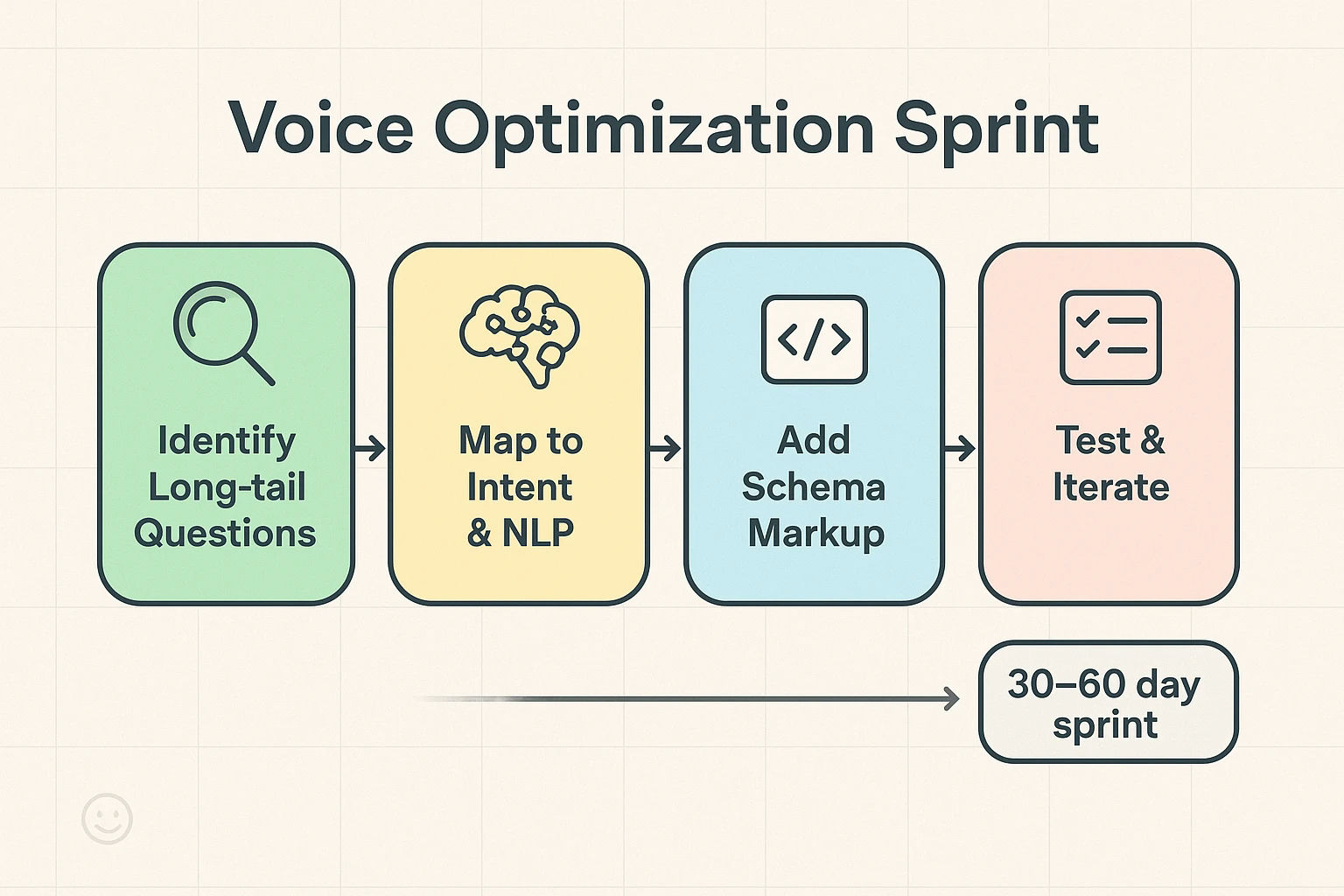
Schema markup is instrumental in optimizing content for question-based voice queries, directly influencing a website's visibility in search engine results, particularly for featured snippets and direct answers via voice assistants. Schema.org vocabulary, when applied correctly, provides structured data that helps search engines understand the context and meaning of content, rather than just the keywords. This structured data is crucial for AI algorithms that power voice search, as it allows them to quickly and accurately extract specific answers to user questions.
For question-based voice queries, the most relevant schema types include:
FAQPage: This markup is used for pages containing a list of frequently asked questions and their corresponding answers. When a user asks a question via voice, search engines can pull the direct answer from theFAQPageschema, providing a concise response.HowTo: This schema is ideal for content that provides step-by-step instructions. Voice users often ask "how-to" questions, andHowTomarkup allows search engines to present these steps clearly and audibly.QAPage: Designed for question and answer forums or support pages, this schema helps search engines understand the relationship between a question and its various possible answers, which is valuable for complex voice queries.
Implementing schema markup offers several pivotal advantages:
- Enhanced Featured Snippet Eligibility: Google's search algorithm frequently uses content with well-structured schema to populate featured snippets, which are often the direct answers delivered by voice assistants. A report by SEMrush indicates that pages with featured snippets capture 8.4% of all clicks.
- Improved Machine Readability: Schema makes content more comprehensible for AI algorithms, enabling them to quickly identify and retrieve specific pieces of information relevant to a voice query. This is especially true for question-answer pairs, where schema explicitly defines the question and its precise answer.
- Increased Voice Search Visibility: By explicitly labeling content components (like questions and answers), businesses enhance their chances of being the authoritative source for voice search queries. This direct access to answers positions the brand as a credible and accurate information provider.
For businesses looking to streamline this process, AI schema markup automation tools can automatically identify and implement appropriate schema types, ensuring consistent and accurate application across the website. This proactive approach to schema integration is vital for capturing increased visibility for voice search, ultimately driving improved user experience and future-proofing SEO strategies against evolving algorithmic demands.
Optimizing for Conversational Search Patterns and Voice Assistant Behaviors
Optimizing for conversational search patterns and understanding voice assistant behaviors is paramount for businesses seeking to capture emerging voice search traffic. Voice assistants like Siri, Alexa, and Google Assistant are designed to mimic human conversation, meaning users interact with them differently than they would with a traditional search bar. This conversational interface necessitates a distinct approach to content creation and SEO.
Key elements for optimizing content for conversational search patterns include:
- Embracing natural language: Content should be written in a way that sounds natural when spoken aloud. This involves using complete sentences, avoiding excessive jargon, and structuring information logically, much like a dialogue. A study by Dialogflow reveals that users expect conversational AI to understand complex queries 80% of the time, highlighting the need for highly articulate content.
- Answering "zero-click" queries: Many voice searches result in a direct answer from the voice assistant without the user needing to visit a website (a "zero-click search"). To capture these, content must provide concise, definitive answers to common questions, making it prime for featured snippets.
- Considering local intent: A significant portion of voice searches includes local intent, such as "find a coffee shop near me" or "what's the best bakery in downtown Austin?" Businesses must ensure their Google My Business profiles are fully optimized and their content includes local keywords and geographic references. According to BrightLocal's Voice Search for Local Business study, 58% of consumers use voice search to find local business information.
- Creating contextually rich content: Voice assistants often maintain context across multiple queries within a single conversation. Producing content that addresses broader topics with sub-sections that answer related follow-up questions can improve visibility for these multi-turn interactions. This approach aligns with the principles of AI-powered content marketing strategy, which focuses on comprehensive and coherent narratives.
Understanding voice assistant behaviors also involves recognizing their preferred content formats and delivery methods. For example, voice assistants often prioritize short, to-the-point answers for quick facts, while providing more detailed information when prompted by follow-up questions. By tailoring content to match these behaviors, businesses can increase their chances of being the chosen source for voice search results, ensuring increased visibility for voice search, improved user experience, and a future-proofed SEO strategy.
The Role of Featured Snippets in Voice Search Optimization
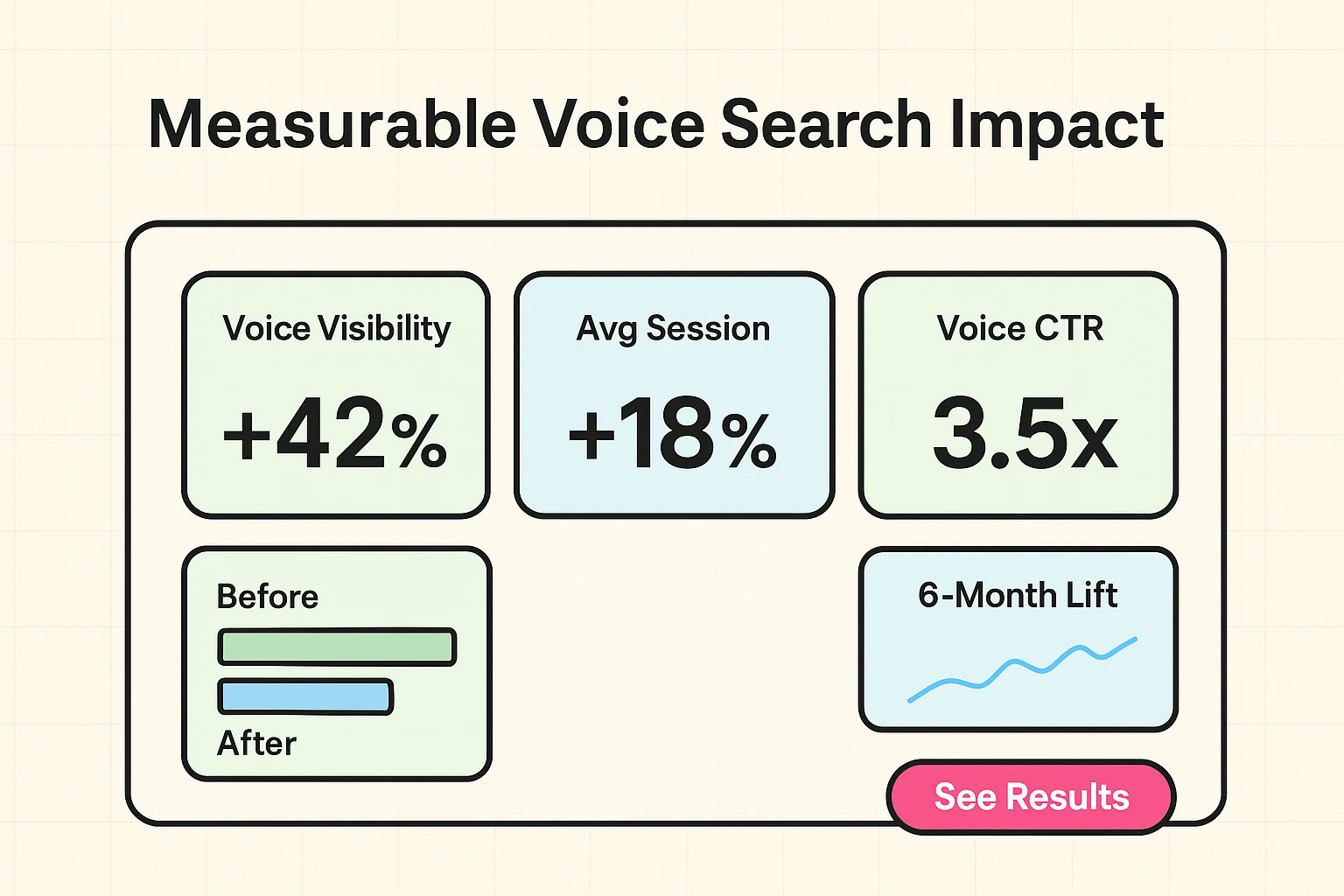
Featured snippets are highly coveted in the realm of voice search optimization, as they represent the primary mechanism by which voice assistants deliver direct answers to user queries. A featured snippet, often referred to as "Position Zero," is a selected search result that appears above the organic search results, immediately addressing the user's question with a concise excerpt from a webpage. For voice search, this snippet is frequently read aloud, making it the sole source of information for many users.
Securing a featured snippet offers several critical advantages for businesses:
- Direct Answer in Voice Search: Voice assistants prioritize featured snippets for their direct answers, effectively making the featured snippet the only result for many voice queries. This positions the content provider as the authoritative source without the user ever needing to click through to the website.
- Increased Brand Visibility and Authority: Appearing as a featured snippet significantly boosts brand visibility and establishes credibility. It signals to both users and search engines that the content is highly relevant and trustworthy, a crucial factor for a comprehensive AI SEO automation guide.
- Higher Click-Through Rates (CTR) for Text-Based Search: While voice search often bypasses a click, featured snippets still generate substantial clicks in traditional text search results. SEMrush data indicates that featured snippets can capture over 8% of all clicks for relevant queries.
To optimize content for featured snippets:
- Structure answers concisely: Provide direct, factual answers to common questions in the first paragraph of a section. Aim for clarity and brevity, typically under 50 words.
- Use question-and-answer format: Explicitly state the question as a heading (e.g., H2 or H3), followed immediately by the answer. This makes it easy for search engine algorithms to identify the query-answer pair.
- Leverage lists and tables: For queries seeking steps, comparisons, or definitions, ordered lists, unordered lists, and tables are frequently pulled into featured snippets. These formats are easily digestible for both users and AI.
- Address precise user intent: Understand the exact intent behind potential featured snippet queries. For instance, a query like "what is voice search optimization" requires a definition, whereas "how to optimize for voice search" requires a step-by-step guide.
By strategically structuring content to target featured snippets, businesses can significantly enhance their presence in voice search, ensuring their brand is the preferred answer provided by voice assistants, thereby maximizing increased visibility for voice search.
Frequently Asked Questions about Voice Search Optimization and AI
This section addresses common concerns and queries businesses have regarding AI-driven voice search optimization, providing clear, data-backed answers to guide decision-making.
What are the primary differences between optimizing for text search and voice search?
Optimizing for text search typically focuses on shorter keywords, precise phrasing, and traditional SEO best practices like keyword density and backlinks. In contrast, voice search optimization prioritizes long-tail, conversational keywords, natural language processing (NLP) considerations, and question-based queries that mimic human speech patterns. Research by Statista highlights that 70% of Google Assistant searches are conversational in nature. Voice search emphasizes direct answers and featured snippets, which are often read aloud by AI assistants, making contextual relevance and conciseness paramount. For effective content generation and optimization in this area, consider exploring strategies for AI SEO content generation and optimization.
How does AI genuinely help in analyzing voice search queries?
AI, particularly through natural language processing (NLP) and machine learning (ML), provides distinct advantages in analyzing voice search queries. NLP enables AI algorithms to understand the semantic meaning, intent, and context of spoken phrases, moving beyond simple keyword matching. ML continuously refines these algorithms, allowing voice assistants to learn from past interactions and improve the accuracy of future responses. For example, Google'sBERT (Bidirectional Encoder Representations from Transformers) model significantly enhances the understanding of conversational nuances in search queries, impacting 10% of search queries according to Google. This deep understanding allows AI to more effectively map complex, natural language queries to relevant content, including an understanding of how AI influences crawlability and indexation.
Can small businesses effectively compete in voice search against larger enterprises?
Yes, small businesses possess a significant opportunity to compete effectively in voice search, often more efficiently than in traditional text search. Voice search frequently prioritizes local results and direct answers to specific questions. By optimizing for local SEO (e.g., Google My Business), creating comprehensive FAQ content, and leveraging long-tail, hyper-specific keywords, small businesses can capture niche voice queries. For instance, a small local bakery optimizing for "best gluten-free cupcakes near me" can outrank a large chain for that specific voice query. A HubSpot study found that 46% of voice search users look for local business information daily, providing a clear pathway for smaller entities.
What role does structured data play in current voice search rankings?
Structured data, implemented via schema markup, plays a critical role in current voice search rankings by explicitly telling search engines what content means, not just what it says. This structured information helps AI algorithms quickly identify and extract precise answers for voice queries, increasing the likelihood of content appearing in featured snippets or direct voice responses. For example, marking up an FAQ section with FAQPage schema makes question-answer pairs easily digestible for voice assistants. According to a study by Google, adopting structured data can lead to a 15% increase in impressions, improving visibility for voice search and featured snippet attainment.
What future AI developments will further impact voice search optimization?
Future AI developments will profoundly impact voice search optimization, focusing on enhanced personalization, predictive capabilities, and multimodal search. Advancements in conversational AI will allow for more natural, multi-turn dialogues with voice assistants, requiring content to be even more contextually aware. AI will also become more predictive, anticipating user needs based on past behavior and location, delivering proactive information. Furthermore, multimodal search, combining voice with visual input (e.g., asking "What's this plant?" while pointing a phone camera), will necessitate optimization for both verbal and visual cues. These trends underscore the importance of continuous adaptation and a deep understanding of future AI SEO automation trends to maintain increased visibility for voice search.
Secure Your Voice Search Future with BenAI
The landscape of search is undeniably shifting towards voice-activated interactions, increasingly powered by sophisticated AI. Businesses that proactively optimize for voice search will unlock unprecedented opportunities for increased visibility, improved user experience, and a future-proofed digital presence. BenAI offers specialized AI business solutions designed to navigate this complex environment. Our expertise in AI implementation, training, and consulting allows organizations to transform into AI-first entities, leveraging conversational search patterns and AI-driven insights to capture new audiences.
Partner with BenAI to develop a tailored voice search strategy that integrates long-tail keyword optimization, natural language processing considerations, and strategic schema markup implementation. We provide the systems and guidance necessary to ensure your content resonates with voice assistant behaviors and secures those vital featured snippets. Do not let your business fall behind in the conversational AI revolution; start your AI-first journey with BenAI and confidently lead the way in AI adoption.
Ready to transform your SEO strategy and dominate voice search? Explore BenAI's comprehensive solutions and schedule a consultation to discuss your specific needs. Your AI-first business starts here.
Join Our Growing AI Business Community
Get access to our AI Automations templates, 1:1 Tech support, 1:1 Solution Engineers, Step-by-step breakdowns and a community of forward-thinking business owners.

Latest Blogs
Explore our latest blog posts and insights.