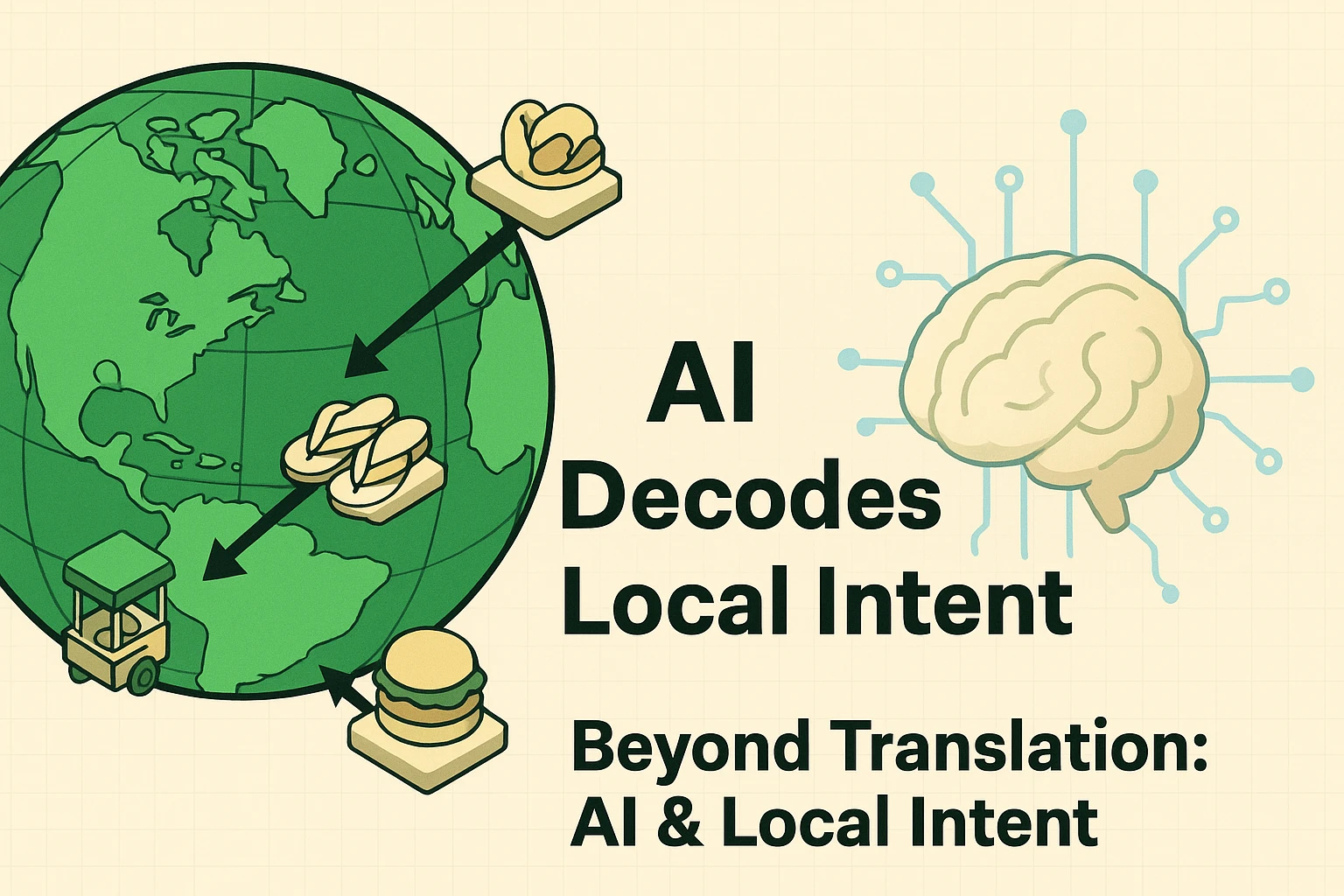
Beyond Translation: How AI Decodes Localized Keyword Intent Across the Globe
Imagine you're searching for "shoes." Simple, right? But what if you're in New York City, looking for a new pair of sneakers for a run, versus someone in Tokyo searching for a traditional pair of tabi shoes for a cultural event? The word "shoes" is the same, but the underlying intent—the "why" behind the search—is vastly different.
This is the hidden challenge of global digital strategy: localized keyword intent. It's the difference between merely translating words and truly understanding what people want when they type or speak a query, in their specific corner of the world, and in their own language.
For too long, businesses expanding internationally have relied on basic translations and generic keyword research, missing out on massive opportunities. But what if there was a way to truly unlock these nuances at scale? Enter Artificial Intelligence. AI isn't just translating keywords; it's learning to think like a local, inferring hidden meanings and categorizing intent with a precision human teams alone could never achieve.
Our journey today will reveal how advanced AI techniques are transforming multilingual keyword research, moving beyond simple linguistic equivalency to truly grasp the complex tapestry of global search intent.
The Global Echo Chamber: Why Localized Intent Matters More Than Ever
In an increasingly connected world, it's easy to assume that a search query's intent is universal. But geographic, cultural, and linguistic contexts dramatically alter its meaning. A query like "fast food" might trigger images of quick, casual dining in the US, while a similar query in Thailand might be more aligned with an immersive "street food" experience. If your strategy conflates these, you're not just missing a sale; you're missing a conversation.
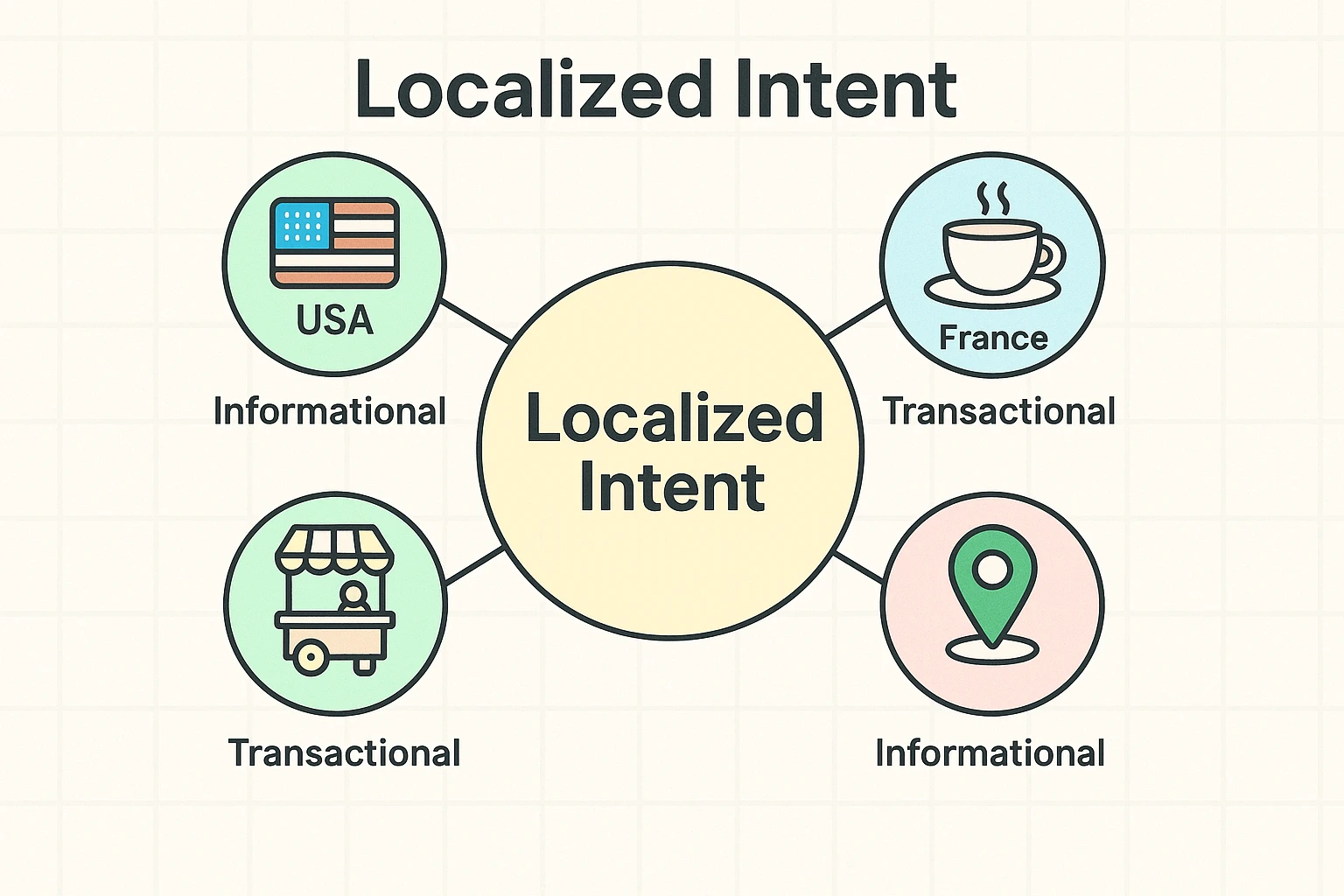
Here's why this matters for your global strategy:
- Diverse Search Behaviors: Users in different regions have distinct ways of searching, influenced by local dialects, common phrases, and even the search engines they prefer.
- Cultural Nuances: What's considered "informational" in one country might be "transactional" in another. For instance, looking for "best prices on electronics" in Europe might prompt reviews and comparisons (informational intent), while in a market like China, it could lead directly to e-commerce platforms (transactional intent).
- Informational vs. Transactional: This is the core distinction. Is the user looking to learn (informational) or buy/do (transactional)? The signals for these intentions can be incredibly subtle and locale-specific, making manual identification nearly impossible at scale.
Traditional multilingual keyword research often falls short because it primarily focuses on linguistic equivalency. While accurate translation is crucial, it's merely the first step. The real challenge is understanding the intent behind the words in each unique market.
Building Bridges: AI's Role in Decoding Intent Across Borders
This is where AI steps in as your multilingual, multi-local detective. AI-powered tools can go far beyond simple keyword matching, analyzing vast datasets to uncover the true intent behind localized queries.
NLP for Linguistic Nuances
Natural Language Processing (NLP) is at the heart of this revolution. It allows AI to understand and interpret human language in a way that transcends literal translation.
- Deconstructing Semantics: NLP can identify the underlying meaning of words and phrases, even when idioms or colloquialisms are involved. For example, the phrase "knock your socks off" translated literally makes no sense in most other languages. NLP helps the AI understand the intent of excitement or surprise.
- Sentiment Analysis: Beyond just words, NLP can gauge the emotional tone of a search query. Is the user expressing frustration, eagerness, or curiosity? This can be a vital clue to their intent.
- Identifying Dialectal Differences: AI models trained on regional data can differentiate between various dialects of the same language (e.g., European Spanish vs. Latin American Spanish), ensuring content is tailored to the specific audience.
Machine Learning for Intent Classification
Machine Learning (ML) takes the insights from NLP and turns them into actionable classifications. By feeding ML models with massive amounts of localized search data, they learn to identify patterns indicative of different intent types.
- Supervised Learning: Here, AI models are trained on datasets where the intent of each keyword is already labeled (e.g., "Paris hotels" = transactional, "history of Paris" = informational). The model learns to associate specific linguistic and contextual features with these labels.
- Unsupervised Learning: For emerging markets or totally new products, unsupervised learning can cluster similar queries together, revealing new intent patterns the human researcher might have missed.
- Contextual Analysis: Advanced ML models can analyze not just the query itself, but also surrounding search results, snippets, and even user behavior data (where available) to infer intent more accurately. This means understanding that "where to buy coffee beans" in Italy might be highly transactional, while in Colombia, it could be more informational, seeking farming origins.
The AI-Driven Workflow: From Data to Localized Intent
The application of AI in this context involves a systematic process:
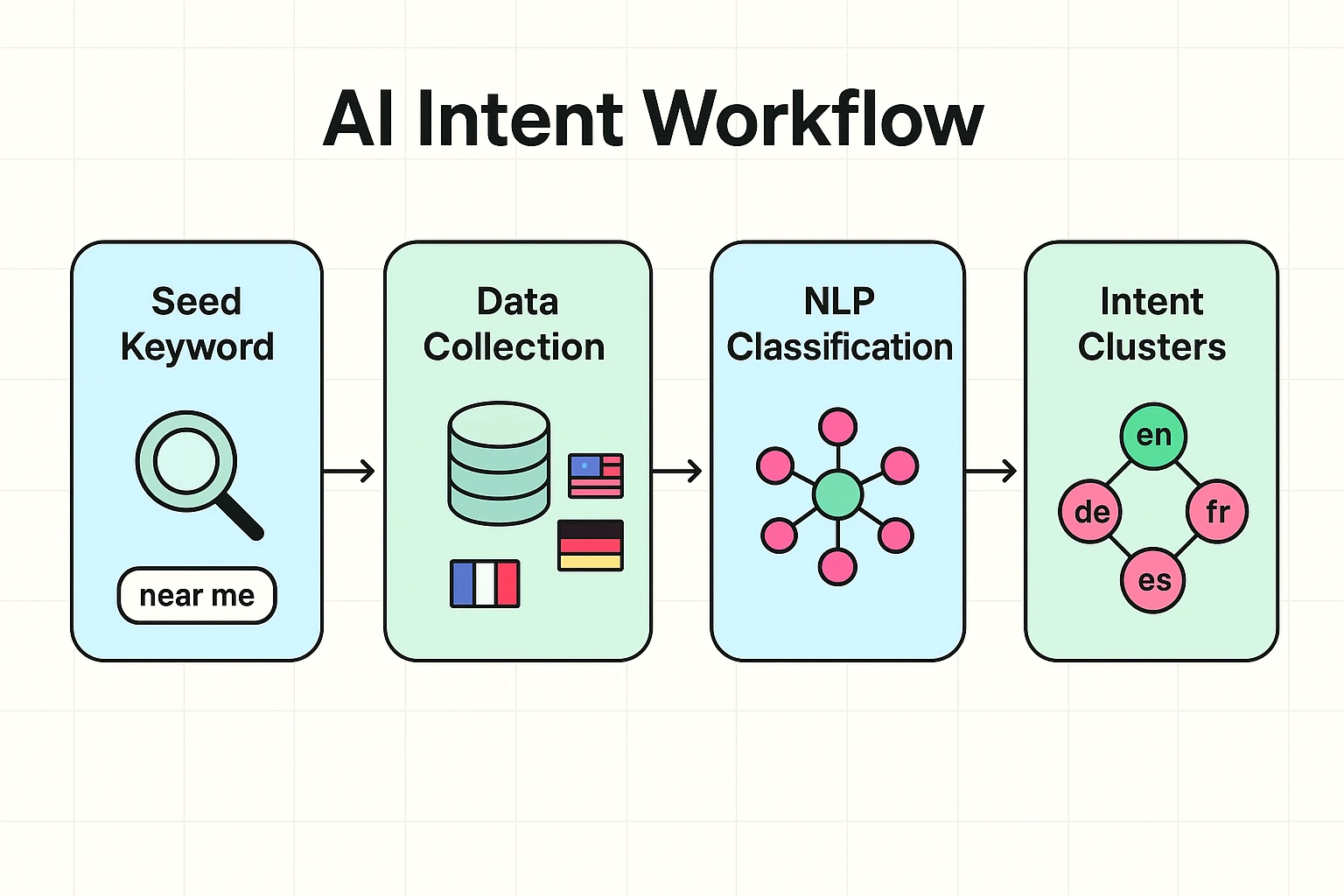
- Comprehensive Data Collection: This begins with gathering massive amounts of localized search data, including keywords, SERP features, and competitor analysis, across target geographies and languages. Leveraging AI for Local SEO visibility is critical here.
- Linguistic Pre-processing: Raw text data is cleaned, tokenized, and processed using NLP techniques to normalize it for analysis, preserving crucial cultural and linguistic nuances.
- Intent Classification Model Training: ML models are trained to classify queries into specific intent categories (informational, navigational, transactional, commercial investigation) customized for each locale.
- Localized Intent Clustering: Keywords are then grouped into clusters based on their shared localized intent, revealing segments like "local informational - weather," "local transactional - restaurant reservation," or "commercial investigation - product comparison."
- Actionable AI Keyword Content Gap Analysis & Strategy Generation: The classified clusters directly inform content creation, ad targeting, and technical SEO adjustments, ensuring every piece of content aligns with the specific localized intent it targets.
Data Sources & Collection: Feeding the AI Brain
To effectively train these AI models, you need rich, localized data. Think beyond traditional keyword tools to integrate:
- Local Search Engine Results Pages (SERPs): Analyzing what actually ranks for specific queries in different regions provides invaluable clues about intent.
- Local Forums and Social Media: These platforms are goldmines of authentic language and expressed needs, directly reflecting local search behavior.
- Local Business Reviews: The language used by customers in reviews can reveal transactional intent and specific local preferences.
- Geo-tagged Data: When combined with intent analysis, geo-tagged data can powerfully inform AI International SEO strategies.
- Web Analytics from Local Domains: Understanding how users interact with your content on local sites provides crucial feedback for AI models.

Identifying "Implicit" Local Intent
Perhaps one of the most powerful applications of AI here is its ability to detect location-based intent without explicit geo-modifiers. A user searching for "pizza" in their local language might implicitly be looking for nearby options, even if they don't add "near me" or their city name. AI can infer this intent based on their IP address, past search history, or commonly associated queries in that region. This capacity is vital for truly mastering global search.
Mastery: Implementing Your AI-Driven Localized Intent Strategy
Moving from theory to practice is where the real magic happens. By integrating AI into your workflow, you can revolutionize your multilingual keyword research and content strategy. This also contributes to Reducing Manual SEO Workflows with AI.
A New Workflow for Research
Instead of relying on spreadsheet translations, imagine a dynamic workflow:
- Seed Keywords & Discovery: Start with core product/service keywords.
- AI-Powered Expansion: AI generates a long tail of localized keyword variations across target languages, considering synonyms, related terms, and common misspellings unique to each locale.
- Localized Intent Classification: Each keyword variation is run through the AI intent classification model for its specific geography and language. This is where AI differentiates "informational" from "transactional" intent in Paris versus Berlin, even for similar concepts.
- SERP Analysis (AI-Augmented): While AI can automate a lot, human oversight is still key. Quickly review the local SERPs for high-priority clusters to validate AI's findings and catch unique, emerging trends. This can also inform your AI Content Strategy Clusters for better content organization.
- Content Prioritization: Focus your content creation efforts on the localized intent clusters that offer the highest potential ROI.
Crafting Intent-Specific Content at Scale
With AI's classification power, you can create hyper-targeted content that truly resonates:
- Informational Content: For informational intent, AI can help you curate detailed guides, how-tos, and rich resources that answer local questions. This might mean local recipes for a food brand or deep dives into local regulations for a legal service.
- Transactional Content: For transactional intent, your content should guide users directly to product pages, booking forms, or service inquiries, using local language for calls to action and highlighting region-specific promotions.
- Semantic Search & Entity Optimization: AI helps you understand the entities (people, places, things) and concepts relevant to each localized query, allowing you to optimize content for better understanding by search engines themselves.
Action: Measuring Success & Future-Proofing
Measuring the success of an AI-driven localized intent strategy goes beyond simple keyword rankings. You'll want to track:
- Conversion Rates per Intent Type: How well does your transactional content convert in Germany vs. Japan? Are your informational articles reducing bounce rates and increasing time on page for specific local audiences?
- Local Search Visibility Shares: Monitor your presence in local SERP features (e.g., local packs, featured snippets) for intent-specific queries.
- User Engagement Metrics: Analyze localized page views, time on site, and interaction rates for content tailored to specific intents.
As AI continues to evolve, staying ahead means continuously refining your models with new data and adapting to emerging search behaviors. The landscape of Future AI SEO Automation Trends is dynamic, and your strategy should be too.
Frequently Asked Questions
Q1: What exactly is "localized keyword intent"?
Localized keyword intent refers to the specific underlying goal or purpose of a search query in a particular geographical region and language. It's not just about what words are used, but why someone uses them in their specific local context. For example, "weather" in London implies a different set of expectations and potential actions (e.g., what to wear, travel planning) than "weather" in a tropical locale, even if both are informational.
Q2: How does AI identify localized intent variations beyond simple translation?
AI uses sophisticated Natural Language Processing (NLP) and Machine Learning (ML) techniques. Instead of just translating words, it analyzes:
- SERP Features: What types of results (e.g., local pack, shopping results, featured snippets) appear for a query in a specific region.
- Language Nuances: Recognizing regional dialects, slang, and cultural idioms that can alter intent.
- Contextual Signals: Looking at related searches, user behavior data (if available), and the overall semantic field around a keyword in that locale.
- Sentiment: The emotional tone associated with the query, which can vary by culture.
Q3: Can I rely solely on AI for my multilingual keyword research?
While AI significantly enhances multilingual keyword research and intent classification, it's best viewed as a powerful augmentation tool rather than a complete replacement for human expertise. AI can process vast amounts of data and identify patterns, but human marketers are still crucial for:
- Strategic Oversight: Defining overall marketing goals and interpreting AI outputs.
- Cultural Validation: Ensuring AI's classifications align with deep cultural understanding and local market knowledge.
- Creative Content Direction: Human creativity remains essential for crafting compelling content based on AI insights.
- Adaptation to Unforeseen Changes: Humans can react to sudden market shifts or new trends that AI models may not yet be trained on.
Q4: Is this only for large enterprises with big budgets?
Not at all. While custom, large-scale AI implementations can be extensive, the principles and many AI-powered tools are becoming increasingly accessible. Even small businesses can leverage existing AI SEO tools, use large language models (LLMs) for initial intent brainstorming, and systematically analyze localized SERPs to apply AI-driven insights without needing a data science team. The goal is to adopt an "AI-first" mindset and integrate these methodologies into your current processes.
Q5: What are the biggest mistakes to avoid when using AI for localized intent?
The most common pitfalls include:
- Treating translation as localization: Assuming a direct translation of keywords will capture local intent.
- Ignoring local SERPs: Not validating AI insights against actual search results in each target region.
- Not iterating: AI models need continuous feeding of new data and refinement to stay accurate in dynamic markets.
- Over-automating: Losing the human touch and cultural sensitivity that AI cannot fully replicate. Always remember that AI empowers, it doesn't replace.
Your AI-First Journey Starts Now
The era of one-size-fits-all global digital strategy is over. Businesses that embrace advanced AI techniques to truly understand and cater to localized keyword intent will gain an undeniable competitive edge. By decoding the "why" behind every search, in every language, and in every locale, you're not just optimizing for search engines; you're connecting with people on a deeper, more meaningful level.
Ready to transform your global digital strategy with AI?
Join Our Growing AI Business Community
Get access to our AI Automations templates, 1:1 Tech support, 1:1 Solution Engineers, Step-by-step breakdowns and a community of forward-thinking business owners.

Latest Blogs
Explore our latest blog posts and insights.