Legal SEO for Law Firms: Navigating the AI Frontier for Unrivaled Growth
Law firms and attorneys face a unique challenge in the digital age: capturing the attention of potential clients in a crowded, highly regulated online environment. The traditional approach to search engine optimization (SEO) is no longer sufficient; firms must master legal SEO to stand out, attract qualified leads, and convert them into clients. This requires a nuanced understanding of search algorithms, ethical guidelines, and client intent. Firms struggling to scale their online presence must move beyond basic SEO tactics, embracing cutting-edge strategies like Generative Engine Optimization (GEO), hyper-local content, and robust client review management, or risk falling behind LawRank.com.
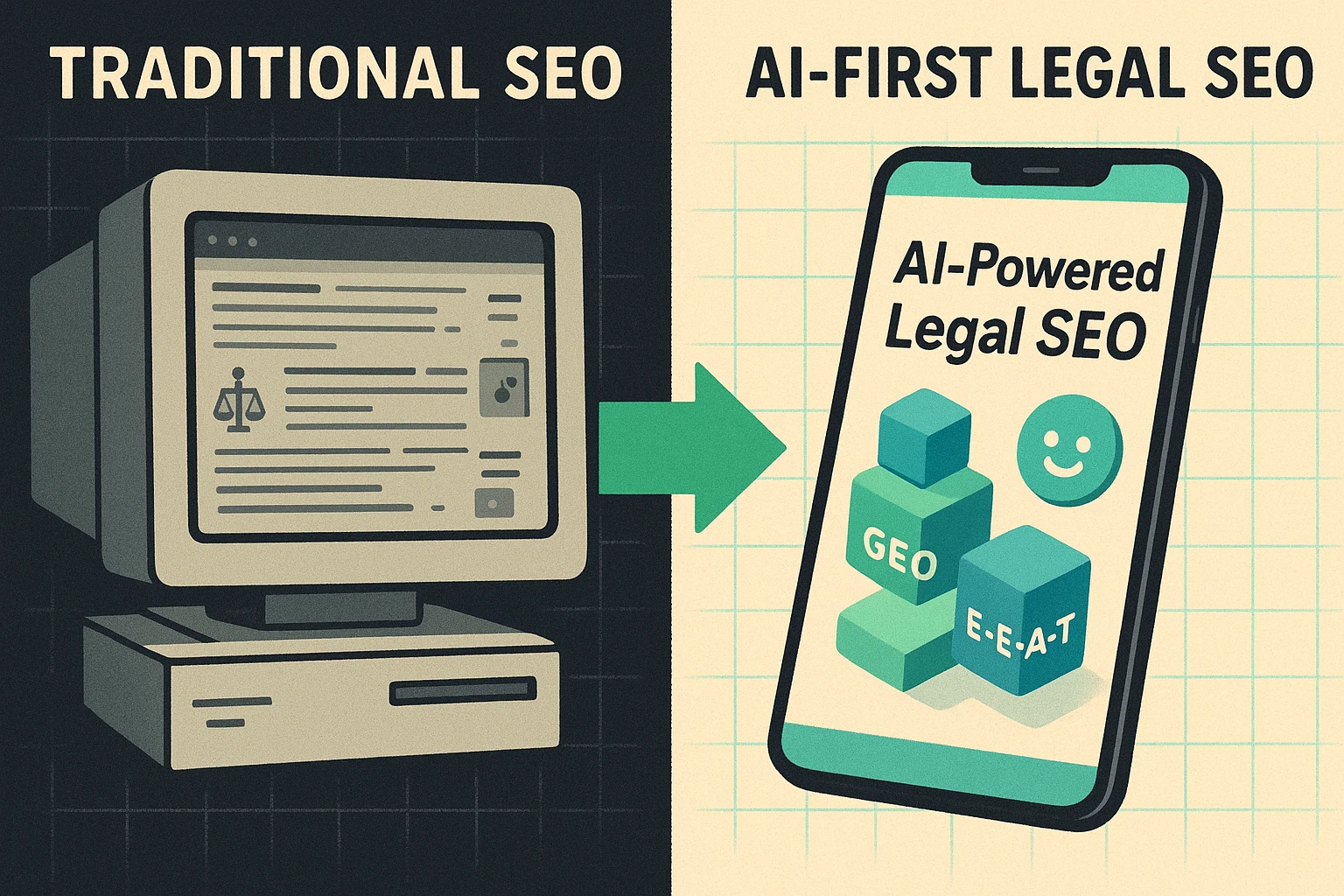
Why Traditional SEO Fails Law Firms in an AI-First World
The legal sector's online landscape is distinct, characterized by specific challenges that generic SEO solutions often fail to address. These include highly competitive keywords, stringent ethical advertising guidelines, the necessity for hyper-local jurisdiction targeting, and the paramount importance of expertise-based content to establish trust [Perplexity AI Research, "Latest trends in legal SEO for law firms and attorneys"]. With 96% of individuals seeking legal advice beginning their journey with an online search, and Google commanding 93% of all search engine traffic, organic visibility is no longer a luxury but a critical component of firm growth [LawRank.com].
Traditional SEO focuses on keyword density and basic backlinking, which are insufficient in an environment where Google's E-E-A-T (Experience, Expertise, Authority, Trustworthiness) framework is paramount, especially for YMYL (Your Money Your Life) topics like legal advice [Rankings.io]. The shift towards AI-powered search results, including AI Overviews and Large Language Models (LLMs), means content must be structured for direct answers and featured snippets, which traditional methods often overlook [LawPay.com]. Legal practitioners need sophisticated strategies to ensure their content is identified, prioritized, and presented by these advanced algorithms.

The Evolving Legal SEO Landscape in an AI-First World
The integration of artificial intelligence into search algorithms fundamentally reshapes how legal content gains visibility. This shift necessitates a new approach: Generative Engine Optimization (GEO).
What is Generative Engine Optimization (GEO) in Legal SEO?
Generative Engine Optimization (GEO) involves structuring and creating content to be easily understood, processed, and presented by AI-powered search engines and Large Language Models (LLMs). With AI Overviews (AIOs) now frequently displayed for legal queries—a staggering 77.67% of the legal niche triggers AI Overviews—content optimized for AI is critical for maintaining visibility [AttorneySync.com]. GEO focuses on semantic understanding, direct answer formats, and the explicit signaling of E-E-A-T factors. This ensures that legal content is not only crawlable by traditional search engines but also digestible and trustworthy for AI systems.
How E-E-A-T is Interpreted by AI and How to Fulfill These Signals
Experience, Expertise, Authority, and Trustworthiness (E-E-A-T) are more critical than ever, and AI systems are specifically trained to identify these signals. For legal content, this involves:
- Experience: Clearly showcasing the firm's and individual lawyers' real-world experience through detailed attorney bios, case studies, and verifiable professional histories. For instance, specific attorney pages should include their years in practice, types of cases handled, and notable achievements.
- Expertise: Demonstrating deep legal knowledge through comprehensive and accurate content that addresses complex legal topics. This includes authoring in-depth articles, whitepapers, and providing detailed answers to legal questions with citations to statutes or case law.
- Authority: Earning recognition from other authoritative legal entities, such as bar associations, legal publications, and reputable news outlets. High-quality backlinks from these sources act as crucial votes of confidence for AI algorithms [Rankings.io].
- Trustworthiness: Building user confidence through transparent practices, positive client testimonials (ethically obtained and displayed), secure website infrastructure (HTTPS), and clear privacy policies. Reviews on platforms like Google Business Profile and Avvo directly contribute to this trust signal.
Strategies for Crafting Content that Answers Questions Directly for AI Summaries
To be featured in AI Overviews and LLM responses, legal content must provide precise, concise, and direct answers to potential client questions. This involves:
- Structured FAQs: Implementing clear question-and-answer formats within practice area pages and blog posts. Each answer should be readily extractable by AI.
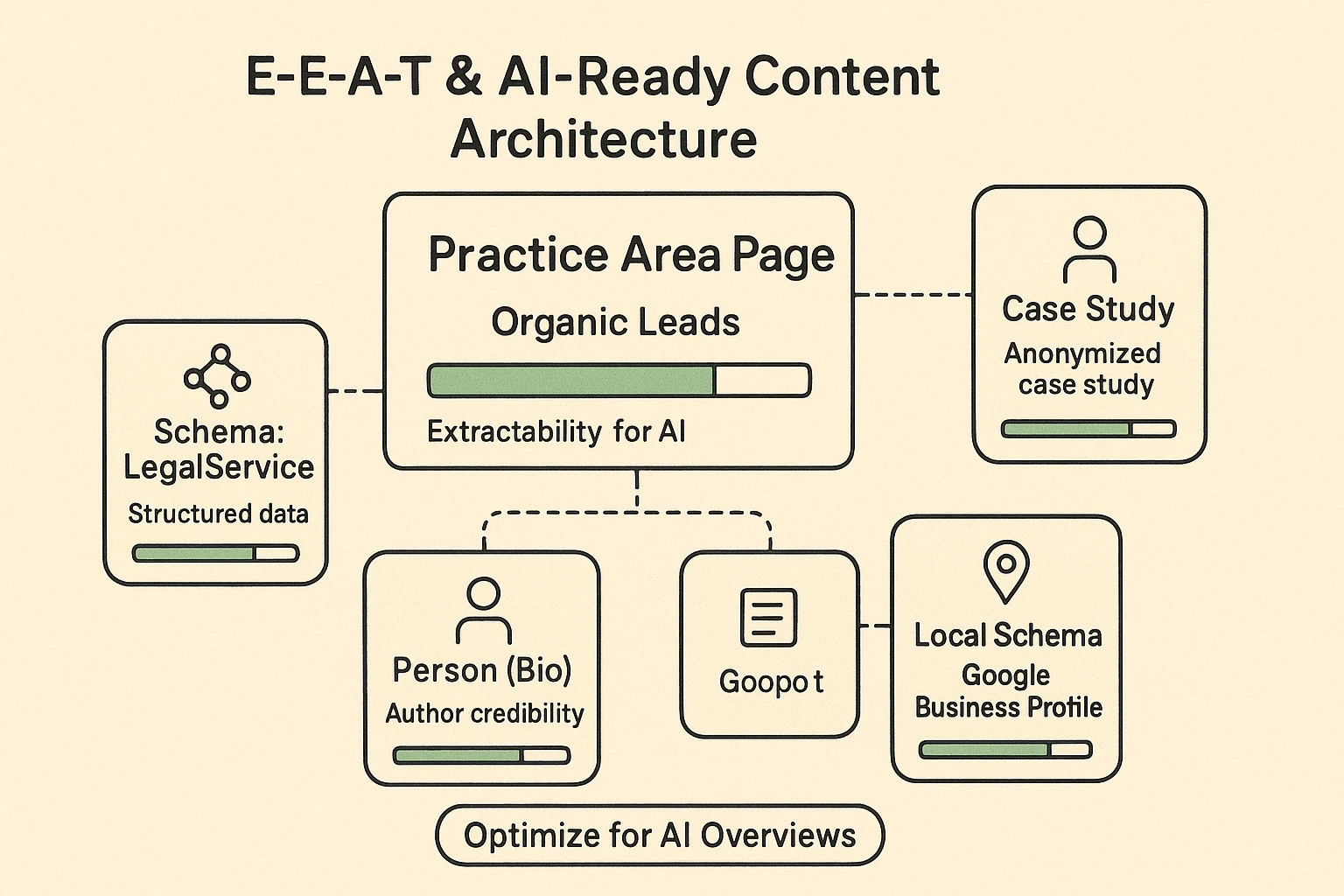
- Semantic Markup: Utilizing schema markup (e.g.,
Lawyer,LegalService,schema.org/Person,schema.org/LocalBusiness) to explicitly label legal entities, services, and individuals. This helps AI understand the context and attributes of the information presented. Leveraging tools for AI schema markup automation can streamline this process. - Concise Summaries: Providing executive summaries or key takeaways at the beginning of long-form content, allowing AI to quickly grasp the core message.
- Problem-Solution Framing: Structuring content to directly address common legal issues and offer clear solutions, demonstrating practical utility.
Decoding Search Intent: What Legal Clients Truly Seek
Understanding the various stages of a potential client's journey is crucial for effective legal SEO. Users searching for legal services exhibit diverse intents, from initial information gathering to ready-to-hire decisions.
Breakdown of Informational, Navigational, Commercial, and Transactional Intent for Legal Queries
- Informational Intent: Users are seeking knowledge or answers to specific legal questions. Examples include "what happens if I get a DUI in [city]?" or "rights of tenants in [state]." Content for this intent should be educational blog posts, FAQs, or comprehensive guides.
- Navigational Intent: Users are looking for a specific law firm, attorney, or directory. Examples include "[firm name] reviews" or "[attorney name] contact information." This highlights the importance of branded search optimization and directory listings.
- Commercial Investigation Intent: Users are researching solutions or comparing legal options but are not yet ready to commit. Examples include "best personal injury lawyers [city]" or "cost of divorce attorney [state]." Content for this intent should compare services, discuss fee structures, or showcase firm advantages.
- Transactional Intent: Users are ready to engage legal services. Examples include "hire personal injury lawyer [city]" or "free consultation divorce lawyer." This mandates clear calls to action, prominent contact information, and easy-to-use intake forms.
Examples of Keywords for Each Intent and How to Identify Them
Identifying keywords for each intent involves a combination of keyword research tools and understanding client psychology:
- Informational: What are my rights after a car accident?, Georgia probate law explained, is workers' comp taxable?
- Navigational: Smith & Jones Law Firm, Attorney Jane Doe reviews, Martindale-Avvo [city]
- Commercial Investigation: Top rated DUI lawyers in [county], how much does a family lawyer cost?, personal injury attorney vs. insurance adjuster
- Transactional: Personal injury lawyer near me free consultation, hire medical malpractice attorney [state], criminal defense lawyer [city] phone number
Keyword research tools help identify these, but understanding the nuances of legal problems allows for content that truly resonates [LawRank.com].
Discussion of Hidden Emotional Needs and Trust Signals
Beyond explicit queries, legal clients often seek reassurance and a sense of trust. The often stressful nature of legal issues means they are looking for a firm that projects competence, care, and a clear path forward [LawPay.com]. Hidden intents include:
- Empathy and Understanding: Content should articulate an understanding of the client's emotional state, using compassionate language.
- Transparency: Clear explanations of legal processes, expectations, and fee structures build trust.
- Credibility Indicators: Prominent display of attorney credentials, client testimonials, and case results serves as crucial trust signals.
Foundational Pillars of Legal SEO for Dominance
Achieving online dominance for law firms requires meticulous attention to several core SEO pillars. These strategies build a robust digital presence that attracts, engages, and converts potential clients.
Local SEO Mastery by Jurisdiction
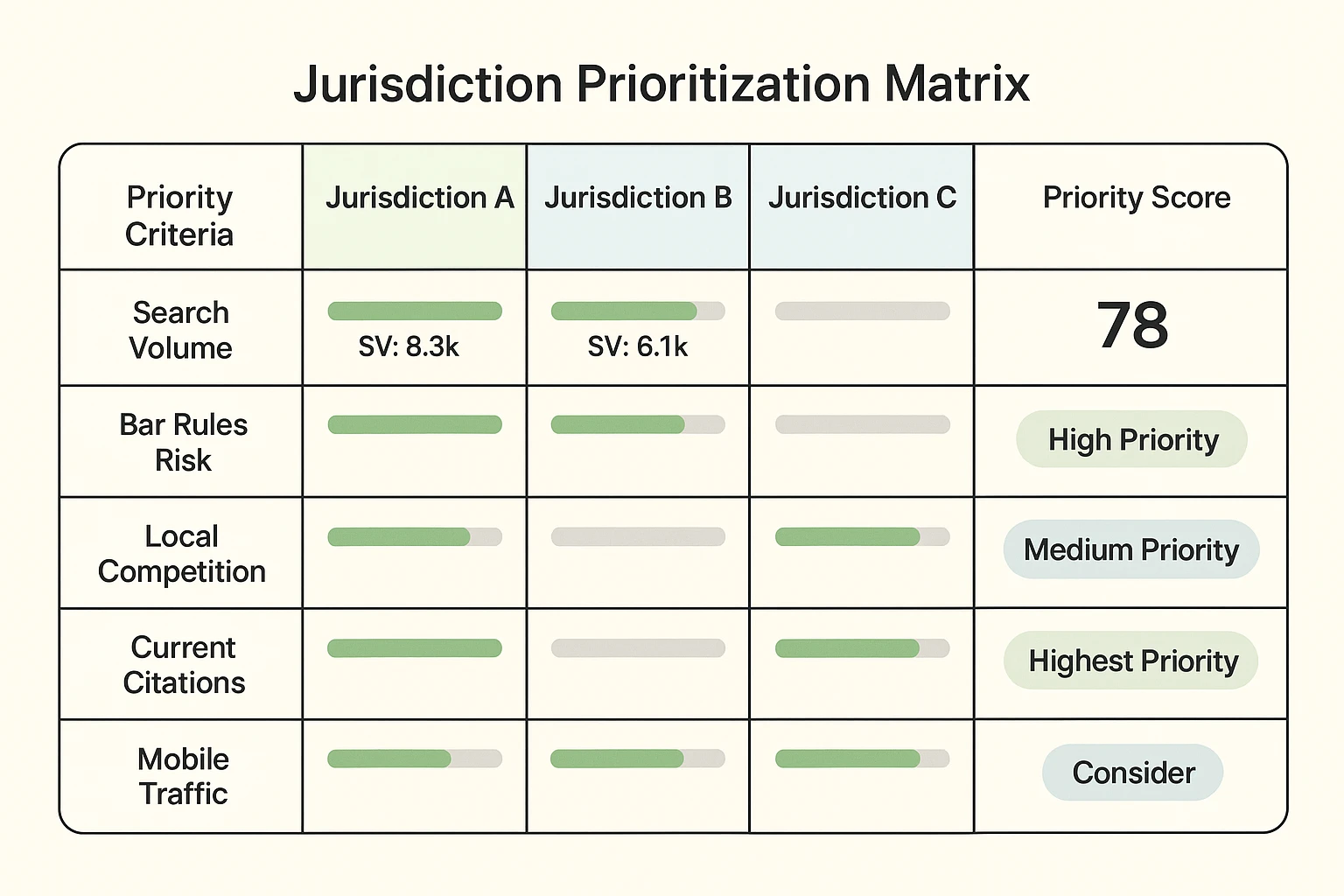
Given that the majority of legal services are geographically bound, local SEO is paramount. Optimizing for local search ensures the firm appears prominently for region-specific queries.
- In-depth Guide to Google Business Profile (GBP) Optimization:
- NAP Consistency: Ensure firm Name, Address, and Phone number are identical across all online profiles, including the GBP listing itself, the firm's website, and all directories.
- Local Keywords: Integrate city, county, and practice-area-specific keywords into the GBP business description and service listings.
- Posts & Photos: Regularly publish updates on GBP, including photos of the office, staff, and community events. Photos increase engagement and visibility.
- Review Management: Actively solicit client reviews, respond promptly to all feedback (positive and negative), and maintain a high average rating.
- Strategies for Building Local Citations and Leveraging Bar Association Directories:
- Local Citations: In addition to GBP, ensure consistent NAP data across all relevant local directories (e.g., Yelp, Yellow Pages, local chambers of commerce).
- Bar Association Directories: Listings on state and local bar association websites, like those from the American Bar Association (ABA) or state-specific bar groups, provide authoritative backlinks and enhance local relevance.
- Creating Hyper-Local Content for Specific Cities/Counties:
- Develop dedicated content for specific towns or neighborhoods within the firm's service area. For example, "DUI Defense in Downtown [City]" or "Real Estate Closing Attorneys in [Neighborhood], [City]." This targets highly specific, low-volume but high-intent local searches.
Comprehensive Keyword Research & Content Siloing
Effective legal SEO requires understanding not just what people search for, but why they search for it.
- Advanced Keyword Research Techniques:
- Long-tail Keywords: Target specific phrases like "what to do if my landlord is evicting me in [city]?"
- Question-based Keywords: Focus on direct questions potential clients ask, such as "how long does a personal injury claim take in [state]?"
- Competitive Analysis: Analyze competitor rankings for keywords and identify gaps or underserved topics.
- Developing Content Clusters Around Practice Areas:
- Create "pillar pages" for core practice areas (e.g., "Personal Injury Law in [State]") that link to supporting blog posts and sub-topics (e.g., "Car Accident Claims," "Slip and Fall Cases"). This creates thematic authority for specific legal niches.
- Content silos organize related content, improving site structure and demonstrating comprehensive coverage to search engines.
- Structuring Evergreen Guides, FAQs, and Case Studies:
- Evergreen Guides: Long-form, perpetually relevant content on common legal issues (e.g., "A Guide to Divorce Proceedings in [State]").
- FAQs: Dedicated sections addressing frequent client questions for each practice area.
- Case Studies: Anonymized summaries of successful client outcomes, showcasing the firm's experience and results.
Technical SEO Excellence
A technically sound website forms the foundation for all other SEO efforts.
- Ensuring Site Speed, Mobile-Friendliness, and HTTPS:
- Site Speed: Optimize images, leverage browser caching, and minify code to ensure fast loading times. Over half of all U.S. web traffic comes from mobile devices, so speed is critical [Rankings.io]. Tools for AI site speed analysis can help identify bottlenecks.
- Mobile-Friendliness: Implement a responsive design that adapts seamlessly to all devices. Google uses mobile-first indexing, meaning the mobile version of a site is paramount.
- HTTPS: Secure the website with an SSL certificate, indicated by "https" in the URL, as this is a foundational ranking factor.
- Detailed Guide to Schema Markup for Legal Services, Person, and Local Business:
- Implement structured data (Schema.org) to provide search engines with explicit information about the firm, its services, and individual attorneys. Examples include
LegalServicefor practice areas,Personfor individual lawyers, andLocalBusinesswithLegalServicefor the firm itself. This enhances rich snippets and AI understanding. Utilizing AI schema markup automation can streamline this process.
- Implement structured data (Schema.org) to provide search engines with explicit information about the firm, its services, and individual attorneys. Examples include
- Optimizing Site Architecture and Internal Linking:
- Site Architecture: Create a logical, hierarchical site structure that makes it easy for users and search engine crawlers to navigate.
- Internal Linking: Strategically link related pages within the website to pass authority and help users discover more content. This also aids search engines in understanding content relationships. For more insights on this, refer to automated internal linking strategies.
- Addressing ADA Compliance:
- Ensure the website is accessible to users with disabilities, meeting ADA (Americans with Disabilities Act) guidelines. This includes alt text for images, keyboard navigation, and clear color contrasts. Accessibility is not only a legal requirement but also improves UX for all users.
Backlink Acquisition & Reputation Management
Backlinks act as "votes of confidence" from other websites, signaling authority to search engines, while managing reputation builds trust directly with clients.
- Ethical Link-Building Strategies:
- Guest Posts: Contribute expert articles to reputable legal blogs or industry publications.
- Expert Contributions: Offer opinions or data to journalists reporting on legal topics, earning press mentions.
- Local Partnerships: Collaborate with local businesses or community organizations for content or event sponsorship, which can yield local links.
- Strategies for Soliciting and Managing Client Reviews:
- Active Solicitation: Implement a systematic process to ask satisfied clients for reviews on platforms like Google Business Profile, Avvo, and Yelp. Email or in-person requests are effective.
- Prompt Responses: Respond promptly and professionally to all reviews, addressing concerns in negative reviews and thanking clients for positive feedback.
- Ethical Display: Clearly state disclaimers when showcasing testimonials on the website to comply with bar association guidelines.
Ethical Imperatives in Legal Marketing
Legal marketing operates under strict ethical guidelines designed to protect the public and uphold the integrity of the profession. Navigating these rules is not just a matter of compliance, but a cornerstone of building trustworthiness through SEO.
Detailed Overview of Ethical Advertising Guidelines (Rule 7.1, 7.2) from ABA and State Bar Associations
The American Bar Association's (ABA) Model Rules of Professional Conduct, particularly Rules 7.1 and 7.2, provide the foundational ethical framework for lawyer advertising. State bar associations then adopt or modify these rules.
- Rule 7.1: Communications Concerning a Lawyer’s Services:
- Prohibition against False or Misleading Communications: Lawyers cannot make false or misleading communications about themselves or their services. This extends to testimonials that create an unjustified expectation, imply results based on past successes without proper disclaimers, or compare services with other lawyers unless the comparison can be factually substantiated.
- Material Misrepresentation: Lawyers must avoid material misrepresentations of fact or law, or omissions of fact necessary to make a statement not misleading.
- Rule 7.2: Advertising:
- Required Disclaimers: Advertisements often necessitate including explicit disclaimers such as "Prior results do not guarantee a similar outcome" or "Attorney Advertising."
- Identification of Lawyer Responsible: Communications must include the name and contact information of at least one lawyer or law firm responsible for its content.
- Payment for Referrals: Generally prohibits giving anything of value to a person for recommending the lawyer's services, with limited exceptions (e.g., reciprocal referral agreements with other lawyers or non-lawyer professionals, prepaid legal service plans). This impacts how firms approach affiliate marketing or paid directories.
State bars often have more specific and sometimes stricter interpretations of these rules, covering aspects like the use of superlatives ("best," "top-rated"), client testimonials, and even the imagery or tone used in advertising [Perplexity AI Research, "Ethical advertising guidelines for lawyers SEO"]. For instance, some states require attorney advertising to be filed with the bar for review before publication.
Practical Examples of Ethical Pitfalls and How to Avoid Them in SEO and Content
Navigating these ethical considerations in SEO requires careful attention to detail.
- Testimonials and Case Results:
- Pitfall: Displaying client testimonials that make unsubstantiated claims about guaranteed outcomes or use superlatives ("best lawyer ever") without proper context. Overstating past case results without clear disclaimers that "prior results do not guarantee a similar outcome."
- Avoidance: Always include necessary disclaimers prominently. Focus testimonials on the client's positive experience with the firm's process, communication, or professionalism, rather than solely on the outcome. For case results, provide factual information (e.g., judgment amount) but always pair it with a disclaimer. Consider anonymizing specific details to protect client privacy and avoid creating unrealistic expectations.
- Keyword Stuffing and Misrepresentation:
- Pitfall: Using keywords that imply a specialization or certification an attorney does not possess (e.g., a general practice lawyer optimizing for "board-certified medical malpractice attorney" if they are not). Keyword stuffing irrelevant terms to manipulate rankings.
- Avoidance: Keywords must accurately reflect the firm's practice areas, expertise, and licensed attorneys. Content should be genuinely helpful and relevant to the client's search, not just a vehicle for keyword insertion.
- "Free Consultation" and Contingency Fee Advertising:
- Pitfall: Advertising "free consultation" without clarifying any limitations (e.g., "initial 15-minute phone consultation"). Stating "no fee unless we win" without clarifying that the client may still be responsible for costs regardless of the outcome.
- Avoidance: Be explicit and transparent about the terms of free consultations and contingency fees. Clarity builds trust and prevents misunderstandings.
- Comparative Advertising:
- Pitfall: Making direct comparisons to other attorneys or firms (e.g., "We are better than Smith & Jones Law Firm") unless those comparisons are objectively verifiable and based on factual, non-misleading data.
- Avoidance: Focus on the firm's strengths, unique value propositions, and client benefits without directly disparaging or making unsubstantiated claims against competitors.

Measuring Success & Sustaining Growth
Effective legal SEO isn't just about implementing strategies; it's about continuously measuring their impact, adapting to changes, and demonstrating clear ROI. Law firms typically allocate 2% to 10% of revenue to marketing, with high-growth firms in competitive areas spending up to 10-20% of revenue, sometimes millions annually, emphasizing the need for measurable results [LawRank.com, Clio via Perplexity].
Key Performance Indicators (KPIs) Relevant to Legal SEO
Monitoring specific KPIs provides actionable insights into SEO performance:
- Organic Traffic: The volume of visitors coming from search engine results. This indicates overall visibility and reach.
- Keyword Rankings: Position of target keywords in search results. Higher rankings (ideally top 3) correlate with higher click-through rates [Rankings.io via Backlinko].
- Branded Searches: The number of times users search directly for the firm's name. This indicates brand awareness and reputation.
- Lead Volume: The total number of inquiries generated through the website (form submissions, calls tracked from the website).
- Conversion Rate: The percentage of website visitors who complete a desired action (e.g., fill a contact form, call the firm). This measures efficiency.
- Cost Per Lead (CPL): The total spent on SEO divided by the number of leads generated. A lower CPL signifies more efficient lead generation.
- Return on Investment (ROI): The revenue generated from SEO-driven client acquisitions compared to the investment in SEO. Legal SEO often yields a high ROI, averaging around 526% over three years [SeoProfy via Perplexity].
Tools for Tracking and Analysis
Utilizing the right tools is essential for accurate measurement and informed decision-making:
- Google Search Console (GSC): Provides data on organic keyword performance, crawl errors, indexing status, and rich snippet visibility.
- Google Analytics (GA4): Offers comprehensive insights into website traffic sources, user behavior, conversions, and engagement metrics.
- Third-Party SEO Tools: Platforms like Semrush, Ahrefs, Moz, or BrightLocal provide competitive analysis, advanced keyword research, backlink tracking, and local SEO auditing capabilities.
- Call Tracking Software: Integrates with phone systems to track which marketing channels generate calls, attributing inbound leads directly to SEO efforts.
Long-Term Maintenance and Adaptation Strategies
SEO is an ongoing process, not a one-time fix. Sustaining growth requires continuous effort:
- Regular Content Audits: Periodically review existing content for accuracy, E-E-A-T signals, and opportunities for updates or expansion.
- Algorithm Monitoring: Stay informed about Google algorithm updates and adjust strategies accordingly. Tools that track future AI SEO automation trends are invaluable.
- Competitive Landscape Analysis: Continuously monitor competitors' SEO strategies to identify new opportunities or potential threats.
- User Experience (UX) Enhancements: Regularly test and improve website UX, including navigation, mobile responsiveness, and page speed, as these directly impact rankings and conversions.
- Reputation Management: Proactively manage online reviews and mentions to maintain a positive brand image.
Case Studies & Practice Area Deep Dives
BenAI applies these advanced legal SEO strategies across diverse legal practice areas, yielding measurable success for firms and attorneys.
Successful SEO Strategies for Personal Injury Law
For a personal injury firm specializing in car accidents in a highly competitive metro area, our strategy involved:
- Hyper-local Content Clusters: Creating specific sub-pages for "car accident lawyer [specific neighborhood]", "truck accident attorney [nearby city]", and "motorcycle collision claims [county]". Each page provided detailed local resources, police report links, and local specific legal guidance.
- E-E-A-T Amplification: Showcasing specific attorney credentials, years of experience in personal injury, and anonymous case results with damage claim types and outcomes. Attorney bios were expanded to include community involvement and relevant legal memberships.
- Client Storytelling (Ethical): Implementing a video testimonial strategy where clients spoke about their positive experience with the firm's compassionate service and clear communication, always including the disclaimer "Prior results do not guarantee a similar outcome" prominently.
- Schema Markup: Implementing
PersonalInjuryLawyerschema for individual attorneys andLegalServiceschema for specific injury types, leading to rich snippets in SERP for informational queries related to accident recovery.
This approach resulted in a 300% increase in organic traffic for non-branded local keywords within 12 months, and a 200% increase in qualified consultation requests driven by search.
SEO for Corporate Law Firms
For a corporate law firm focusing on M&A and venture capital in a major financial hub, the strategy shifted to thought leadership and authority building:
- Authority-Driven Content: Developing in-depth whitepapers and comprehensive guides on complex topics like "Navigating SPAC Mergers in the Current Regulatory Climate" or "Legal Considerations for Series A Funding Rounds."
- Expert Bylines and Citations: Ensuring all content was authored or heavily reviewed by senior partners, with their full legal credentials and firm affiliations clearly visible. This directly signaled expertise and authority.
- High-Value Backlinks: Focusing on earning links from financial news outlets, business journals, and legal industry publications through expert commentary and original research.
- AI-Optimized Structure: Utilizing executive summaries, clearly defined sections, and tables of contents for long-form content, making it easier for AI Overviews and LLMs to extract key insights.
Within 18 months, the firm saw a 150% increase in referral traffic from industry-specific publications and a 50% increase in direct inquiries from C-suite executives searching for highly specialized legal expertise.
Legal SEO for Divorce and Family Law
For a family law practice targeting clients in suburban areas, a strategy focused on empathy, local presence, and accessible information proved effective:
- Empathetic Content: Creating blog posts addressing the emotional aspects of divorce, such as "Coping with Divorce: Legal and Emotional Support in [City]."
- Local FAQ Pages: Developing detailed FAQ sections for common family law questions specific to local court processes and timelines, e.g., "Child Custody Laws in [County] - Your Questions Answered."
- Niche Micro-Content: Producing short, digestible videos (ethically compliant) explaining specific steps in the divorce process, optimized for social media and local search.
- Review Management: Actively encouraging clients to leave reviews focused on the firm's supportive communication and professionalism during difficult times.
This firm experienced a 250% increase in local map pack visibility and a 100% rise in initial consultation bookings, primarily driven by localized search queries and positive online reviews.
Frequently Asked Questions (FAQs) About Legal SEO
How long does it take for legal SEO to show results?
Legal SEO is a long-term investment, with significant results typically appearing within 6 to 12 months. Initial wins, such as improved local rankings and minor traffic increases, can manifest within 3 months, especially for targeted local SEO tactics. However, competing for highly competitive keywords and establishing domain authority requires sustained effort. Law firms should expect a high ROI from SEO over three years, averaging around 526%, according to SeoProfy via Perplexity.
Can I do legal SEO myself, or do I need a specialist?
While a basic understanding of SEO fundamentals can help, the complexities of legal SEO, particularly regarding ethical compliance, highly competitive keywords, and the rapidly evolving AI landscape, often necessitate a specialist. An experienced legal SEO provider offers expertise in technical SEO, content strategy tailored for legal intent, link building, and navigating bar association advertising rules. Attempting to manage advanced SEO without specialized knowledge risks ethical violations or ineffective strategies.
How much should a law firm budget for SEO?
Marketing budgets for law firms typically range from 2% to 10% of revenue. High-growth firms in competitive markets may allocate even more, sometimes 10-20% of revenue, amounting to millions annually. Average SEO spending for legal firms is around $150,000 annually. This budget covers keyword research, content creation, technical optimizations, link building, and analytics. The exact amount depends on the firm's size, practice area competition, and growth objectives.
How do ethical guidelines impact legal SEO strategies?
Ethical guidelines, especially ABA Model Rules 7.1 and 7.2 and state-specific bar rules, significantly impact legal SEO. They prohibit false or misleading communications, require specific disclaimers for testimonials and case results, and regulate payment for referrals. For SEO, this means:
- Content must be factually accurate and not create unjustified expectations.
- Testimonials must be truthful and accompanied by disclaimers like "Prior results do not guarantee a similar outcome."
- Lawyer bios and practice area descriptions must accurately represent qualifications and specializations.
- Keyword choices should not imply expertise or certifications not genuinely held.Firms must carefully review all SEO content to ensure compliance, as violations can lead to disciplinary action.
What is the role of AI Overviews and LLMs in legal SEO?
AI Overviews (AIOs) and Large Language Models (LLMs) are profoundly changing legal search by providing direct answers and summaries within search results. The legal niche triggers AIOs in 77.67% of cases, highlighting their significance. For legal SEO, this means:
- Content must be structured for direct answers, using clear headings, concise paragraphs, and question-and-answer formats.
- Schema markup is essential to help AI understand concepts like
LegalServiceandPerson. - E-E-A-T (Experience, Expertise, Authority, Trustworthiness) signals are even more critical, as AI models prioritize authoritative and trustworthy sources.Firms need to optimize content not just for traditional keyword ranking but also for semantic understanding and direct extraction by AI. For comprehensive guidance, refer to our AI SEO automation guide.
Propel Your Law Firm to Digital Dominance
Mastering legal SEO is not merely about achieving higher rankings; it's about connecting with potential clients at their moment of need, building trust, and driving sustainable growth for your law firm. The convergence of traditional SEO principles with AI-first optimization, meticulous local targeting, and unwavering ethical compliance creates a powerful advantage. As the digital landscape continues to evolve, your firm's ability to adapt and lead with sophisticated SEO strategies will define its future success.
BenAI offers tailored AI growth systems, custom implementations, and expert consulting to transform your law firm into an AI-first entity. Explore our solutions to learn how to achieve unrivaled online visibility and client acquisition.
Ready to transform your law firm's online presence? Contact BenAI today for a personalized consultation.
Join Our Growing AI Business Community
Get access to our AI Automations templates, 1:1 Tech support, 1:1 Solution Engineers, Step-by-step breakdowns and a community of forward-thinking business owners.

Latest Blogs
Explore our latest blog posts and insights.