For B2B manufacturing and industrial businesses, the journey from identifying a need to finalizing a procurement decision is rarely straightforward. It's a complex, multi-stage evaluation process, marked by technical specifications, compliance requirements, and a relentless hunt for reliability. You're not just looking for a product; you're vetting a partner. And in this intricate landscape, the right information, found at the right time, can be the deciding factor.
This is where Search Engine Optimization (SEO) for manufacturing and industrial supply isn't just a marketing tactic—it's a critical component of your B2B procurement strategy. It's about ensuring your highly technical requirements meet precise solutions, and that your evaluation criteria are met with verifiable data.
Navigating the B2B Procurement Labyrinth with Precision SEO
The typical B2B procurement cycle is notoriously long, spanning months or even years. Research from Forrester Consulting shows that 60% of buyers start their research online, and 70% of the buying journey is complete before they even engage a sales representative. For industrial and manufacturing buyers, this means that every technical datasheet, every component specification, and every certification listed online becomes a pivotal touchpoint in their evaluation process.
Your procurement team is actively searching for:
- Exact component matches: 87% of B2B buyers find detailed product information highly valuable. They need to locate specific parts, materials, or machinery that fit their precise engineering requirements.
- Technical documentation: They're sifting through CAD drawings, material safety data sheets (MSDS), and performance specifications.
- Supplier credibility: Certifications (ISO, ASTM, REACH), quality control processes, and industry compliance are non-negotiable.
Traditional SEO often falls short in this specialized environment. General keywords simply won't cut it. You need an SEO strategy engineered for technical precision, designed to capture the intent of a highly specialized B2B buyer.
Optimizing for Technical Search: Beyond Basic Keywords
In the manufacturing and industrial sectors, keywords aren't just words; they're specifications. They represent exact measurements, material compositions, and industry standards.
Catalog SEO: Transforming Product Listings into Discovery Engines
Your online product catalog isn't just a display; it's a critical search interface for technical buyers. Research indicates that 73% of B2B buyers consult product catalogs during their decision-making process. Optimizing these catalogs means:
- Detailed Product Pages: Each product or component needs its own dedicated page with comprehensive, unique descriptions. Avoid generic copy; instead, focus on technical attributes, dimensions, performance metrics, and application guides.
- Structured Data Implementation: Using schema markup for products, offers, and manufacturing-specific properties helps search engines understand your data better. This improves visibility for specific product searches and can lead to rich snippets in search results.
- Accurate Categorization and Faceted Search: Ensure your catalog is logically structured with intuitive categories and robust faceted search options (e.g., filter by material, size, voltage, industry standard). This mirrors the way technical buyers narrow down their choices.
Technical Documentation SEO: Making Specs Searchable
For engineering teams and procurement specialists, technical documents are gold. If they can't find your data sheets, CAD files, or white papers, they can't evaluate your suitability.
- PDF/Document Optimization: While search engines can index text within PDFs, optimize the document properties (title, author, keywords), ensure text is selectable (not just scanned images), and provide clear, descriptive filenames.
- HTML Conversion/Summaries: Consider converting key technical information into HTML pages or providing HTML summaries that link to downloadable PDFs. Search engines prefer crawlable web pages.
- Version Control and Archiving: Maintain clear version control for all technical documents. Buyers need to know they're accessing the most current and relevant information. Archiving older versions, while still accessible, prevents confusion.
CAD Drawings and Specifications Search: Engineering Your Online Presence
Engineers frequently search for CAD drawings and precise specifications to integrate components into their designs.
- Dedicated CAD Libraries: Host your CAD files (e.g., .stp, .dwg, .sldprt) in a well-organized, searchable library. Enable direct download or preview functionality.
- Metadata for CAD Files: Add descriptive metadata to your CAD files, including part numbers, material, dimensions, and relevant industry standards. This makes them searchable within your site and potentially through specialized engineering search platforms.
- Keyword Strategy for CAD: Think like an engineer. What specific part numbers, material grades, or design parameters would they type into a search bar? Integrate these into your page content and file names. For instance, instead of just "valve," use "stainless steel ball valve ANSI class 300 DN50."
Supplier Directories and Industry Certifications: Building Trust Signals
In B2B industrial procurement, trust isn't subjective; it's verifiable. Compliance, quality, and proven processes are paramount. For 90% of B2B buyers, the ease of finding information online significantly influences their supplier choice.
- Optimize for Directory Listings: Ensure your business is accurately listed and optimized on major industrial and manufacturing directories (e.g., Thomasnet, GlobalSpec, Alibaba for B2B) and relevant industry association websites.
- Certification Pages: Create dedicated pages detailing all relevant certifications (ISO 9001, AS9100, CE Mark, RoHS, UL, etc.). These pages should explain what each certification means and link to official documentation where possible. This is a critical trust signal.
- Quality Control Processes: Document your quality assurance and control processes. Detailed content on your testing procedures, traceability, and material sourcing enhances credibility. This aligns with findings that buyers prioritize suppliers who demonstrate commitment to quality and compliance.
Leveraging AI for Precision SEO in Industrial Procurement
This is where advanced AI comes into play. Manual optimization for thousands of technical specifications, CAD files, and certifications is nearly impossible. AI-powered SEO solutions can:
- Automate long-tail keyword research: Identify obscure yet high-intent technical queries (e.g., "M12 x 1.75 titanium bolt supplier").
- Generate structured data at scale: Automatically apply schema markup to vast product catalogs.
- Analyze user intent: Understand the specific technical needs behind complex search queries to surface the most relevant content.
- Monitor technical documentation changes: Alert you to opportunities for updating and re-optimizing older documents.
You can learn more about how BenAI leverages no-code AI for technical SEO automation and how these tools can transform your digital strategy.
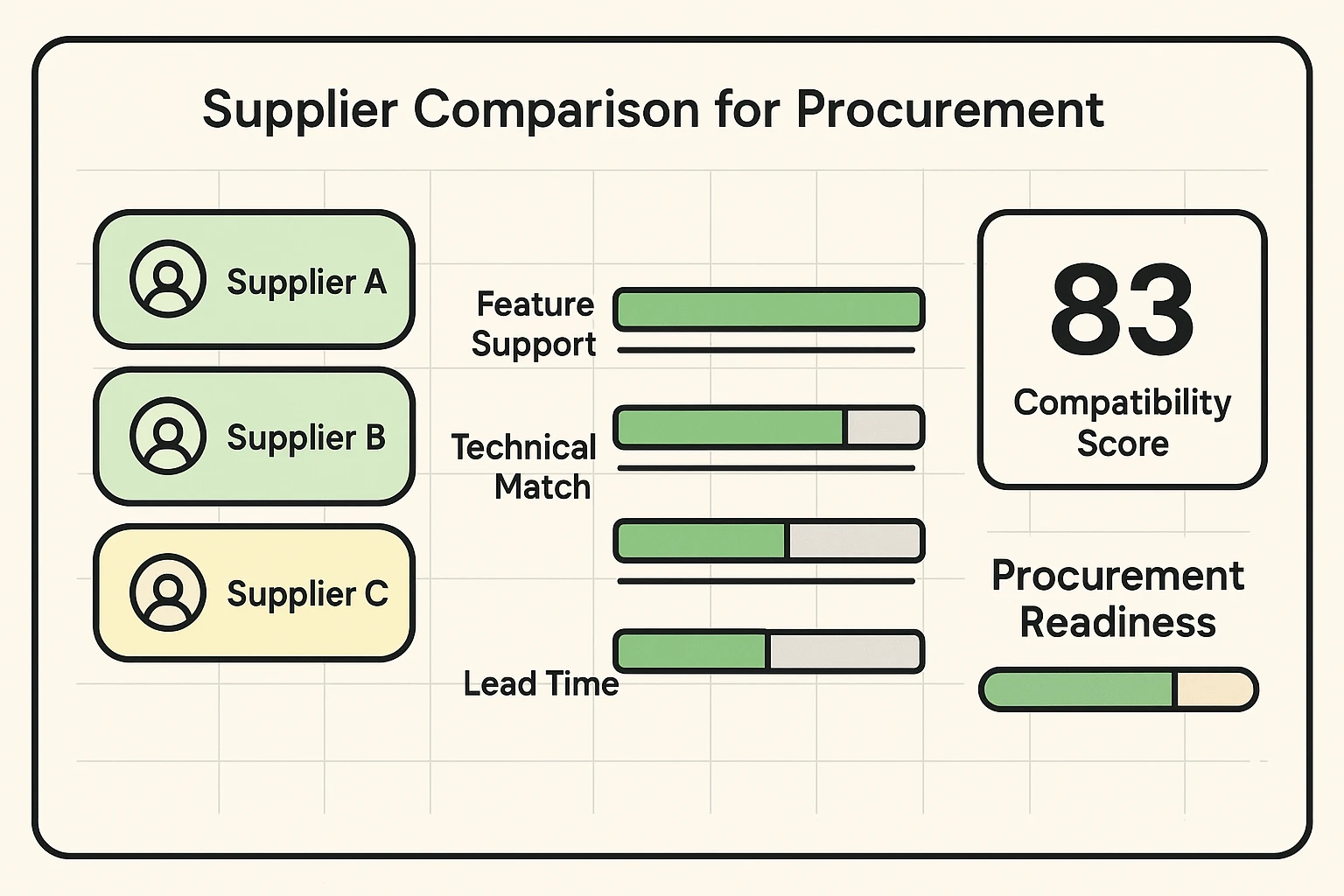
Compare suppliers across technical fit and procurement readiness with a clear compatibility score and horizontal bars for quick shortlisting decisions.
The Long B2B Procurement Cycle: Sustained Engagement Through Content
Due to the length and complexity of B2B procurement, your online presence needs to support buyers through every stage, from initial problem identification to post-purchase support. They're seeking detailed content, validation, and a sense of partnership.
1. Early-Stage Research (Problem Identification & Solution Exploration):At this stage, buyers are looking for macro trends, industry insights, and potential solutions to their operational challenges.
- Content Strategy: Thought leadership articles, whitepapers on industry challenges, and high-level solution overviews.
- SEO Focus: Broad industry terms, problem-based queries (e.g., "optimize supply chain efficiency," "reduce machinery downtime").
2. Mid-Stage Evaluation (Vendor Comparison & Technical Deep Dive):This is where the precision SEO discussed earlier becomes paramount. Buyers are actively comparing specific features, technical specs, and supplier capabilities.
- Content Strategy: Detailed product pages, comparison guides, technical documentation, case studies showcasing ROI for similar applications.
- SEO Focus: Specific product keywords, component numbers, "vs." comparisons, "best X for Y industry." This stage heavily benefits from well-optimized automated content structuring to keep information accessible.
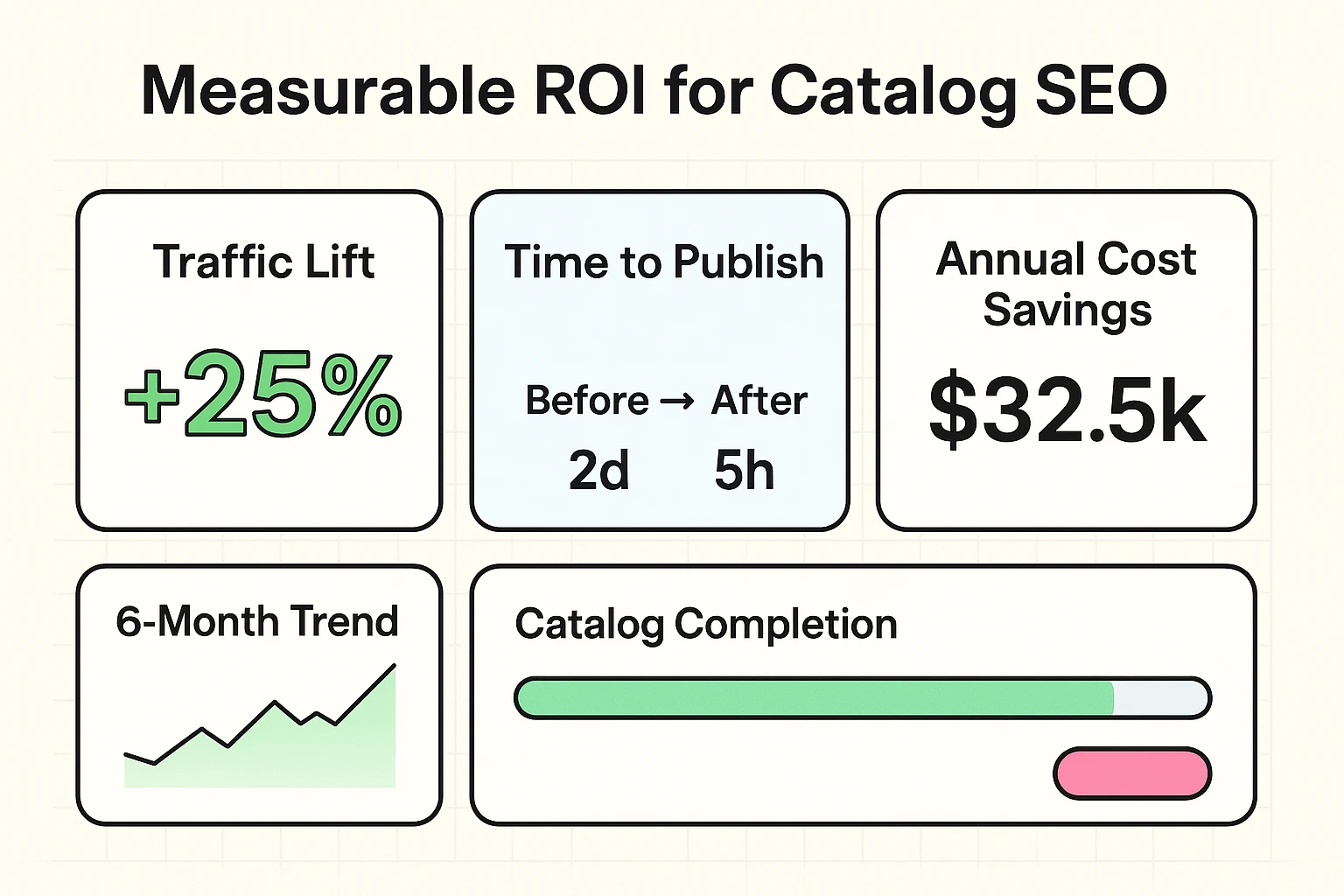
Showcase measurable ROI from catalog and technical-document SEO with bold KPIs and progress indicators to justify investment decisions.
3. Late-Stage Decision (Pilots, RFPs, & Negotiation):Buyers are looking for final validation, implementation details, and assurances of long-term support.
- Content Strategy: Implementation guides, support FAQs, clear contact information for sales and technical support, testimonials that speak to comprehensive service.
- SEO Focus: Branded searches, "pricing," "support," "implementation guide for [product]." An AI-driven quality control guide can also be invaluable here, demonstrating commitment to excellence.

Map the CAD and spec discovery flow with confidence bars to evaluate integration reliability and prioritize engineering workflows.
Sub-Silos: The Nuance of Industrial SEO
While general principles apply, specific industrial sectors have unique SEO requirements:
- Heavy Machinery SEO: Focus on equipment models, load capacities, operational efficiencies, and safety certifications. Use video content to demonstrate machinery in action.
- Electronics Manufacturing SEO: Optimize for specific chipsets, circuit board layouts, component tolerances, and compatibility information. The ability to showcase detailed image optimization with AI tools for micro-components can be a differentiator.
- Chemical Industry SEO: Emphasize safety data sheets, regulatory compliance (REACH, GHS), specific chemical compound names, and purity levels.
- Industrial Automation SEO: Highlight system integration capabilities, compatibility with existing PLCs/SCADA systems, software versions, and use cases for specific automation challenges.
An AI SEO automation guide is essential for handling the complexity across these diverse industrial segments, ensuring consistent, high-quality optimization.
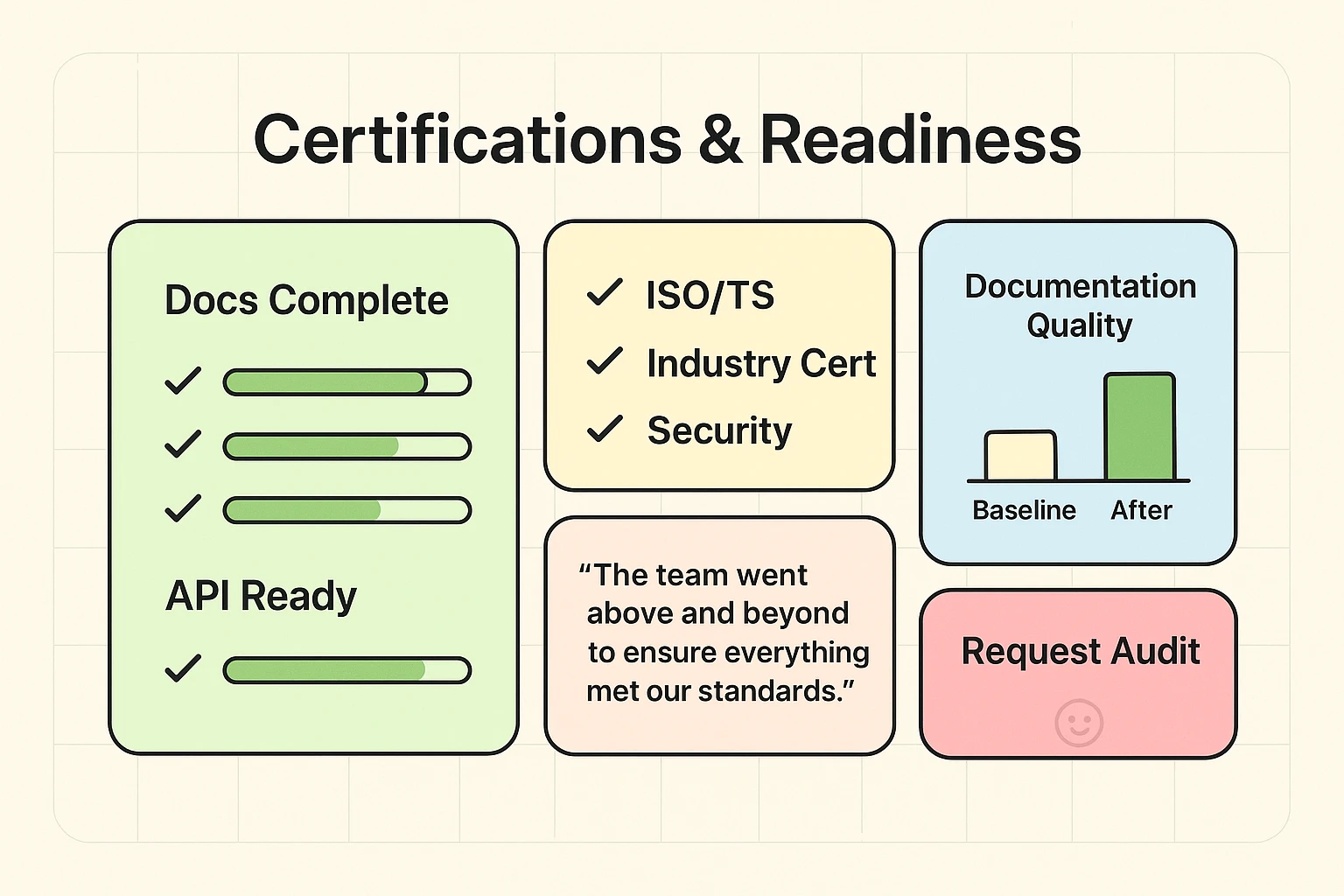
Demonstrate supplier credibility with checklist progress, certification badges, and documentation-quality improvements to reduce procurement risk.
FAQs
Is industrial SEO really different from general B2B SEO?
Absolutely. While core principles are the same, industrial SEO demands a hyper-focus on technical accuracy, extreme keyword specificity, and the optimization of non-traditional content assets like CAD files and datasheets. Industrial buyers aren't just looking for solutions; they're looking for exact fits based on rigorous engineering or procurement criteria.
How can I measure the ROI of my investment in industrial SEO?
Measuring ROI goes beyond typical traffic or conversion rates. For industrial B2B, look at metrics like:
- Qualified leads from specific product/component searches: How many inquiries directly resulted from highly technical keyword searches?
- Downloads of technical documentation: Are engineers accessing your CAD files and datasheets?
- Website engagement on technical pages: Time spent, pages visited on product specification pages.
- Reduction in time-to-close: Does a stronger online presence accelerate the procurement cycle?
- Improvement in search rankings for specific, high-value technical terms. An AI SEO reporting dashboard can streamline this analysis.
We have thousands of products and specs. How can we possibly optimize all of it?
This is precisely where AI automation and a strategic approach are crucial. Manual optimization for such scale is unsustainable. Our approach at BenAI focuses on:
- Prioritization: Identifying your highest-value products, components, or services for initial in-depth optimization.
- Templatization: Developing scalable templates for product pages and technical documentation that incorporate SEO best practices.
- AI-driven automation: Using AI tools to automate keyword integration, schema markup generation, and content updates across your vast inventory. This ensures consistency and accuracy at scale.
How important are backlinks and domain authority in industrial SEO, given the niche market?
They remain vital. Relevant, high-quality backlinks from industry associations, engineering publications, and reputable trade journals signal authority to search engines. For example, a link from an organization like ASME or an article in Manufacturing Today holds immense weight. We emphasize building genuine relationships and creating authoritative content that naturally earns these valuable links within your specific industrial niche.
What role do certifications and compliance play in SEO?
They are critical trust signals, not just for buyers but for search engines too. Explicitly listing and linking to your certifications, detailed compliance pages, and quality control processes boosts your credibility. When buyers search for "ISO 9001 certified manufacturer for X component," your optimized certification pages become highly relevant and trustworthy results.
Your AI-First Approach to Industrial Procurement SEO
In the complex world of B2B manufacturing and industrial procurement, your digital presence is your most powerful sales and qualification tool. Generic SEO won't move the needle for technical buyers. You need a partner who understands the intricacies of technical keywords, the necessity of accessible specifications, and the long-term engagement required for complex sales.
BenAI specializes in crafting and implementing AI-driven SEO strategies that speak the language of engineers, procurement managers, and operations leaders. We transform your product catalogs, technical documentation, and trust signals into powerful discovery engines. Our AI Marketing Solutions are designed to make your business the authoritative source for solutions in your specialized niche.
Ready to position your business as the trusted, searchable solution in the industrial supply chain? Let's connect and build an AI-first strategy that drives your procurement success.
Join Our Growing AI Business Community
Get access to our AI Automations templates, 1:1 Tech support, 1:1 Solution Engineers, Step-by-step breakdowns and a community of forward-thinking business owners.

Latest Blogs
Explore our latest blog posts and insights.